Flag of Russia
The Russian flag is a horizontal tricolor of white, blue and red stripes. It goes back to Peter the Great in the late 17th century, was replaced by the Soviet flag after 1917 and was restored in 1991.
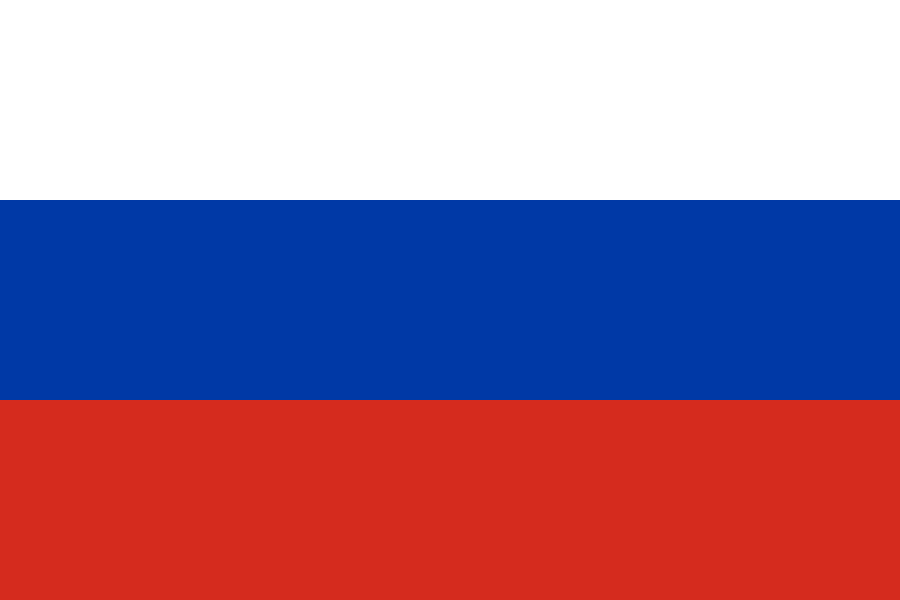
What the flag of Russia looks like
The flag of the Russian Federation is a rectangle with three horizontal stripes of equal height. The top stripe is white, the middle stripe is blue and the bottom stripe is red. The ratio of the width to the height is 2:3. The flag has no emblem, and it looks the same from both sides.
This plain tricolor is the state flag, used for all purposes. Russia also has other official flags that follow different rules. The President has a separate standard with the coat of arms, and the Navy flies a different ensign, a white flag with a blue diagonal cross (the St Andrew's flag). The Russian flag is also known as the "white-blue-red tricolor" and it can be viewed in a small version as the Russia flag emoji.
You can get an image from the download page. Russia spans Europe and Asia, and you can compare its flag with others on the European flags page.
Russia flag colors
Color codes measured from the official design. Use HEX for the web and CMYK for print.
HEX
#FFFFFFRGB
255, 255, 255CMYK
0, 0, 0, 0 HEX
#D52B1ERGB
213, 43, 30CMYK
0, 80, 86, 16 HEX
#0039A6RGB
0, 57, 166CMYK
100, 66, 0, 35 Russian flag meaning and symbolism
The law on the flag names the colors (white, blue and red) but gives them no meaning. In the time of Alexander III the official interpretation was:
- White for nobility and frankness.
- Blue for faithfulness, honesty, impeccability and chastity.
- Red for courage, generosity and love.
A common unofficial explanation links the colors to the three parts of the Russian lands: white for White Russia (Belarus), blue for Little Russia (Ukraine) and red for Great Russia. This is a popular reading, and it is not part of the law.
The same three colors, in different orders, became the Pan-Slavic colors chosen at the Prague Slavic Congress of 1848. They influenced the flags of other Slavic nations, including Slovakia, Slovenia and Serbia. They are similar to the colors of the Netherlands flag, from which Peter the Great took his inspiration.
History of the Russian flag
Before Peter the Great, Russian banners were mostly religious and showed images of saints. Peter, who was keenly interested in European-style shipbuilding, introduced a white-blue-red flag for Russian ships, modeled on the Dutch flag. The oldest surviving Russian flag, a tricolor with a golden double-headed eagle, was first raised on his yacht on 6 August 1693, and in 1705 Peter decreed the tricolor as the flag of Russian merchant ships. For a long time it was a maritime flag, and it was used on land only on certain occasions.
In 1858, Tsar Alexander II decreed a state flag of black, yellow and white, based on the dynastic colors of the Romanov coat of arms. The white-blue-red flag stayed in use on merchant ships and among private citizens. In 1883 Alexander III authorized it for decorating buildings on land during public festivities, and in 1896 an imperial order of Nicholas II designated it as the sole national flag of the Russian Empire. After the February Revolution of 1917, the Provisional Government continued to use it.
After the October Revolution of 1917, the red flag became the symbol of the new state. From 1924, the flag of the Soviet Union was red with a gold hammer and sickle and a star. This is the reason people ask about the sickle: the hammer and sickle belong to the Soviet flag and not to the present Russian flag. The Russian republic within the USSR had its own flag, and from 1954 it was red with a blue stripe at the hoist.
In 1991 the white-blue-red tricolor was readopted: the Supreme Soviet of the Russian republic declared it the national flag on 22 August 1991, after the failed coup in Moscow. The Soviet flag was lowered from the Kremlin on 25 December 1991, when the USSR ended. The present proportions of 2:3 and darker shades were set by a decree of President Yeltsin in 1993, the current law on the state flag dates from 2000, and 22 August has been celebrated as National Flag Day since 1994.
Flags that look like the Russian flag
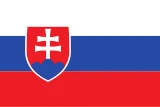
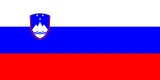
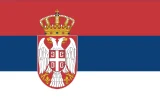
Several flags use the same colors. The flag of Slovakia has the same stripes in the same order, with a coat of arms on the left side. The flag of Slovenia also has them, with a shield in the upper left corner. The flag of Serbia has red, blue and white stripes. The flag of Luxembourg is red, white and light blue, and the Netherlands has red, white and blue.
Russia flag facts
| Country | Russia |
|---|---|
| Flag adopted | August 22, 1991 |
| Proportions | 2:3 |
| Colors | #FFFFFF, #D52B1E, #0039A6 |
| Flag emoji | 🇷🇺 |
| Country code | RU, RUS (ISO 3166) |
| Capital | Moscow |
| Continent | Europe |
| Population | 146,119,928 |
| Area | 17,075,400 km² |
| Currency | Russian ruble |
| National anthem | State Anthem of the Russian Federation |
Russia flag: frequently asked questions
What is the old Russian flag?
Before 1991 the flag was the red Soviet flag with a gold hammer and sickle. Before 1917 the Russian Empire used the white-blue-red tricolor, as well as an imperial black-yellow-white flag from 1858.
What was the original Russian flag?
The white-blue-red tricolor goes back to the reign of Peter the Great, and the oldest surviving example was first raised in 1693. It was used first on ships, and according to one account it was modeled on the Dutch flag.
When did Russia stop using the Soviet flag?
The Soviet flag was lowered over the Kremlin on 25 December 1991. The white-blue-red tricolor had been approved as the national flag of Russia on 22 August 1991.
Why is there a sickle on the Russian flag?
There is no sickle on the present Russian flag. The hammer and sickle appear on the Soviet flag, which was in use from the early 1920s to 1991.
Why are there two Russian flags?
Russia has one national flag, the plain white-blue-red tricolor. People sometimes mean the presidential standard, which has the coat of arms, or the naval ensign, which is a white flag with a blue cross, or the Soviet and imperial flags of the past.
What do the colors of the Russian flag mean?
The law sets no meaning, but in the time of Alexander III white stood for nobility and frankness, blue for faithfulness and honesty, and red for courage, generosity and love.
Why did Russia change its flag in 1993?
The tricolor itself was restored in August 1991, after the failed coup. In December 1993 President Yeltsin's Decree No. 2126 only adjusted it, changing the proportions from 1:2 to 2:3 and making the colors darker. The current law on the state flag dates from 2000.
Why did the Russian Empire have two flags?
In 1858 Alexander II decreed a black-yellow-white flag based on the Romanov dynastic colors for government buildings. Merchant ships and citizens kept using the white-blue-red tricolor, so both coexisted until Nicholas II made the tricolor the sole national flag in 1896.
What is the alternate flag of Russia?
The best-known alternative is the black, yellow and white imperial flag of 1858, used by the state until the white-blue-red tricolor replaced it in 1896. The tricolor was banned after the 1917 October Revolution and readopted on 22 August 1991. See also the Russia flag emoji.
Flags that look like the Russia flag

Flags of neighboring countries
 Azerbaijan
  Belarus
  China
China  Estonia
  Finland
  Georgia
  Japan
Japan  North Korea
  Kazakhstan
  Lithuania
  Latvia
  Mongolia
  Norway
  Poland
  Sweden
  Ukraine
  United States