Flag of the United Kingdom
The British flag, called the Union Flag or Union Jack, layers the red cross of St George of England, the white diagonal cross of St Andrew of Scotland and the red diagonal cross of St Patrick of Ireland on a blue field. The present design dates from 1801.
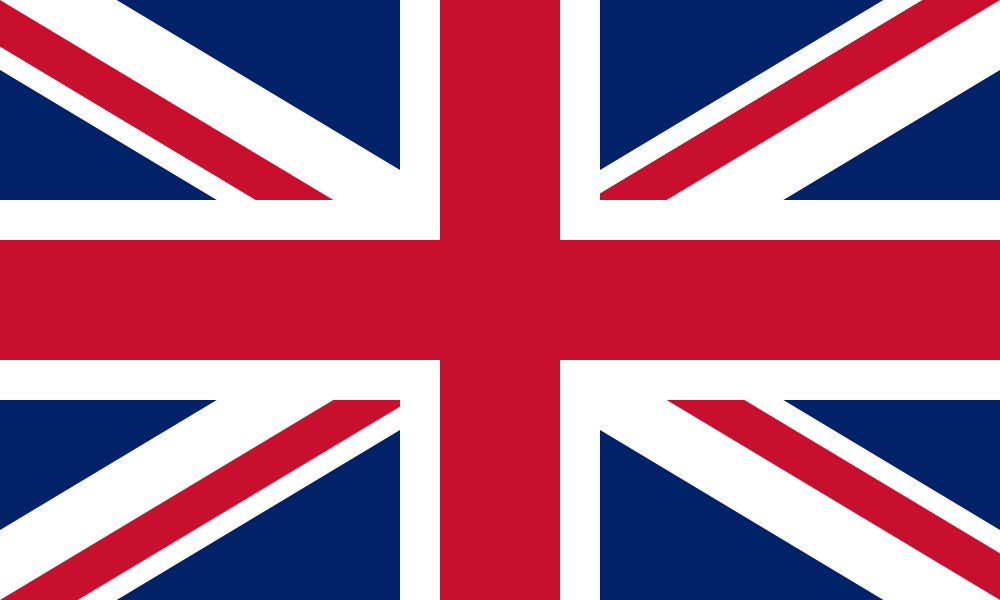
What the flag of the United Kingdom looks like
The Union Flag has a dark blue background with a combination of three crosses. A red upright cross with a white border is the Cross of St George. Behind it, a white diagonal cross is the saltire of St Andrew. A thinner red diagonal cross, the saltire of St Patrick, is placed over the white one. The proportions are 3:5.
The design is not symmetrical. The red diagonal strips are not centered in the white ones: in each quarter they are shifted to one side, a technique known as counterchanging. In the upper hoist quarter, nearest the pole, the broad white band of St Andrew lies above the red band, and the flag is upside down if this is reversed. The Union Flag is therefore one of the few national flags with a wrong way up.
The flag of Wales, which shows a red dragon, is not part of the design because Wales was already united with England when the first Union Flag was created.
United Kingdom flag colors
Color codes measured from the official design. Use HEX for the web and CMYK for print.
HEX
#C8102ERGB
200, 16, 46CMYK
0, 92, 77, 22 HEX
#FFFFFFRGB
255, 255, 255CMYK
0, 0, 0, 0 HEX
#012169RGB
1, 33, 105CMYK
99, 69, 0, 59 British flag meaning and symbolism
The Union Flag is a symbol of the union of the nations in the United Kingdom, not of any single color symbolism. Each part stands for a patron saint: St George for England, St Andrew for Scotland and St Patrick for Ireland. The blue and white come from the Scottish flag, and the red comes from the English and Irish crosses.
Some people connect the flag to the history of the British Empire, and for that reason, it has been criticized by some as a symbol of colonialism. Others treat it as a general symbol of the country, flown at royal events, sports matches and on public buildings.
History of the Union Flag
The flag came about after the Union of the Crowns in 1603, when James VI of Scotland also became James I of England. In 1606 a new flag combining the crosses of St George and St Andrew was ordered for use at sea, and it served as the flag of Great Britain after the political union of England and Scotland in 1707.
When the Act of Union brought Ireland into the United Kingdom, the red saltire of St Patrick was added, and the new flag was introduced on 1 January 1801. It has been the same ever since, even after most of Ireland left the Union in 1922. The flag is still used by the United Kingdom, which includes Northern Ireland.
The name Union Jack is usually linked to the flag's use as a ship's jack, flown from the jack staff, though the exact origin of the name is debated. Today both names are accepted in everyday use. No law has defined the Union Flag as the national flag. It became the national flag by long custom, and Parliament has accepted it as such.
Union Jack vs the England flag
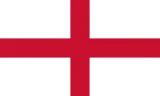
The Union Flag and the English flag are different. England's flag is a plain red St George's Cross on a white field, and it is used for example at football matches. Scotland uses the blue saltire, and Wales uses the red dragon. In Northern Ireland the Union Flag is the official flag, while the Ulster Banner is used unofficially. The Union Flag is the flag of the whole state, and the flags of England, Scotland and Wales represent the individual nations.
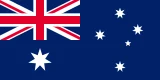
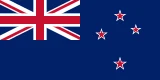
Many countries and territories have the Union Flag in a corner of their own flags, including Australia and New Zealand. For the emoji, see the UK flag emoji page.
United Kingdom flag facts
| Country | United Kingdom of Great Britain and Northern Ireland |
|---|---|
| Flag adopted | January 1, 1801 |
| Proportions | 3:5 |
| Colors | #C8102E, #FFFFFF, #012169 |
| Symbols | saltire, St George's Cross, field, Saint Patrick's Saltire |
| Flag emoji | 🇬🇧 |
| Country code | GB, GBR (ISO 3166) |
| Capital | London |
| Continent | Europe |
| Population | 67,326,569 |
| Area | 242,495 km² |
| Currency | pound sterling |
| National anthem | God Save the King |
United Kingdom flag: frequently asked questions
What are the two British flags called?
The Union Flag, also called the Union Jack, represents the whole United Kingdom. The Cross of St George is the flag of England. Scotland, Wales and Northern Ireland also have flags of their own.
Are the England and UK flags the same?
No. England's flag is a red cross on white, while the UK flag combines the crosses of England, Scotland and Ireland on a blue field.
Why is the UK flag called the Union Flag?
It is called the Union Flag because it joins the flags of the countries that united under one crown. The name Union Jack came from its use as a ship's jack.
Why isn't Wales on the Union Flag?
Wales had been conquered by England in the 13th century and legally incorporated into the Kingdom of England in the 16th century, so it was included under the Cross of St George when the first Union Flag was designed in 1606.
Will the British flag be changed?
No change has been announced. The Union Flag has had the same design since 1801.