Flags of South America
This page shows 14 flags of South America: the 12 independent countries plus French Guiana and the Falkland Islands. Click a flag for its meaning and history.
🎯 Take the South American flags quiz
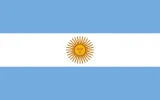 Argentina Buenos Aires
 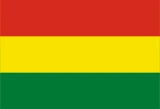 Bolivia La Paz
 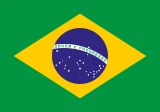 Brazil Brasília
 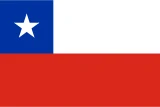 Chile Santiago
 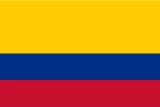 Colombia Bogotá
 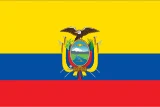 Ecuador Quito
 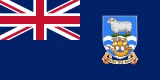 Falkland Islands Stanley
 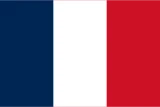 French Guiana Cayenne
 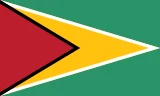 Guyana Georgetown
 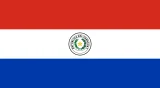 Paraguay Asunción
 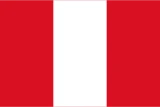 Peru Lima
 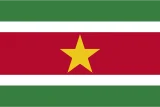 Suriname Paramaribo
 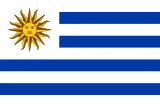 Uruguay Montevideo
 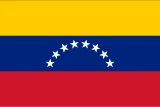 Venezuela Caracas
 Colors and symbols on South American flags
Yellow, blue and red form the continent's most visible pattern. Colombia, Venezuela and Ecuador all derive from the flag of Gran Colombia, created in the early 1800s by independence leader Francisco de Miranda. Colombia has a wider yellow band, Venezuela shows an arc of eight white stars on blue, and Ecuador has a coat of arms in the center.
Argentina and Uruguay both use light blue and white stripes with the Sun of May, which refers to the revolution of 1810. Brazil shows a blue globe with 27 stars (one per state and the federal district) under the words Ordem e Progresso. Chile has a single white star, Peru red-white-red verticals with a coat of arms, and Bolivia red, yellow and green bands. Paraguay is unusual since its front and back differ: the front has the national coat of arms and the reverse the seal of the treasury. Guyana has the Golden Arrowhead, and Suriname a large yellow star on a red band.
Oldest and newest South American flags
Argentina's flag, designed by Manuel Belgrano in 1812, is one of the oldest national flags in the region. Most flags in the northern and western parts date from the 1810s and 1820s, when Spanish rule ended. Venezuela added an eighth star in 2006 to honor the province of Guayana.
The youngest national flags come from Guyana (1966) and Suriname (1975), both former colonies of Britain and the Netherlands. The Falkland Islands fly a British blue ensign with a coat of arms showing a ram, and French Guiana uses the French tricolor.
Look-alike flags people confuse
The yellow, blue and red tricolors of Colombia, Ecuador and Venezuela are the most commonly mixed up. Look for Ecuador's emblem and Venezuela's arc of stars, and note that Colombia's has no symbols at all, so it is the plainest of the three. The stripes also differ in size, since Colombia's yellow band takes up half the height. Argentina and Uruguay share the Sun of May, but Argentina has three horizontal bands while Uruguay has nine blue and white stripes with the sun in a white canton. Peru is sometimes mistaken for Canada's flag, though Peru's stripes run vertically. Bolivia resembles the flags of Ghana and Lithuania. Chile's red, white and blue design with a single star recalls the flag of Texas. See also North America for neighbours.
The two territories add the final variety: a blue ensign for the Falkland Islands and a French tricolor for French Guiana. Compare the sun flags here with the red-disc designs of Japan and Bangladesh in Asia.
Frequently asked questions
How many flags does South America have?
South America has 12 independent countries and two territories: French Guiana and the Falkland Islands. That makes 14 flags in this list.
What is the most recognizable flag in South America?
Brazil's, with its green field, yellow diamond and blue globe, is probably the most recognized. Argentina's sky-blue and white stripes come a close second.
Why are Colombia, Ecuador and Venezuela's flags similar?
All three were once part of Gran Colombia (1819 to 1831) and kept its yellow, blue and red colors after the union broke up.
Which South American flag is different on both sides?
Paraguay. The front and back show different emblems, the best-known example of a national flag that differs on both sides.
Other continents
African flags · Asian flags · European flags · North American flags · Oceanian flags