Flag of Colombia
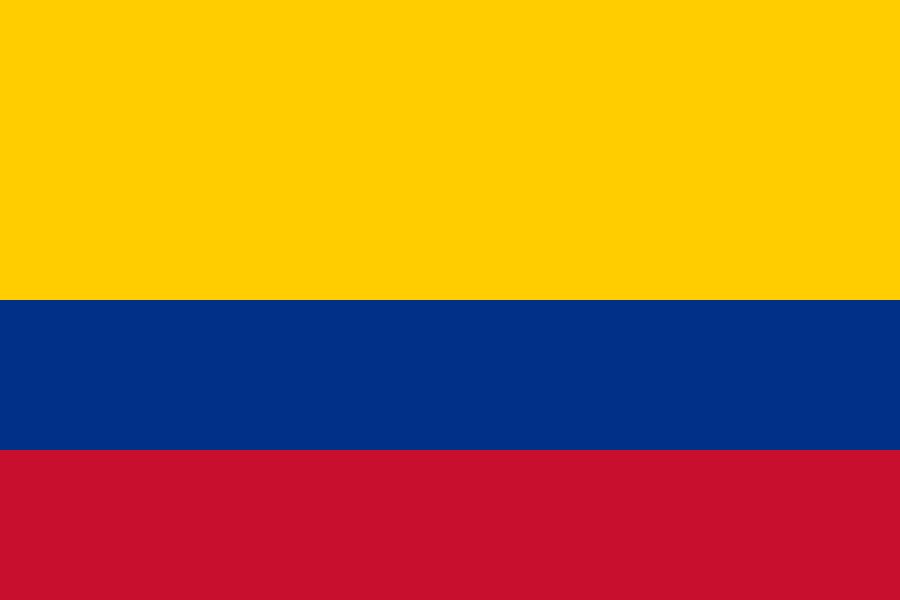
The Colombia flag is a horizontal tricolor of yellow, blue and red. The yellow band takes up the top half and the blue and red bands a quarter each. The same three colors, inherited from Francisco de Miranda's banner, appear on the flags of Venezuela and Ecuador.
What the flag of Colombia looks like
The flag of Colombia has three horizontal bands in yellow, blue and red, from top to bottom. The yellow band is twice as tall as each of the others, so it covers half of the flag, while the blue and red bands each cover a quarter. The proportions of the flag are 2:3. There is no emblem on the version used by citizens and businesses, known as the civil flag.
Variants with the national coat of arms are used for some official and military purposes. Because the yellow, blue and red scheme is shared with its neighbors, the flag is often confused with those of Ecuador and Venezuela. You can see the plain version in the Colombia flag emoji. Note that the spelling "Columbia" is a common mistake: it refers to the District of Columbia, British Columbia and Columbia University, not to this country.
Colombia flag colors
Color codes measured from the official design. Use HEX for the web and CMYK for print.
HEX
#FFCD00RGB
255, 205, 0CMYK
0, 20, 100, 0 HEX
#C8102ERGB
200, 16, 46CMYK
0, 92, 77, 22 HEX
#003087RGB
0, 48, 135CMYK
100, 64, 0, 47 Colombia flag meaning and symbolism
The colors are explained in several ways. The best-known version says that yellow stands for the wealth of the land, including gold, and for sovereignty and justice, blue stands for the sea and the sky, as well as for loyalty, and red stands for the blood spilled by soldiers for independence, and for courage. Another widely repeated explanation says that blue represents the two oceans, the Atlantic and the Pacific, that meet the country's coasts, with Colombia being the only South American country with coasts on both.
An older reading, linked to Miranda, describes yellow as America, red as Spain and blue as the sea that separates them. These are traditional interpretations, and none of them is part of the legal definition of the flag.
The yellow band is often said to be larger because the wealth of the land is meant to dominate. The 2:1:1 split is shared with Ecuador, while Venezuela uses three equal bands.
History of the Colombian flag
The three colors come from the tricolor of the Venezuelan-born revolutionary Francisco de Miranda, who raised a flag in yellow, blue and red during his 1806 expedition to Venezuela. Where he got the idea is uncertain, and several stories are told about it.
After independence from Spain, Simon Bolivar and others created Gran Colombia in 1819, a state that included present-day Colombia, Venezuela, Ecuador and Panama. It used a version of Miranda's tricolor. When Gran Colombia broke up in 1830-31, each of the new states kept the colors in its own arrangement. The Republic of New Granada, the forerunner of modern Colombia, used the same three colors in a different arrangement, and in the 1860s the country was renamed the United States of Colombia.
The present form of the flag, with the 2:1:1 division, is traced to a decree of 26 November 1861 issued by the government of Tomas Cipriano de Mosquera. The design has stayed the same since then, and the country has changed only its name. The flag is flown widely on national holidays such as 20 July, Independence Day, and 7 August, the anniversary of the Battle of Boyaca in 1819.
Colombia flag vs Venezuela and Ecuador
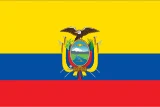
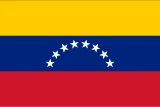
Colombia, Venezuela and Ecuador are the three countries that came from Gran Colombia, which is why their flags look so alike. The Colombian flag has no stars and its yellow band is twice the size of the others. The flag of Venezuela has three equal bands and an arc of eight white stars on the blue stripe. Ecuador's flag has the same 2:1:1 layout as Colombia's, but its state version carries a coat of arms with a condor and Mount Chimborazo, while the civil flag is plain. Beyond Latin America, Romania, Chad and Andorra have blue, yellow and red flags, but their bands are vertical. See more flags of South America.
Colombia flag facts
| Country | Republic of Colombia |
|---|---|
| Flag adopted | November 26, 1861 |
| Proportions | 2:3 |
| Colors | #FFCD00, #C8102E, #003087 |
| Symbols | field |
| Flag emoji | 🇨🇴 |
| Country code | CO, COL (ISO 3166) |
| Capital | Bogotá |
| Continent | South America |
| Population | 52,321,152 |
| Area | 1,141,748 km² |
| Currency | Colombian peso |
| National anthem | National Anthem of Colombia |
Colombia flag: frequently asked questions
Why is the yellow part of the Colombian flag bigger?
The yellow band covers half of the flag, which is often said to emphasize the wealth of the land. The blue and red bands are each a quarter of the flag.
Why are the flags of Venezuela and Colombia similar?
Both countries were part of Gran Colombia, formed in 1819, and they kept the yellow, blue and red colors of Francisco de Miranda's flag after the state broke up. Ecuador did the same.
Is the Colombian and Venezuelan flag the same?
No. Colombia's flag has bands in a 2:1:1 ratio and no stars, while Venezuela's has three equal bands and an arc of eight white stars on the blue band.
What does the Colombian flag symbolize?
Yellow is commonly said to represent wealth and sovereignty, blue the sea and the sky, and red the blood of the soldiers who fought for independence.
Is Columbia Portuguese or Spanish?
The country is spelled Colombia, and Spanish is its official language. The spelling Columbia refers to other places, such as the District of Columbia in the United States, and not to the South American country.
Why did Colombia change their flag?
Colombia's flag changed with its governments. After Gran Colombia broke up, the new states altered the arrangement and added emblems, and the present layout dates from 1861.