Flag of Chile
The Chile flag has two horizontal bands, white over red, and a blue square in the upper hoist corner holding a white five-pointed star. It has been in use since 18 October 1817 and is nicknamed La Estrella Solitaria, the lone star.
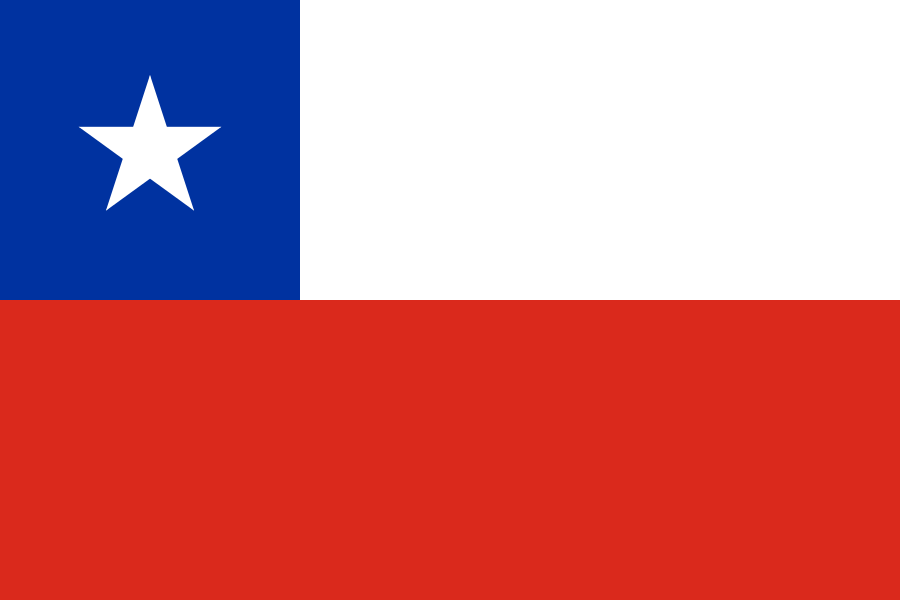
What the flag of Chile looks like
The flag of Chile is divided into two equal horizontal bands: white on top and red on the bottom. At the hoist end of the white band is a blue square, equal in height to the white band, with a white five-pointed star in its center. The width-to-height proportion is 2:3.
The flag is called La Estrella Solitaria because of that single star. The flag is often compared with the flag of Texas, which uses the same three colors and a single star. In the Chile flag the star sits in a blue square above the red band; on the Texas flag the blue stripe runs the full height at the hoist. The Chile flag emoji shows the same design, and it can be downloaded from the Chile flag download page.
Chile flag colors
Color codes measured from the official design. Use HEX for the web and CMYK for print.
HEX
#DA291CRGB
218, 41, 28CMYK
0, 81, 87, 15 HEX
#FFFFFFRGB
255, 255, 255CMYK
0, 0, 0, 0 HEX
#0032A0RGB
0, 50, 160CMYK
100, 69, 0, 37 Chile flag meaning and symbolism
The most common explanation is that blue stands for the sky and the Pacific Ocean, white for the snow-covered Andes, and red for the blood shed by those who fought for independence. The five-pointed star is said to represent a guide to progress and honor. Another reading links the star to the Mapuche people and the old morning star, which the Mapuche called Wünelfe; this is a tradition that appears in several accounts rather than in the official description.
The flag has no official explanation of its colors in law, which only describes the design and sizes. Chileans use it on national holidays, especially 18 September, the national day, and on 9 July for Flag Day.
History of the Chilean flag
Before independence, Chile was a Spanish colony and flew the royal banners. The first national flag appeared in 1812 during the period known as the Patria Vieja ("Old Fatherland"). It had three horizontal stripes of blue, white and yellow, and was in use until 1814, when Spanish forces retook the country. After the patriot victory at Chacabuco in 1817, a temporary flag of blue, white and red horizontal stripes was used for a short time, in what is known as the transition flag.
The present flag was approved by the government of Bernardo O'Higgins on 18 October 1817. Its exact authorship is debated: it is often attributed to the war minister José Ignacio Zenteno, with the drawing credited to Antonio Arcos or to Gregorio de Andía y Varela. Compared with the transition flag, the blue stripe became a square in the corner holding a white star. The flag was raised in Santiago on 12 February 1818, the day Chile's independence was proclaimed there, and it has stayed essentially unchanged since.
Chile flag vs Texas flag
The similarity between the Chile and Texas flags is a coincidence, not a copy. The Chilean flag came first, in 1817, and the Texas flag was adopted in 1839, about 22 years later. There is no sign that one was based on the other. Both use a blue field, a white star and red and white bands, which are also the colors of the United States flag and many flags of the Americas. In the Texas flag the blue stripe takes up a third of the width and runs the full height, while in the Chile flag the blue part is a square in the upper hoist corner.
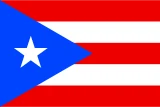
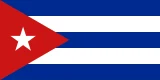
Chile's flag is also close in spirit to those of Puerto Rico and Cuba, which combine a white star, a triangle and red, white and blue stripes. See more flags of South America.
Chile flag facts
| Country | Republic of Chile |
|---|---|
| Flag adopted | October 18, 1817 |
| Proportions | 2:3 |
| Colors | #DA291C, #FFFFFF, #0032A0 |
| Symbols | five-pointed star, canton, field |
| Flag emoji | 🇨🇱 |
| Country code | CL, CHL (ISO 3166) |
| Capital | Santiago |
| Continent | South America |
| Population | 19,458,000 |
| Area | 756,102 km² |
| Currency | Chilean peso |
| National anthem | National Anthem of Chile |
Chile flag: frequently asked questions
What does the Chilean flag symbolize?
Blue is often said to represent the sky and the Pacific Ocean, white the snow of the Andes, and red the blood of those who died for independence. The star is said to be a symbol of progress and honor.
Why do Chile and Texas have similar flags?
It is a coincidence. Both flags use red, white and blue, which were common colors in the Americas after the American and French revolutions, and both feature a single white star. They have different layouts.
Which flag was first, Chile or Texas?
Chile's flag was first. It was adopted on 18 October 1817, while the flag of the Republic of Texas dates from 1839.
Is the Texas flag the same as the Chilean flag?
No. The Texas flag has a blue vertical stripe at the hoist with a star, and white and red horizontal stripes. The Chile flag has a smaller blue square in the corner, and the star is smaller within it.
What is a fun fact about the Chilean flag?
The flag is nicknamed the lone star and has stayed almost unchanged for over two centuries. Chileans celebrate Flag Day on 9 July, in memory of the battle of La Concepcion in 1882.