Flag of Suriname
The Suriname flag has five horizontal bands, green, white, wide red, white and green, with a large yellow five-pointed star in the middle of the red band. It was adopted on 25 November 1975, the day of independence from the Netherlands.
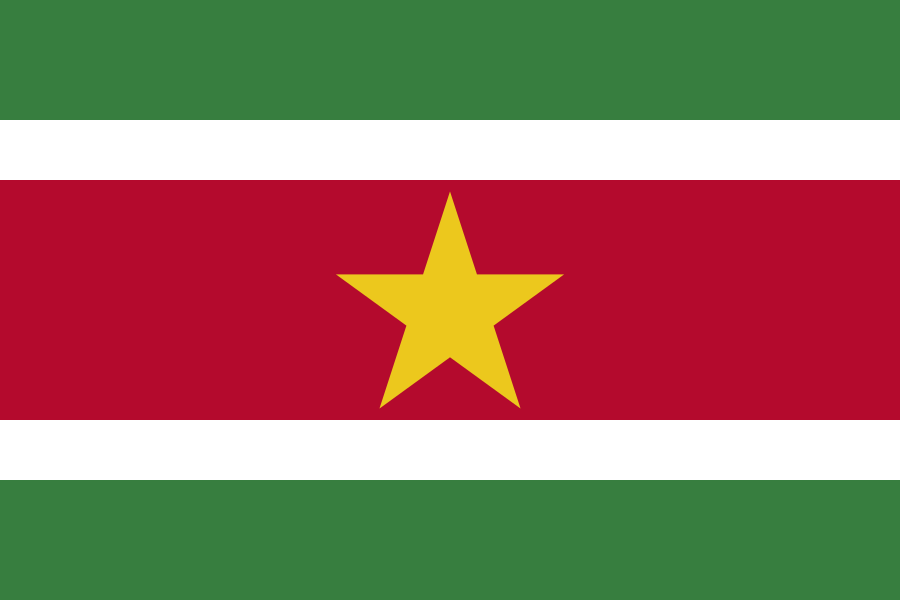
What the flag of Suriname looks like
The flag of Suriname is made of five horizontal bands. From top to bottom they are green, white, red, white and green. The red band in the center is the widest, twice as high as each green band and four times as high as each white one. A large yellow five-pointed star is centered on the red band, and one point of the star faces upward. The ratio is 2:3.
It is one of the very few South American flags to use a green, white and red scheme, and its stripes are layered so that the red center stands out. Ready-to-use images are on the Suriname flag download page, and the emoji is at /suriname/emoji/.
Suriname flag colors
Color codes measured from the official design. Use HEX for the web and CMYK for print.
HEX
#377E3FRGB
55, 126, 63CMYK
56, 0, 50, 51 HEX
#B40A2DRGB
180, 10, 45CMYK
0, 94, 75, 29 HEX
#FFFFFFRGB
255, 255, 255CMYK
0, 0, 0, 0 HEX
#ECC81DRGB
236, 200, 29CMYK
0, 15, 88, 7 Suriname flag meaning and symbolism
The meanings most often given are:
- Green is for fertility and hope. Much of the country is covered by tropical rainforest.
- White is for peace and justice.
- Red is for progress and love, and it is placed at the center because it is the largest band.
- The yellow star stands for unity of all the ethnic groups in the country and for a golden future.
The multiple meanings of the star reflect the population: Suriname's people include descendants of enslaved Africans, Maroons, Indigenous peoples, and Hindustani, Javanese, Chinese and European communities.
History of the Suriname flag
Suriname was a Dutch colony from 1667, when the Netherlands received it from the British in exchange for New Amsterdam (New York). For most of that period the Dutch tricolor was used there. After 1954 it was an autonomous part of the Kingdom of the Netherlands, and in 1959 it adopted its own flag: a white field with five stars arranged in a ring, each star in a different color to represent the main ethnic groups.
As independence approached, the leaders of the new state wanted a design that was simpler and better tied to national unity. The present flag was adopted when Suriname became independent on 25 November 1975. It replaced the 1959 flag, and the five stars were reduced to a single yellow star.
The design has been kept without changes since then. It also appears, in a reduced form, in the national coat of arms and in many local symbols.
Suriname among its neighbors
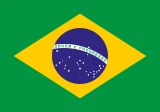
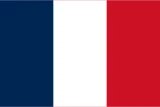
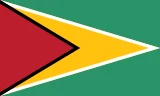
Suriname sits between Guyana, Brazil and French Guiana, and it is the only Dutch-speaking country in South America. Compare more designs on the South America flags page.
Suriname flag facts
| Country | Suriname |
|---|---|
| Flag adopted | November 25, 1975 |
| Proportions | 2:3 |
| Colors | #377E3F, #B40A2D, #FFFFFF, #ECC81D |
| Symbols | field, five-pointed star, fimbriation, fess |
| Flag emoji | 🇸🇷 |
| Country code | SR, SUR (ISO 3166) |
| Capital | Paramaribo |
| Continent | South America |
| Population | 563,402 |
| Area | 163,270 km² |
| Currency | Surinamese dollar |
| National anthem | God zij met ons Suriname |
Suriname flag: frequently asked questions
What does the Suriname flag mean?
Green stands for fertility and hope, white for peace and justice, red for progress and love, and the yellow star for the unity of the people and a golden future.
What country was Suriname before?
Suriname was a Dutch colony, called Dutch Guiana, before independence in 1975. Earlier, in the 17th century, it was briefly an English colony.
Is Suriname Dutch or French?
Suriname is neither today, but its colonial history is Dutch. Dutch is the official language, and the French territory of French Guiana lies on its eastern border.
What language does Suriname speak?
Dutch is the official language and is used in government and schools. Most people also speak Sranan Tongo, an English-based creole, along with Sarnami, Javanese and other languages.
Are Suriname people Latinos?
Suriname is in South America but was colonized by the Dutch, not Spain or Portugal, so it is not usually considered part of Latin America. It is a member of the Caribbean Community (CARICOM).