Flag of Argentina
The Argentina flag has three equal horizontal bands: light blue, white and light blue. The official version carries the golden Sun of May, with a human face, in the center. Manuel Belgrano created it in 1812, during the fight for independence.
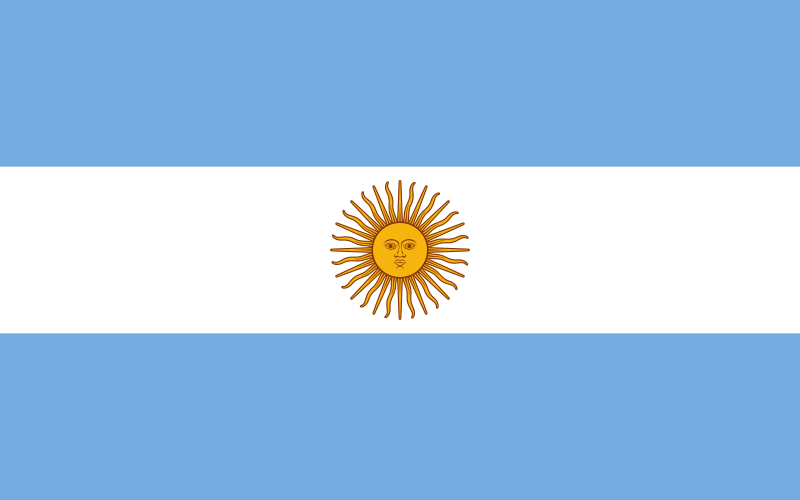
What the flag of Argentina looks like
The flag of Argentina has three horizontal bands of equal height. The top and bottom bands are a light sky blue, known in Spanish as celeste, and the middle band is white. Proportions vary in practice, and 9:14 is commonly cited for the official flag.
In the middle of the white band sits the Sun of May (Sol de Mayo), a golden-yellow sun with a human face. It has 32 rays, alternating between 16 straight and 16 wavy ones. The sun appears on the official flag of the nation, which is used by government institutions and at ceremonies.
There are two versions in common use. The bandera oficial de ceremonia has the Sun of May, and the bandera de ornato, the ornamental flag, has only the three stripes. The plain version is often used by citizens and hung from houses, while the one with the sun is used on official occasions. Both are legitimate Argentine flags, which answers the question of which is the correct version. For the small flag emoji, see the Argentina flag emoji.
Argentina flag colors
Color codes measured from the official design. Use HEX for the web and CMYK for print.
HEX
#74ACDFRGB
116, 172, 223CMYK
48, 23, 0, 13 HEX
#FFFFFFRGB
255, 255, 255CMYK
0, 0, 0, 0 Argentina flag meaning and symbolism
The most widespread explanation is that the sky blue and white stand for the sky and clouds. Another version links them to the blue and white cloak of the Virgin Mary of the Immaculate Conception, a devotion Belgrano is said to have had. A third idea points to the blue and white of the Bourbon royal house, which the early independence movement still used when it claimed to rule in the name of the Spanish king. The light blue and white cockade worn by the patriots during the May Revolution of 1810 came before the flag. There is no single agreed meaning.
The Sun of May is better documented. It recalls the sun that is said to have appeared through the clouds on 25 May 1810, during the May Revolution that started the break from Spain. It is also often linked to Inti, the sun god of the Inca, which links the new nation to the indigenous heritage of the Andes. The 32 rays are not explained in the law, so no meaning is assigned to them.
History of the Argentine flag
General Manuel Belgrano, who led the patriot army, asked the government in 1812 for a national cockade, and on 27 February he raised a blue and white flag at the Paraná River in Rosario. The ruling Triumvirate in Buenos Aires, still not prepared to declare independence, told him to take it down. Belgrano hoisted it again later that year in Jujuy. Argentines now celebrate Flag Day on 20 June, the anniversary of his death in 1820.
After independence was declared at the Congress of Tucumán on 9 July 1816, the blue and white flag was approved as the national flag on 20 July of that year. The Sun of May was added in 1818, when the Congress approved it for the war flag of the state. The design has been used with only minor changes since, and later laws and decrees fixed the shades and the form of the sun.
The name Argentina itself comes from the Latin word for silver, argentum, and the Río de la Plata, the River of Silver.
Flags that look like Argentina's
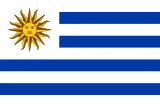
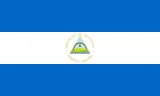
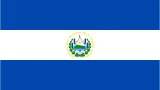
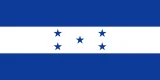
Several flags in the Americas share the blue and white of Argentina's. Uruguay's has nine stripes and a sun in the corner, and the Sun of May appears on it too. The flags of Nicaragua, El Salvador and Honduras also use light blue and white bands, since they come from the Federal Republic of Central America. The main difference is that Argentina is the only one of these with a sun on a plain three-band design.
Argentina flag facts
| Country | Argentina |
|---|---|
| Flag adopted | 1818 |
| Proportions | 5:8 |
| Colors | #74ACDF, #FFFFFF |
| Symbols | Sun, Sun of May, fess, field |
| Flag emoji | 🇦🇷 |
| Country code | AR, ARG (ISO 3166) |
| Capital | Buenos Aires |
| Continent | South America |
| Population | 47,327,407 |
| Area | 2,780,400 km² |
| Currency | Argentine convertible peso |
| National anthem | Argentine National Anthem |
Argentina flag: frequently asked questions
Why does Argentina have two flags?
The official ceremonial flag has the Sun of May on the white stripe. The ornamental flag has no sun and is used by citizens. Both use the same colors and layout.
Why does the sun on the Argentinian flag have a face?
The Sun of May is drawn with a human face, in the style of the sun on the first Argentine coins and in Inca tradition, where the sun god Inti was shown with a face. It recalls the sun that appeared during the May Revolution of 1810.
Who created the flag of Argentina?
Manuel Belgrano, a general and one of the leaders of the independence movement, created it in 1812 and first raised it in Rosario. The Congress of Tucumán made it official in 1816.
What flag is similar to the Argentina flag?
Uruguay's flag is the closest. Nicaragua, El Salvador and Honduras also use blue and white stripes, though they differ in layout and emblem.
When did Argentina change its flag?
The colors have been used since 1812. The only major change was adding the Sun of May in 1818.