Flag of Nicaragua
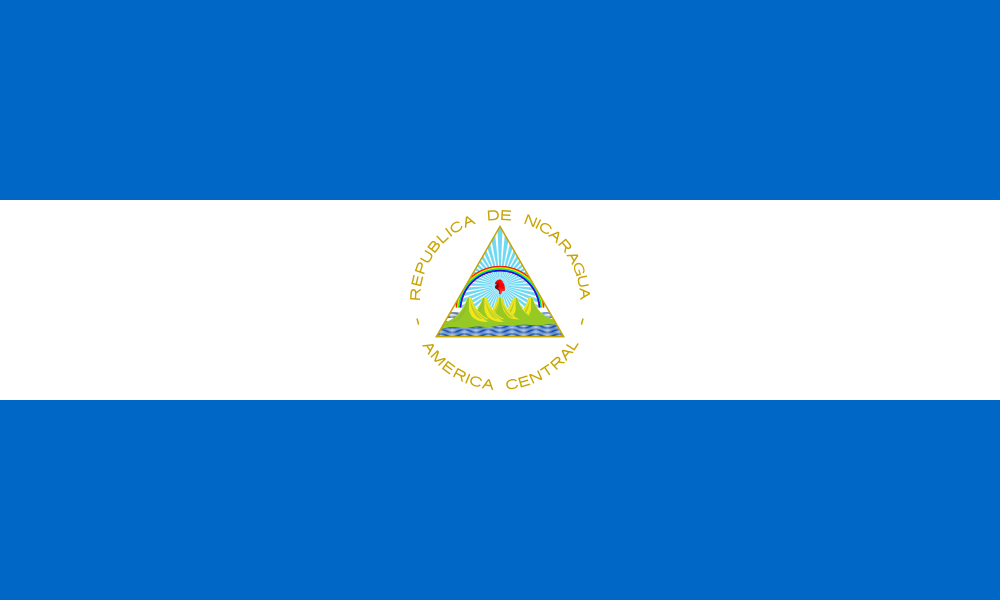
The Nicaragua flag is a horizontal triband of blue, white and blue with the national coat of arms in the center: a triangle holding five volcanoes, a rainbow and a cap of liberty. It is one of the few flags that shows a rainbow, including a violet band.
What the flag of Nicaragua looks like
The flag of Nicaragua has three horizontal stripes of equal height: blue at the top, white in the middle and blue at the bottom. The proportions are 3:5.
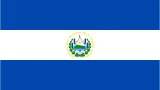
The coat of arms sits in the center of the white stripe. It is an equilateral triangle that contains five volcanoes rising from the sea, with a Phrygian cap (a soft cap used as a symbol of liberty) on a pole above them. Rays of light spread out behind the cap, and a rainbow arches over the whole scene. Around the triangle, in a circle, are the words República de Nicaragua at the top and América Central at the bottom, written in gold letters. This inscription is the main visual difference from the flag of El Salvador, whose arms are a different shape and carry different words.
The coat of arms is the only multicolored part of the flag, so the rainbow is where purple appears. The bands of the rainbow include violet, which is rare on national flags.
If you need the flag as an image, you can use the download page.
Nicaragua flag colors
Color codes measured from the official design. Use HEX for the web and CMYK for print.
HEX
#0067C6RGB
0, 103, 198CMYK
100, 48, 0, 22 HEX
#FFFFFFRGB
255, 255, 255CMYK
0, 0, 0, 0 Nicaragua flag meaning and symbolism
The colors are linked to the old Central American federation. A common explanation is that the two blue stripes stand for the Pacific Ocean and the Caribbean Sea, with the white stripe as the land between them. Blue is also read as justice and loyalty, and white as peace and purity. These readings are traditional, not set in law.
The coat of arms is described in more detail. The triangle represents equality. The five volcanoes stand for the five states of the Federal Republic of Central America: Guatemala, El Salvador, Honduras, Nicaragua and Costa Rica. The rainbow is a symbol of peace, the rays behind the cap stand for a bright future, and the red Phrygian cap is a sign of freedom. The sea around the volcanoes refers to the two oceans.
The flag does not use the color purple as a main color, although people often search for "Nicaragua flag purple". The purple is only the violet band within the rainbow in the emblem.
History of the Nicaraguan flag
After independence from Spain in 1821, Nicaragua joined the Federal Republic of Central America (also called the United Provinces of Central America). The federation had a flag of blue-white-blue horizontal stripes with a triangle of volcanoes in the middle, and this is the origin of the flag used by Nicaragua today. It was in use from 1823 until the federation broke up in about 1841.
After the breakup, the five states each kept a version of the federal blue-and-white flag, and some of them, such as Honduras and El Salvador, still look very similar. Nicaragua used several variations of the design in the 19th century.
The current flag was officially adopted in 1908. It was confirmed in the law of 1971, which fixed the design of the national arms and flag. The emblem has been redrawn slightly over the years, but the overall design has not changed since then.
Nicaragua celebrates independence on 15 September.
Flags that look like the Nicaraguan flag
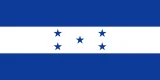
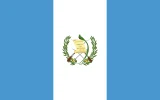
Several Central American flags share the blue and white stripes inherited from the federation. El Salvador's flag has the same triband and a round coat of arms. Honduras has a blue-white-blue flag with five blue stars in the middle, and Guatemala uses blue-white-blue vertical stripes. Argentina and Uruguay use a lighter blue, but with different layouts. On a small image, the Nicaraguan flag and the flag of El Salvador are almost impossible to tell apart, so the emblem is the clearest way to check which one you are looking at.
Nicaragua flag facts
| Country | Nicaragua |
|---|---|
| Flag adopted | August 27, 1971 |
| Proportions | 3:5 |
| Colors | #0067C6, #FFFFFF |
| Symbols | coat of arms of Nicaragua, field, fess |
| Flag emoji | 🇳🇮 |
| Country code | NI, NIC (ISO 3166) |
| Capital | Managua |
| Continent | North America |
| Population | 5,142,098 |
| Area | 120,340 km² |
| Currency | Nicaraguan córdoba |
| National anthem | Salve a ti |
Nicaragua flag: frequently asked questions
What does the Nicaragua flag symbolize?
The blue stripes are commonly said to represent the Pacific and Caribbean coasts and the white stripe the land between them, though some read white as peace. In the coat of arms, five volcanoes stand for the five original Central American states, the rainbow for peace, and the cap for liberty.
Why are the El Salvador and Nicaragua flags so similar?
Both come from the blue-white-blue flag of the Federal Republic of Central America, which existed from 1823 to about 1841. After the federation fell apart, several of its members kept the same colors and design.
When did Nicaragua change its flag?
The current design was officially adopted in 1908 and was confirmed by law in 1971. Earlier flags from the 19th century used the same blue-and-white base.
Does the Nicaragua flag have purple?
Only in a small way. The rainbow in the coat of arms includes a violet band, but the main colors of the flag are blue and white.
What does the symbol on the Nicaragua flag mean?
The triangle stands for equality. Inside it, five volcanoes represent the five states of the old Central American federation, a rainbow stands for peace, and the red cap of liberty stands for freedom.