Flags of Oceania
This page shows 27 flags of Oceania: 14 sovereign countries, led by Australia and New Zealand, and 13 island territories across Polynesia, Melanesia and Micronesia.
🎯 Take the Oceanian flags quiz
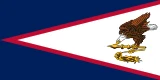 American Samoa Pago Pago
 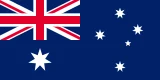 Australia Canberra
 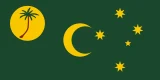 Cocos (Keeling) Islands West Island
 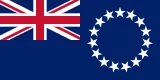 Cook Islands Avarua
 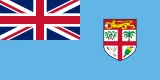 Fiji Suva
 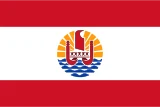 French Polynesia Papeete
 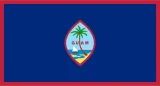 Guam Hagåtña
 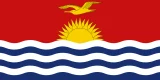 Kiribati South Tarawa
 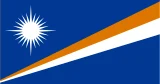 Marshall Islands Majuro
 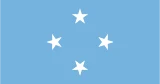 Micronesia Palikir
 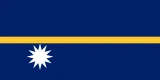 Nauru Yaren District
 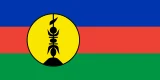 New Caledonia Nouméa
 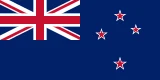 New Zealand Wellington
 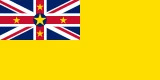 Niue Alofi
  Norfolk Island Kingston
 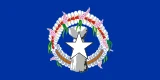 Northern Mariana Islands Saipan
 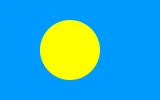 Palau Ngerulmud
 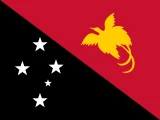 Papua New Guinea Port Moresby
 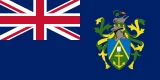 Pitcairn Islands Adamstown
 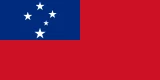 Samoa Apia
 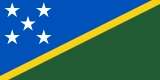 Solomon Islands Honiara
 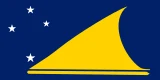 Tokelau
  Tonga Nukuʻalofa
 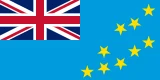 Tuvalu Funafuti
  US Minor Outlying Islands
 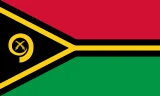 Vanuatu Port Vila
 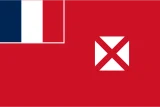 Wallis & Futuna Mata-Utu
 Colors and symbols on Oceania flags
Two ideas recur across the region: the Southern Cross and the Union Jack. The Southern Cross constellation appears on Australia, New Zealand, Samoa and Papua New Guinea. Australia adds a seven-pointed Commonwealth Star, New Zealand shows four red stars with white borders, and Samoa has five white stars on a blue canton.
The Union Jack sits in the corner of Australia, New Zealand, Fiji, Tuvalu, the Cook Islands, Niue and Pitcairn Islands, a sign of British colonial history. Others use Pacific imagery: Kiribati shows a frigatebird over a rising sun, Papua New Guinea a bird-of-paradise, and the Solomon Islands five stars for its main island groups. Vanuatu has a yellow Y shape, Tonga a red cross in a white canton on a red field, and Nauru a twelve-pointed star for its twelve tribes. In Micronesia, the Federated States of Micronesia flag has four white stars on light blue, one for each state, and the Marshall Islands flag has a 24-ray star, one ray for each municipality, with two diagonal rays in orange and white.
US territories keep their own designs too. Guam has a dark blue field with a red border and a local seal, the Northern Mariana Islands a star on a latte stone, and American Samoa a bald eagle holding a staff and a war club on a triangle.
Oldest and newest Oceania flags
Tonga's red-and-white design dates to 1875, which makes it the region's oldest national flag still flown. Australia's design was chosen in 1901 after a public competition, and New Zealand adopted its flag in 1902. In a 2016 referendum, New Zealanders voted to keep it rather than switch to a silver-fern design.
Most Pacific flags date from independence between the 1960s and 1980s: Samoa (1962), Nauru (1968), Fiji (1970), Kiribati (1979) and Vanuatu (1980). Palau adopted its flag in 1981. Territories such as Guam, American Samoa and French Polynesia have local flags.
Look-alike flags people confuse
Australia and New Zealand are the best-known confusion: both are blue with the Union Jack and Southern Cross stars. Check the stars: Australia's are white, New Zealand's red. Fiji uses light blue and a shield, while Tuvalu adds nine yellow stars, one for each island, to a light blue field with the Union Jack. Palau is a light blue field with a golden disc, often compared with Japan's sun, but it is off center and represents the moon. Compare with other regions such as Asia.
Frequently asked questions
What are the countries in Oceania?
Oceania has 14 sovereign countries: Australia, Fiji, Kiribati, the Marshall Islands, Micronesia, Nauru, New Zealand, Palau, Papua New Guinea, Samoa, the Solomon Islands, Tonga, Tuvalu and Vanuatu.
Is there a flag for Oceania?
No official flag represents the whole of Oceania. Some groups use symbolic designs, but each country and territory keeps its own flag, all shown on this page.
Which Oceania flag has a bird on it?
Papua New Guinea shows a bird-of-paradise, and Kiribati shows a frigatebird above the sun.
Which Oceania flags show the Southern Cross?
The Southern Cross appears on the flags of Australia, New Zealand, Samoa and Papua New Guinea.
Other continents
African flags · Asian flags · European flags · North American flags · South American flags