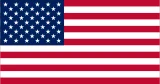
Flag of the U.S. Minor Outlying Islands
The U.S. Minor Outlying Islands flag is the American flag: thirteen red and white stripes with fifty white stars on a blue canton. The territory is a group of small, mostly uninhabited Pacific and Caribbean islands and atolls.
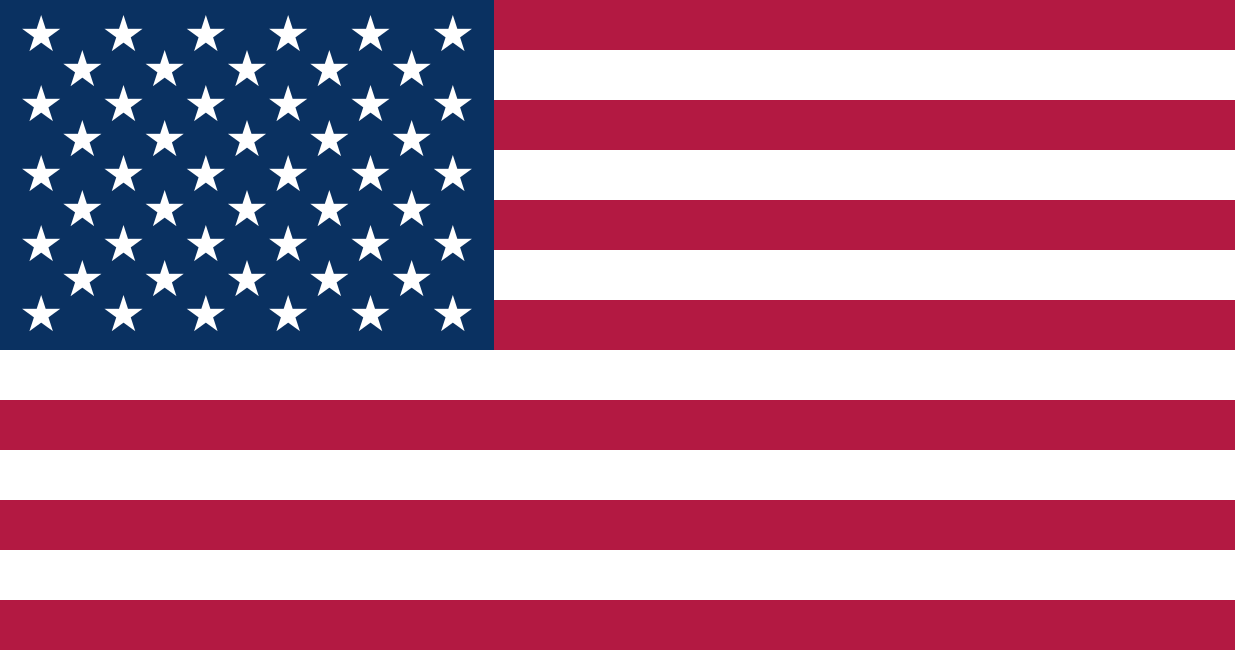
What the flag of the U.S. Minor Outlying Islands looks like
The islands have no flag of their own and use the flag of the United States. It has thirteen horizontal stripes, seven red and six white, and a blue rectangle in the upper hoist corner with fifty white five-pointed stars in nine rows. The flag's proportions are 10:19.
The U.S. Minor Outlying Islands flag emoji shows this design. The original is described on the page for the United States.
US Minor Outlying Islands flag colors
Color codes measured from the official design. Use HEX for the web and CMYK for print.
HEX
#B31942RGB
179, 25, 66CMYK
0, 86, 63, 30 HEX
#FFFFFFRGB
255, 255, 255CMYK
0, 0, 0, 0 HEX
#0A3161RGB
10, 49, 97CMYK
90, 49, 0, 62 What the stars and stripes mean
The thirteen stripes stand for the original thirteen colonies, and the fifty stars for the fifty states. In the 1782 report on the design of the Great Seal, Charles Thomson gave the colors on the seal these meanings: white for purity and innocence, red for hardiness and valor, and blue for vigilance, perseverance and justice. These meanings are often applied to the flag as well. The flag has had the present fifty-star layout since 4 July 1960, after Hawaii joined the Union.
Which islands are included
The group covers Baker Island, Howland Island, Jarvis Island, Johnston Atoll, Kingman Reef, Midway Atoll, Navassa Island, Palmyra Atoll and Wake Island. Most are in the central Pacific, and Navassa lies in the Caribbean. They are unincorporated territories, apart from Palmyra Atoll, and they are managed by US federal agencies. Several are national wildlife refuges. The only residents are a small number of military, contractor and wildlife staff, so the population is just a few hundred at most.
Some claims are disputed: Haiti claims Navassa Island, and the Marshall Islands claims Wake Island. The United States controls both.
Wake Island has an airfield used by the US military, and Midway Atoll is remembered for the naval battle of June 1942. The US flag is flown at such places, but the islands have no local government of their own and no elected representatives.
US Minor Outlying Islands flag facts
| Country | US Minor Outlying Islands |
|---|---|
| Proportions | 10:19 |
| Colors | #B31942, #FFFFFF, #0A3161 |
| Flag emoji | 🇺🇲 |
| Country code | UM, UMI (ISO 3166) |
| Continent | Oceania |
| Population | 190 |
| Area | 34 km² |
| Currency | United States dollar |
| National anthem | The Star-Spangled Banner |
US Minor Outlying Islands flag: frequently asked questions
Does the U.S. Minor Outlying Islands territory have its own flag?
No. It uses the flag of the United States.
Does anyone live on the U.S. Minor Outlying Islands?
Only a few people. Most islands are uninhabited, and the small population is made up of military and contract personnel and wildlife staff.
Which islands are part of the U.S. Minor Outlying Islands?
Baker, Howland, Jarvis, Johnston, Kingman Reef, Midway, Navassa, Palmyra and Wake.
When did the US flag get fifty stars?
On 4 July 1960, the first Independence Day after Hawaii became a state in 1959.