Flags of the 50 U.S. states
All 50 US state flags are shown here, from Alabama to Wyoming. Click a state to see its design, history and meaning.
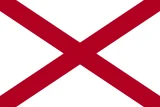 Alabama
  Alaska
 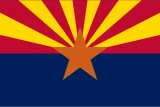 Arizona
 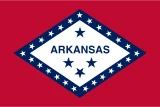 Arkansas
 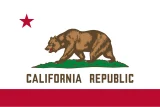 California
 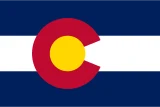 Colorado
 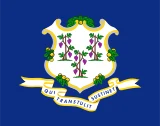 Connecticut
 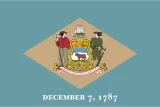 Delaware
 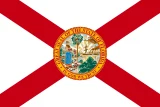 Florida
 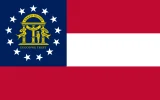 Georgia
 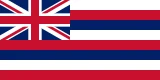 Hawaii
 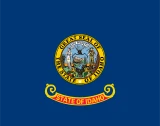 Idaho
Idaho 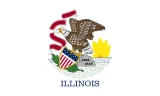 Illinois
 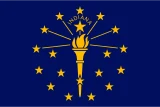 Indiana
 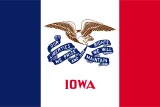 Iowa
Iowa 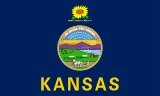 Kansas
  Kentucky
 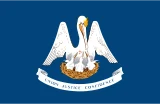 Louisiana
 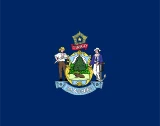 Maine
Maine 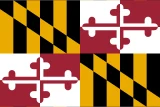 Maryland
  Massachusetts
 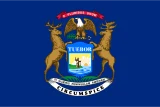 Michigan
  Minnesota
 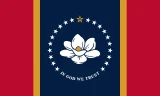 Mississippi
 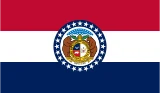 Missouri
 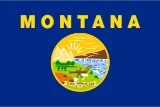 Montana
 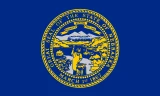 Nebraska
 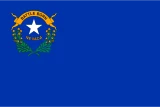 Nevada
 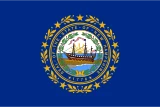 New Hampshire
  New Jersey
 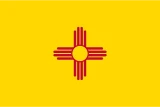 New Mexico
 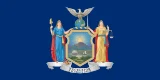 New York
 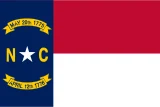 North Carolina
 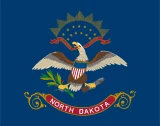 North Dakota
  Ohio
Ohio 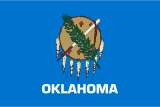 Oklahoma
 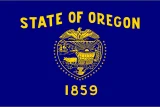 Oregon
 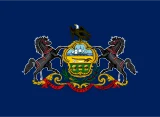 Pennsylvania
  Rhode Island
  South Carolina
 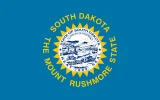 South Dakota
 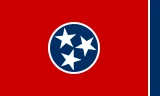 Tennessee
 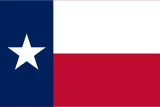 Texas
Texas  Utah
Utah 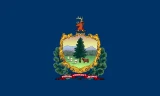 Vermont
 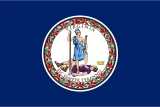 Virginia
 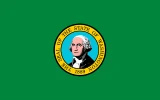 Washington
 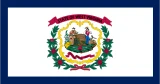 West Virginia
  Wisconsin
 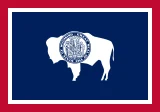 Wyoming
 Why do so many state flags look alike?
Flag designers have a nickname for the most common design: the seal on a bedsheet. Over 20 states place their state seal on a solid blue or other single-color field, which makes them hard to tell apart from a distance. Most were adopted in the late 1800s and early 1900s, often when states needed a banner for military units or an exhibition and reused the seal they already had.
Flag experts argue that a good flag should be simple enough for a child to draw from memory, use few colors, avoid lettering, and be distinctive. By that standard, designs such as New Mexico's red Zia sun on yellow, Maryland's heraldic pattern, Colorado's C and Alaska's Big Dipper are praised. Ohio is the only state whose flag is not a rectangle, as it has a swallowtail with a blue triangle and stars.
Recent redesigns: Mississippi, Utah and Minnesota
Mississippi retired its flag in 2020 after a long debate over its design. Voters picked a replacement that year: a white magnolia ringed by stars on a field of red, blue and gold, with the words In God We Trust.
Utah adopted a new flag in 2024 built around the beehive, the state symbol of industry, replacing its seal on a blue field. Minnesota also adopted a new design in 2024, replacing a seal-based flag first used in 1957 and criticized for its imagery of a settler and a Native American horseman. The new flag has a dark blue shape of the state and an eight-pointed star. These changes follow a wider push among flag designers and voters for simpler, more recognizable state flags, and other states have discussed redesigns too. Each state page shows the current design and its history.
Looking for a quiz? Try the US state flags quiz, or compare with the national flag of the United States, which has used 50 stars since 1960.
Frequently asked questions
What is the only flag that can fly above the US flag?
The Navy church pennant, flown above the national flag during religious services on a Navy ship. The US flag has no higher national flag.
Why is Minnesota changing its state flag?
A state commission chose a new flag in December 2023 and it took effect in May 2024. It replaced the 1957 flag, which was criticized for its imagery and its busy seal, with the shape of the state and a North Star.
What is special about the North Carolina state flag?
It shows two dates on the flag: May 20, 1775, for the Mecklenburg Declaration, and April 12, 1776, for the Halifax Resolves.
Will there be a new American flag in 2026?
No change is planned. The 50-star US flag has been in use since 1960, and a new version would be needed only if a state joined the union.