Flag of Ecuador
The Ecuador flag has a yellow stripe twice as wide as its blue and red stripes, with the national coat of arms in the center. At the top of the emblem is an Andean condor, with Mount Chimborazo and a steamship below it.
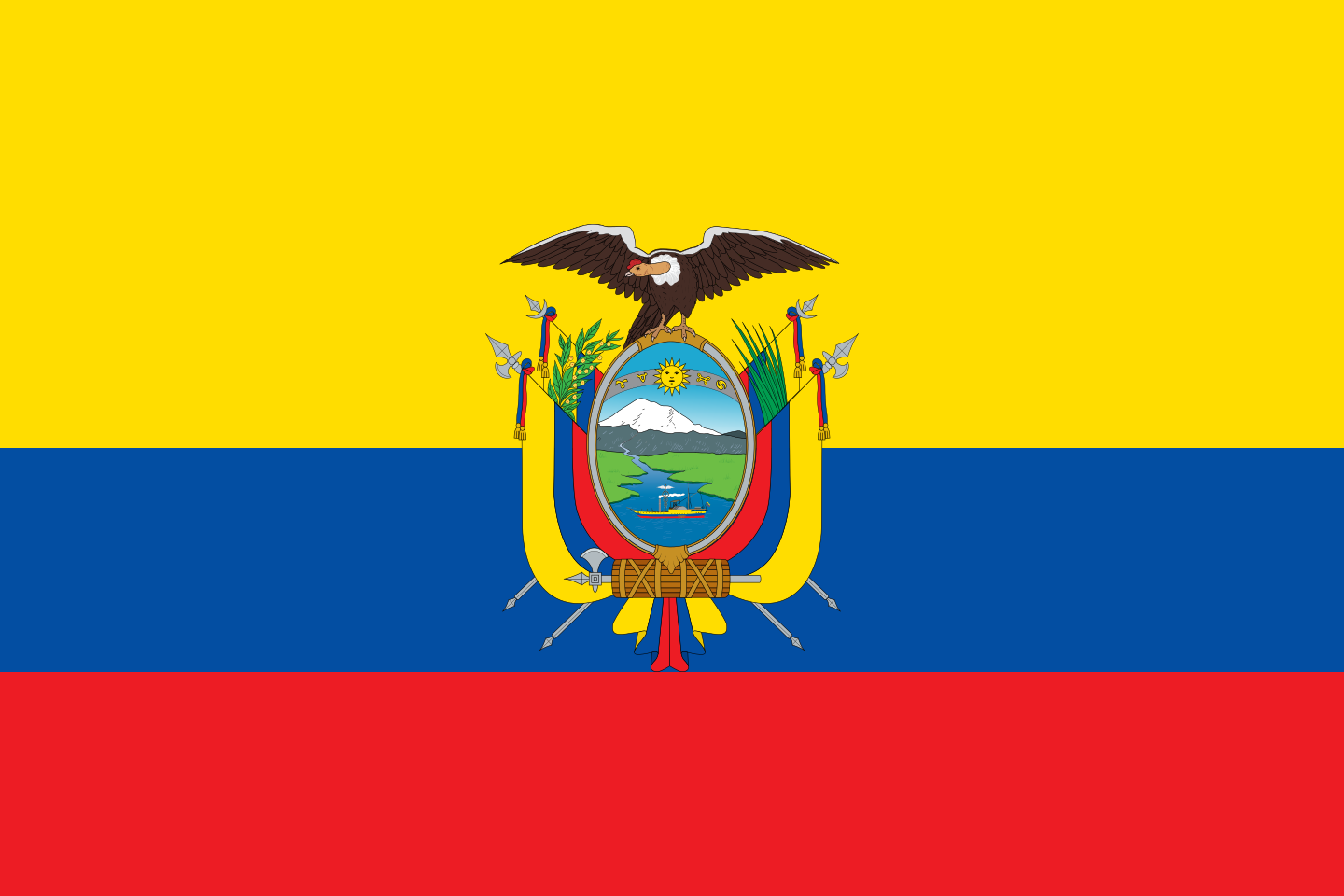
What the flag of Ecuador looks like
The Ecuadorian flag has three horizontal bands: yellow on top, taking up half of the height, then blue and red, each taking a quarter. The ratio of the flag is 2:3. The coat of arms is placed in the center, over the yellow and the blue stripes. This is the state flag, flown by government and military. The version for public use, the civil flag, is the same without the coat of arms.
The coat of arms is an oval shield with a landscape. An Andean condor spreads its wings above the shield. Inside, Mount Chimborazo, the country's highest volcano, rises over the Guayas River, and a steamship with a mast shaped like a caduceus sails on the river. Over the scene, the sun is surrounded by part of the zodiac, with the signs Aries, Taurus, Gemini and Cancer. Around the shield are national flags, a bundle of fasces (rods tied with an axe), and branches of laurel and palm.
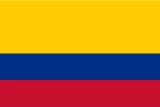
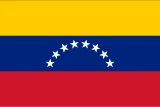
The flag of Ecuador is closely related to the flags of Colombia and Venezuela. A simplified Ecuador flag emoji shows the three stripes alone.
Ecuador flag colors
Color codes measured from the official design. Use HEX for the web and CMYK for print.
HEX
#FFDD00RGB
255, 221, 0CMYK
0, 13, 100, 0 HEX
#ED1C24RGB
237, 28, 36CMYK
0, 88, 85, 7 HEX
#034EA2RGB
3, 78, 162CMYK
98, 52, 0, 36 Ecuador flag meaning and symbolism
The colors are traditionally explained as follows: yellow for the sun, the country's agricultural riches and its fertile land; blue for the sky and the ocean; and red for the blood spilled by those who fought for independence. An older interpretation links the colors to Francisco de Miranda's tricolor, where yellow is America, blue is the sea and red is Spain.
In the coat of arms, the condor stands for the strength, courage and greatness of the nation, as well as for the Andes. Chimborazo is a natural symbol of the country, and the Guayas River stands for the coastal region. The steamship Guayas was the first ship of its kind built in Ecuador, in Guayaquil in 1841, and represents trade and navigation. The sun and the four zodiac signs recall the months from March to June 1845, the time of the Marcist Revolution. The fasces symbolize the republic and the authority of the law, and the laurel and palm mean glory and peace.
History of the Ecuadorian flag
Ecuador's colors come from Gran Colombia, the union of Venezuela, Colombia, Ecuador and Panama founded after independence from Spain. Its flag was a yellow, blue and red tricolor. Ecuador left the union and became a separate republic in 1830, and at first it kept the Gran Colombia flag. The 1845 Marcist Revolution replaced it with a different banner in light blue and white, which was used for about fifteen years.
The yellow, blue and red tricolor returned on 26 September 1860, under the presidency of Gabriel García Moreno, by decree of the national congress. The date is now observed as Flag Day in Ecuador. The tricolor has been the flag since then, though the details of the coat of arms were revised, and the arms were fixed in a law of 1900. This also gives the flag its present form with the double-width yellow band.
Ecuador flag vs Colombia and Venezuela
Ecuador, Colombia and Venezuela all fly yellow, blue and red, and the three flags are often confused. In Ecuador's and Colombia's flags the yellow band is twice the height of the others. The flags of Colombia and Ecuador are almost the same, and the main difference is the coat of arms. In the state flag of Ecuador it is large and detailed, while Colombia's has none. Venezuela's flag has three stripes of equal size and an arc of white stars on the blue band.
Ecuador flag facts
| Country | Ecuador |
|---|---|
| Flag adopted | November 26, 1900 |
| Proportions | 2:3 |
| Colors | #FFDD00, #ED1C24, #034EA2 |
| Symbols | coat of arms of Ecuador, field |
| Flag emoji | 🇪🇨 |
| Country code | EC, ECU (ISO 3166) |
| Capital | Quito |
| Continent | South America |
| Population | 16,938,986 |
| Area | 257,204 km² |
| Currency | United States dollar |
| National anthem | Salve, Oh Patria |
Ecuador flag: frequently asked questions
What is the bird on the Ecuador flag?
It is an Andean condor, one of the largest flying birds in the world. It is the national bird of Ecuador, and stands for strength, courage and power.
Why is Ecuador's flag similar to Colombia's?
Colombia, Ecuador and Venezuela were part of Gran Colombia in the early 19th century. Each country kept the yellow, blue and red colors of that union's flag after leaving it.
Does Ecuador have a weapon in its flag?
The coat of arms includes a bundle of fasces, which is a bundle of rods with an axe and a symbol of authority and law, and flags. It is a symbolic emblem, not a weapon in use.
What did Ecuador used to be called?
Before independence the area was the Royal Audience of Quito, and later the Quito Department of Gran Colombia. The name Ecuador, from the equator that crosses the country, became the name of the republic in 1830.
What do the colors of the Ecuador flag mean?
Yellow is for the sun and the country's crops and wealth, blue for the sky and sea, and red for the blood of independence fighters.
When did Ecuador adopt its current flag?
The yellow, blue and red flag was officially restored on 26 September 1860. The coat of arms in its present form dates from the 20th century.