Flag of England
The England flag is a red cross on a white field, known as the St George's Cross. It is one of the oldest national flags still in use, linked to English ships since the Middle Ages, and it forms the red cross inside the Union Flag.
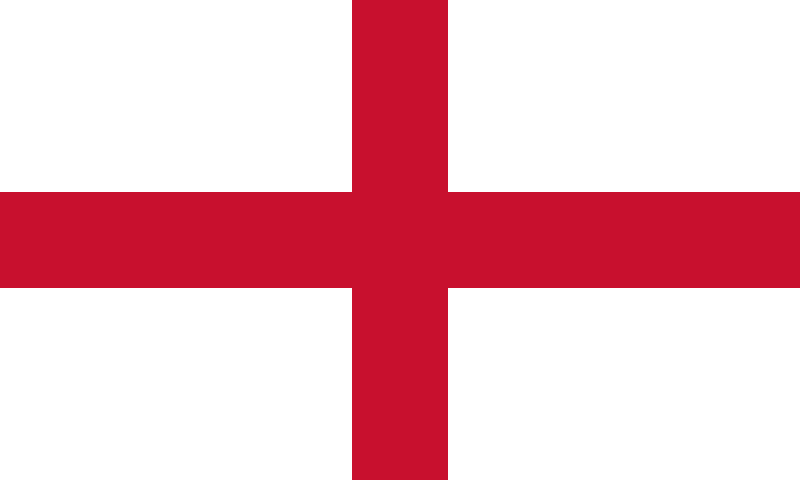
What the flag of England looks like
The flag of England is a plain white rectangle crossed by a red upright cross. The arms of the cross reach all four edges, divide the flag into four equal white rectangles and meet at the center. The usual proportions are 3:5, though flags are often sold in other sizes, and the shades are simply a bright red and white with no other symbols.
This design is called the St George's Cross, or the cross of St George. Because it is so simple, it is easy to confuse with other flags that use the same pattern, such as the flag of the Italian city of Genoa. It is also different from the flag of the United Kingdom, which is red, white and blue and has a more complex design. The England flag stands for England only, not for the whole of Great Britain.
The same cross appears on the England flag emoji, which is a sequence of tag characters rather than a separate country code, and in the flags of many English towns, counties, universities and churches.
England flag colors
Color codes measured from the official design. Use HEX for the web and CMYK for print.
HEX
#FFFFFFRGB
255, 255, 255CMYK
0, 0, 0, 0 HEX
#C8102ERGB
200, 16, 46CMYK
0, 92, 77, 22 England flag meaning and symbolism
The England flag is derived from St George's Cross, and its meaning is tied to Saint George, the patron saint of England. George is traditionally described as a Roman soldier from Cappadocia who was executed for his Christian faith around the year 303. His legend of killing a dragon grew in popularity during the Crusades, and by the later Middle Ages he was seen as a model of chivalry and Christian courage.
The red cross on white is not given a formal symbolic code like some modern flags. It is often said that the red stands for the blood of martyrs and sacrifice, and the white for purity and peace. The cross itself is a Christian symbol, and a red cross on white was widely used by crusaders from across western Europe, not only from England.
Today the flag has a mixed meaning. It is a sign of English national identity, of St George's Day on 23 April, and of English club and national sports teams. In the Union Flag, the red St George's Cross on white is the part that represents England.
History of the England flag
The red cross on white became linked to England during the 13th century, and by the reign of Edward I (1272-1307) it was worn by English soldiers. A popular but poorly documented story says that in the 1190s the English king agreed to pay the city of Genoa so that English merchant ships in the Mediterranean could fly the Genoese flag, which was the same red cross, for protection from pirates. By the 14th century it was widely used as a sign of the English soldier, with Edward III making St George a patron of his chivalric order, the Order of the Garter, in the 1340s.
In 1606, after the crowns of England and Scotland were joined under James I, the cross of St George was combined with Scotland's St Andrew's Cross on a new flag for ships. This became the Union Flag. St Patrick's Cross was added in 1801 after the union with Ireland. From then on, the plain St George's Cross was used mostly by the Royal Navy, as the flag of an admiral, and in towns and churches, and for a long time it was seldom seen as a national flag on its own.
That changed in the late 20th century. English football supporters began to carry the flag in large numbers during Euro 96, which was hosted in England, and it later became a normal sight at international matches and on St George's Day. Devolution in the UK, which gave Scotland and Wales their own parliaments and assemblies in 1999, also encouraged more people in England to treat it as their own flag. In England most flags can now be flown without special permission, so it can be seen on houses and public buildings.
England flag vs UK flag
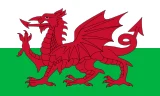
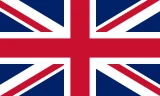
People often ask whether the English flag and the UK flag are the same. They are not. The Union Flag, often called the Union Jack, is the national flag of the United Kingdom, which is made up of England, Scotland, Wales and Northern Ireland. The England flag is a separate flag for one of those nations. Scotland uses a white diagonal cross on blue, and Wales uses its red dragon. The Union Flag includes the crosses of St George, St Andrew and St Patrick, but not a symbol of Wales, since Wales was already part of England when the first Union Flag was created.
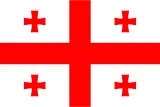
Britain is the island that holds England, Scotland and Wales, so there is no separate flag of Britain. The St George's Cross is also part of the City of London flag, which adds a red sword in the upper hoist corner. A different flag, with a cross and four small crosses, is used by the country of Georgia. See also all flags of the world.
England flag facts
| Country | England |
|---|---|
| Flag adopted | 1277 |
| Proportions | 3:5 |
| Colors | #FFFFFF, #C8102E |
| Symbols | cross, field |
| Flag emoji | 🏴 |
| Country code | GB-ENG (ISO 3166) |
| Capital | London |
| Continent | Europe |
| Population | 57,106,398 |
| Area | 130,278 km² |
| Currency | pound sterling |
| National anthem | God Save the King |
England flag: frequently asked questions
What is the correct flag for England?
The England flag is the St George's Cross, a red cross on a white field. It is widely accepted as the flag of England, though the Union Flag is the national flag of the whole United Kingdom.
Are England and UK flag the same?
No. The UK uses the Union Flag, a red, white and blue design that combines the crosses of St George, St Andrew and St Patrick. The England flag is a plain red cross on white and represents England only.
Why do England and Britain have two different flags?
England has its own flag because it is a nation within the UK, just like Scotland and Wales. The Union Flag was created in 1606 to represent the union of the crowns of England and Scotland, and the St George's Cross remained England's own flag.
Are you allowed to fly the St George flag?
Yes. In England the St George's Cross can generally be flown on private property and from most buildings without special permission. Rules may apply to listed buildings, flagpoles of unusual height and some public sites.
Why are people putting up England flags?
The most common reasons are major football and rugby tournaments, St George's Day on 23 April and local events.
What are the two British flags called?
The two flags usually meant are the Union Flag (often called the Union Jack), the flag of the United Kingdom, and the St George's Cross, the flag of England.