Flag of Slovenia
The Slovenia flag is a horizontal tricolor of white, blue and red with the national coat of arms in the upper hoist corner: a blue shield showing Mount Triglav, wavy lines for water and three gold stars. It was officially adopted in June 1991, when Slovenia became independent.
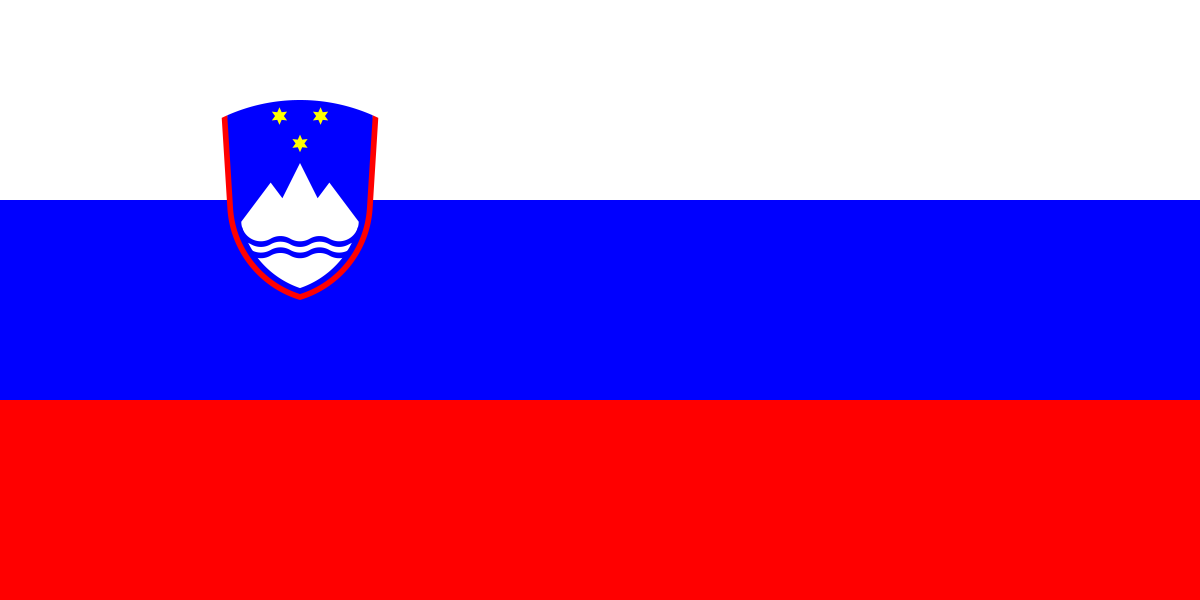
What the flag of Slovenia looks like
The flag of Slovenia has three horizontal bands of equal height: white at the top, blue in the middle and red at the bottom. The proportions are 1:2, so the flag is twice as wide as it is tall.
The coat of arms is placed on the hoist side and overlaps the white and blue bands. It is a shield with a red border, and it contains a white three-peaked mountain on a blue background. The mountain is Triglav, the highest peak in Slovenia and in the Julian Alps. Beneath it are two wavy lines for the rivers and the Adriatic Sea. Above the mountain, three six-pointed golden-yellow stars form a downward-pointing triangle. The flag is also available as the Slovenia flag emoji 🇸🇮.
Slovenia flag colors
Color codes measured from the official design. Use HEX for the web and CMYK for print.
HEX
#FF0000RGB
255, 0, 0CMYK
0, 100, 100, 0 HEX
#0000FFRGB
0, 0, 255CMYK
100, 100, 0, 0 HEX
#FFFFFFRGB
255, 255, 255CMYK
0, 0, 0, 0 Slovenia flag meaning and symbolism
White, blue and red are generally considered Pan-Slavic colors, but in fact they come from the medieval coat of arms of the Duchy of Carniola, the core region of what is now Slovenia. The Slovene tricolor was first raised on 7 April 1848 in Ljubljana by a group of students led by the poet Lovro Toman, and Austria later recognized it as the flag of Carniola.
The coat of arms shows the country's geography. Triglav is the highest peak in Slovenia and a national symbol. The wavy lines stand for the rivers and the Adriatic coast. The three stars come from the arms of the Counts of Celje, a medieval noble family that ruled much of the area in the 14th and 15th centuries.
History of the Slovenia flag
The white, blue and red tricolor first appeared as a Slovene national flag in 1848, during the revolutions in the Austrian Empire, when Slovenes asked for the unification of their lands within the empire. The Slovene lands were part of the Habsburg monarchy until 1918. After that they became part of the Kingdom of Serbs, Croats and Slovenes, renamed Yugoslavia in 1929.
After the Second World War, Slovenia became one of the republics of socialist Yugoslavia. Its flag was the same white, blue and red tricolor, with a red star placed on it in 1945.
Slovenia declared independence from Yugoslavia on 25 June 1991. The star was removed and the new coat of arms, designed by Marko Pogačnik, was added. The flag was officially adopted on 27 June 1991. A short war followed with the Yugoslav army, and independence was recognized abroad in early 1992. Slovenia joined the European Union in 2004. The flag has stayed the same since 1991.
Slovenia flag vs Slovakia and Russia
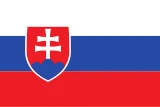
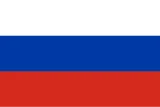
The flag is easy to confuse with those of Slovakia and Russia, since all three use the white, blue and red bands in the same order:
- Russia: plain bands with no emblem, in the ratio 2:3.
- Slovakia: a large coat of arms with a white double cross on three hills, set toward the hoist and spanning all three bands. The ratio is 2:3.
- Slovenia: a smaller shield with Triglav and three stars, in the upper corner, on a flag that is 1:2.
The shared colors are usually described as Pan-Slavic, and the flags are separate designs. Compare more designs on the flags of Europe page.
Slovenia flag facts
| Country | Slovenia |
|---|---|
| Flag adopted | June 27, 1991 |
| Proportions | 1:2 |
| Colors | #FF0000, #0000FF, #FFFFFF |
| Symbols | Coat of arms of Slovenia |
| Flag emoji | 🇸🇮 |
| Country code | SI, SVN (ISO 3166) |
| Capital | Ljubljana |
| Continent | Europe |
| Population | 2,066,880 |
| Area | 20,271 km² |
| National anthem | Zdravljica |
Slovenia flag: frequently asked questions
What is the difference between the Slovenia and Slovakia flags?
Both are white, blue and red. Slovakia's coat of arms is bigger and shows a white double cross on blue hills, while Slovenia's is smaller, sits higher near the hoist and shows Mount Triglav and three gold stars. Slovenia's flag is also longer, at 1:2.
What do the symbols on the Slovenia flag mean?
The shield shows Mount Triglav, the country's highest peak, with wavy lines for the rivers and sea below it. The three stars come from the arms of the medieval Counts of Celje.
When did Slovenia change its flag?
The flag changed in 1991. As part of Yugoslavia, Slovenia's flag had a red star in the middle. When it became independent, the star was replaced by the current coat of arms.
What country did Slovenia used to belong to?
Slovenia was a republic of Yugoslavia until 1991. Before 1918 it was part of the Austro-Hungarian Empire, ruled by the Habsburgs.
Is Slovenia German or Slavic?
Slovenia is a Slavic country. Slovenes speak a South Slavic language, and the country's name and colors reflect that, although it has historically been close to Austria and Italy.