Flag of Sweden
The Swedish flag is a blue field with a yellow (gold) Nordic cross that reaches the edges and is offset toward the hoist. Its blue and yellow are believed to have been inspired by the Swedish coat of arms, and the cross design dates back to the 16th century.
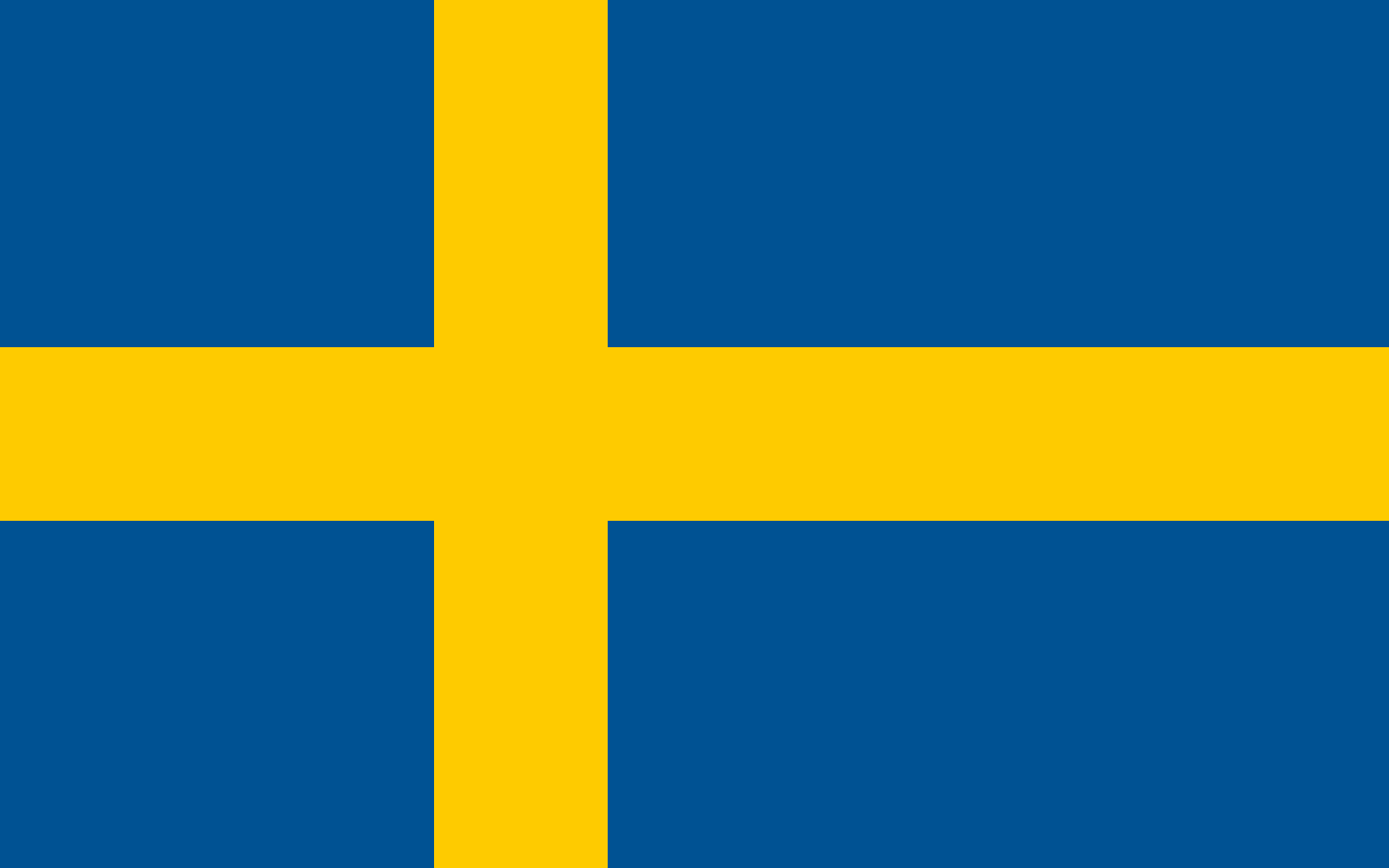
What the flag of Sweden looks like
The flag of Sweden shows a yellow cross on a blue background. The vertical arm of the cross sits closer to the hoist than to the fly, which is the pattern called a Nordic cross (or Scandinavian cross). The arms extend to the edges of the flag.
The proportions of the flag are 5:8, which is a little narrower than the usual 2:3. The standard layout divides the width into sections of 5, 2 and 9 units, and the height into 4, 2 and 4 units, so the arms of the cross are two units wide. The ordinary rectangular flag is used by everyone, while a triple-tailed (swallowtail) version is used as the naval ensign and, with the coat of arms added, as the royal flag.
The Swedish flag is sometimes confused with the flag of Ukraine, which also uses blue and yellow in horizontal stripes, and with the other Nordic flags. You can see the national flag as the Sweden flag emoji, or download it from the download page.
Sweden flag colors
Color codes measured from the official design. Use HEX for the web and CMYK for print.
HEX
#005293RGB
0, 82, 147CMYK
100, 44, 0, 42 HEX
#FECB00RGB
254, 203, 0CMYK
0, 20, 100, 0 Swedish flag colors and meaning
The colors of the Swedish flag are believed to have been inspired by the national coat of arms. Blue and yellow have been Swedish colors since at least the 13th century, and the Three Crowns emblem, three golden crowns on a blue field, has been in use since at least 1336. The colors are known in Swedish as blått and gult, and the 1906 flag law describes them as light medium blue and golden yellow.
There is also a legend that gives the flag a religious origin. According to it, King Eric IX saw a golden cross in the blue sky when he set out on a crusade to Finland in the 1150s, and this gave the flag its look. It is an early modern legend, not a record of what happened.
The cross itself is a Christian symbol, and it traditionally represents Christianity. There are many popular readings for the colors, such as blue for the sea and the sky, and yellow for the sun, but these are not official.
History of the Swedish flag
The exact age of the Swedish cross flag is not known. Cross flags such as the Danish Dannebrog, the red flag with a white Nordic cross, appeared from the 13th century and most likely influenced the Swedish design. The oldest recorded pictures of a blue cloth with a yellow cross date from the early 16th century, during the reign of Gustav I, and a royal warrant of 1562 described the flag as a yellow cross on blue.
For a long time the flag was mainly a royal and military flag, and a royal warrant of 1569 required the yellow cross to be borne on battle standards and banners. During the union with Norway (1814-1905), a union mark combining the Swedish and Norwegian colors was added to the canton of the Swedish and Norwegian merchant flags from 1844. It was nicknamed the "herring salad" (sillsalladen).
Norway left the union in 1905, and the union mark was removed. The union mark was removed from 1 November 1905 under a law of 28 October 1905. The current rules for the flag come from a law of 22 June 1906, which regulated the design and use of the national flag and specified a lighter blue than the darker shade then common. Sweden celebrates its national day on 6 June, and flags are flown on that day and on other official flag days, including the birthdays of members of the royal family.
Sweden's flag and the other Nordic flags
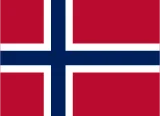
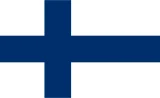
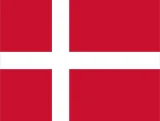
All five Nordic countries use a version of the cross. Denmark has a white cross on red, Norway a blue cross with a white border on red, Finland a blue cross on white, and Iceland a red cross with a white border on blue. Sweden's is the only one with a yellow cross. The Swiss flag is often mentioned in connection with Sweden's, but it is a red square with a short white cross, and it is not a Nordic cross.
Sweden flag facts
| Country | Sweden |
|---|---|
| Flag adopted | June 22, 1906 |
| Proportions | 5:8 |
| Colors | #005293, #FECB00 |
| Symbols | Nordic cross |
| Flag emoji | 🇸🇪 |
| Country code | SE, SWE (ISO 3166) |
| Capital | Stockholm |
| Continent | Europe |
| Population | 10,609,460 |
| Area | 447,425 km² |
| Currency | Swedish krona |
| National anthem | Du gamla, du fria |
Sweden flag: frequently asked questions
Why is Sweden's flag blue and yellow?
The colors are believed to have been inspired by the Swedish coat of arms, which shows three gold crowns on a blue field. Blue and yellow have been Swedish colors since at least 1275.
What is the difference between the Swiss and Swedish flags?
The Swedish flag is blue with a yellow Nordic cross that is off-center, and it is rectangular. The Swiss flag is red with a white cross in the center, and it is square.
Why do Norway and Sweden have similar flags?
Both belong to the Nordic cross family, which is thought to have been influenced by the Danish flag. Norway and Sweden were in a union from 1814 to 1905, but their flags use different colors.
When did Sweden last change its flag?
The union mark with Norway was removed from the flag in 1905, and the flag law of 1906 set the current rules. The design with a yellow cross on blue has been used since the 16th century.
What is a Scandinavian cross?
It is a cross whose vertical bar is moved toward the hoist and whose arms reach the edges of the flag. It is used on the flags of Sweden, Norway, Denmark, Finland and Iceland.