Flag of Denmark
The Denmark flag, called the Dannebrog, is a red field with a white Scandinavian cross that reaches the edges. It is often described as the oldest national flag still in use, and a legend says it fell from the sky in 1219.

What the flag of Denmark looks like
The Danish flag is a plain red rectangle crossed by a white cross. The cross extends to the edges of the flag, and its vertical arm is set closer to the hoist (the side next to the pole) than to the fly, which gives the design the "Scandinavian" or Nordic cross shape. The proportions are 28:37, a little wider than tall.
The construction is simple. The height is divided into three parts, 12:4:12, so the cross is one-seventh of the flag's height wide. The width is divided 12:4:21, and the two red squares at the hoist are therefore the same size, with a longer red rectangle at the fly. The red is a bright shade often called Dannebrog red, and the white is plain.
Denmark has several versions. The ordinary rectangular flag is used by everyone, while the state and military flag, the splitflag, has a swallowtail cut into the fly. A small Denmark flag emoji shows the rectangular version.
Denmark flag colors
Color codes measured from the official design. Use HEX for the web and CMYK for print.
HEX
#C8102ERGB
200, 16, 46CMYK
0, 92, 77, 22 HEX
#FFFFFFRGB
255, 255, 255CMYK
0, 0, 0, 0 Denmark flag meaning and symbolism
The Dannebrog has no official explanation for its colors. The white cross is clearly a Christian symbol, and the red and white are the colors that appear in Danish royal arms of the Middle Ages. Some writers have also suggested that they come from the red and white of the Holy Roman Empire's banner or from the crusader tradition, but no source proves this.
The name itself is usually translated as "Danish cloth" or "Danish banner", from dannebrog, in which brog is an old word for cloth. Danes simply call it Dannebrog, and also use the phrase det danske flag. The flag is deeply tied to national identity and appears at birthdays, Christmas trees and celebrations.
History and legend of the Dannebrog
According to tradition, the flag fell from heaven during the Battle of Lyndanise (near today's Tallinn, Estonia) on 15 June 1219. King Valdemar II was leading a crusade against the Estonians, and the Danes were losing until a red banner with a white cross dropped from the sky. The troops took heart and won. The story is first written down in the 16th century, so it is a legend, and historians do not take it literally. The anniversary is observed as Valdemar's Day (Valdemarsdag), a flag day on 15 June.
The oldest known pictures of a white cross on red as a Danish banner come from the 14th century, in the Gelre Armorial, which shows it as a flag of the Danish king. A cross on a red field was also an emblem of the Danish kings in the later Middle Ages. From then on the Dannebrog was used as the royal and national banner on land and at sea.
For a long time its use was mostly by the crown. In 1748 a decree regulated how merchant ships should fly the Danish flag, and during the 19th century it spread to ordinary people. In the 1850s private individuals were also allowed to fly it on land. Today it is common to see flags on houses, cakes and birthday decorations, and Denmark is one of the few places where flying the flag is also an everyday part of life.
The Dannebrog and the other Nordic flags
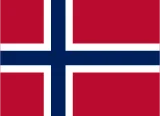
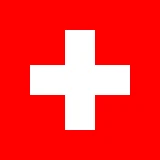
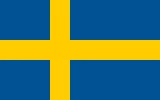
Many European flags look like the Danish flag because they were modelled on it. Sweden, Norway, Finland, Iceland and the Faroe Islands all use an off-center cross, and the Danish design is the first of this kind. Norway's flag, for example, is red with a blue cross that has a white outline: it was created in 1821 while Norway was in union with Sweden, but it shows the influence of the Danish flag, after centuries of the Danish-Norwegian union. The Norwegian flag is red like the Danish one, and Sweden and Finland use a cross in different colors. If you look for the reverse of Denmark's colors, the flag of Switzerland is a white cross on red, but its cross is short and the flag is square.
In the Danish realm, there are also separate flags for the Faroe Islands and Greenland. The Faroese flag is a red-bordered blue cross on white, and Greenland's is white over red with a circle; both are flown alongside the Dannebrog.
Denmark flag facts
| Country | Denmark |
|---|---|
| Flag adopted | 1625 |
| Proportions | 22:29 |
| Colors | #C8102E, #FFFFFF |
| Symbols | field, Nordic cross |
| Flag emoji | 🇩🇰 |
| Country code | DK, DNK (ISO 3166) |
| Capital | Copenhagen |
| Continent | Europe |
| Population | 5,822,863 |
| Area | 42,925 km² |
| Currency | Danish krone |
| National anthem | Der er et yndigt land |
Denmark flag: frequently asked questions
What is Denmark's flag called?
It is called the Dannebrog, which is usually explained as "Danish cloth". Danes also call it simply Dannebrog or det danske flag.
What does the Dannebrog mean?
The white cross is a Christian symbol and red and white are old Danish royal colors. There is no official meaning for each color, and the best-known story is the legend of the flag falling from the sky in 1219.
When did the Dannebrog fall from the sky?
The legend says it fell on 15 June 1219 at the Battle of Lyndanise in Estonia, when King Valdemar II was fighting a crusade. Historians regard it as a legend, as the story was first recorded centuries later.
Why do Norway and Denmark have similar flags?
Norway was in a union with Denmark for more than 400 years, until 1814, and the Danish flag was widely used in Norway. Norway's current flag, from 1821, keeps the cross design but changes the colors.
Is the Dannebrog the oldest flag in the world?
It is often called the oldest national flag in continuous use, since a white cross on red was a Danish banner by the 14th century. Some other flags have very old roots too, so the claim is debated.