Flag of Serbia
The Serbia flag is a horizontal tricolor of red, blue and white. Serbia uses two versions: a plain civil flag and a state flag with the national coat of arms, a white double-headed eagle, placed on the hoist side.
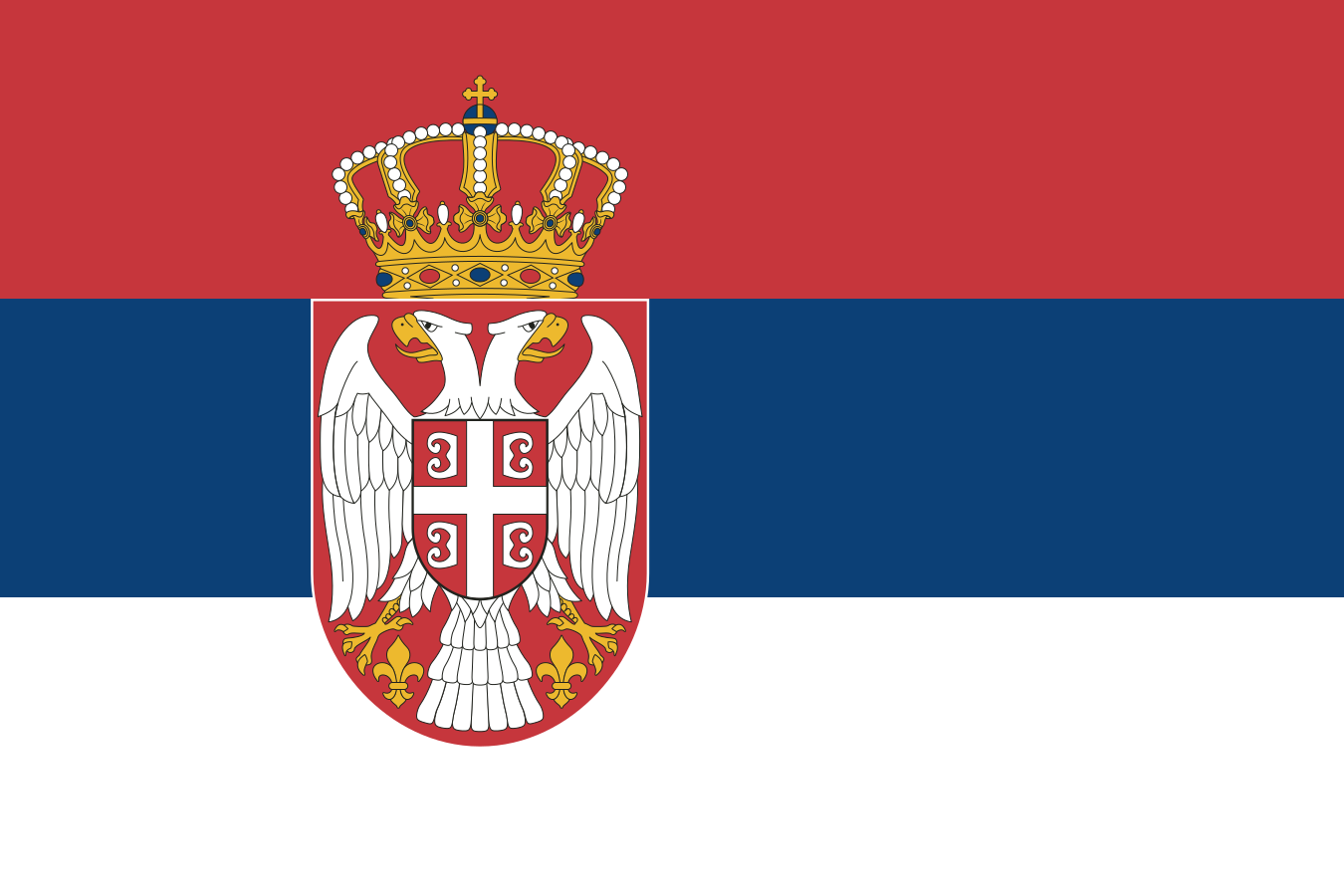
What the flag of Serbia looks like
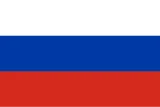
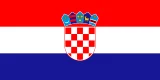
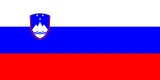
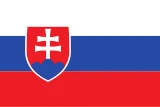
The Serbian flag has three horizontal stripes of equal height: red at the top, blue in the middle and white at the bottom. The ratio of the flag is 2:3. The colors are shared with Russia, Slovakia, Slovenia and Croatia, but each of those flags has a different order or arrangement.
There are two official versions. The civil flag is the plain tricolor. The state flag, used on government buildings, has the lesser coat of arms of Serbia placed toward the hoist, overlapping the red and blue stripes. That is the reason why people ask why Serbia has two flags: they are two versions of the same flag, which differ in use.
The coat of arms is a white double-headed eagle with a gold crown, holding a red shield on its chest. The shield shows a white cross with a firesteel (a stylized letter C) in each quarter. The Serbia flag emoji shows the plain tricolor.
Serbia flag colors
Color codes measured from the official design. Use HEX for the web and CMYK for print.
HEX
#FFFFFFRGB
255, 255, 255CMYK
0, 0, 0, 0 HEX
#C6363CRGB
198, 54, 60CMYK
0, 73, 70, 22 HEX
#0C4076RGB
12, 64, 118CMYK
90, 46, 0, 54 Serbia flag meaning and symbolism
The red, blue and white are often called the Pan-Slavic colors, since they are shared by many Slavic nations. In Serbia, red is traditionally linked to the blood shed in the struggle for freedom and to courage, blue to the sky and to the country's hopes, and white to purity and faith. These readings are popular but not officially defined.
The double-headed eagle comes from the Byzantine Empire and the medieval Nemanjić dynasty, which ruled Serbia. The Serbian cross with four firesteels is often connected to the saying Samo sloga Srbina spasava, "only unity saves the Serbs", where the four letters C stand for the four words that begin with the Cyrillic letter C. The historians who study heraldry usually see the firesteels as older and with a different origin, so the motto is a later popular reading.
History of the Serbian flag
The first Serbian uprising against the Ottoman Empire began in 1804, and banners from the period used a variety of colors and symbols. The red, blue and white tricolor became the flag of the autonomous Principality of Serbia in the 19th century. When the principality was raised to a kingdom in 1882, the tricolor with the coat of arms was its state flag. That is the Kingdom of Serbia flag people look for in connection with the First World War, when Serbia fought on the side of the Allies after Austria-Hungary declared war in 1914.
In 1918 Serbia joined the new Kingdom of Serbs, Croats and Slovenes, later called Yugoslavia, whose flag was a blue, white and red tricolor. After the Second World War, the Socialist Republic of Serbia within Yugoslavia flew a red-blue-white tricolor with a red five-pointed star in the center of the blue stripe. In 1992 Serbia and Montenegro formed the Federal Republic of Yugoslavia, whose flag had the stripes blue, white and red. Serbia kept its own tricolor as a republic within it.
The star was dropped as communist rule ended around 1990. The tricolor with the coat of arms was confirmed again in 2004, and Serbia became fully independent in 2006 after Montenegro left the state union. The use of the flag, coat of arms and anthem is now regulated by law. The anthem is Bože pravde, "God of Justice".
Flags that look like the Serbian flag
The flag of Russia has the same three colors in horizontal stripes, but in the order white, blue, red, which is the Serbian order reversed. The flag of Croatia has red, white and blue with a checkered shield. Look for other flags in the region on the flags of Europe page.
Serbia flag facts
| Country | Serbia |
|---|---|
| Flag adopted | November 11, 2010 |
| Proportions | 2:3 |
| Colors | #FFFFFF, #C6363C, #0C4076 |
| Symbols | coat of arms of Serbia, field |
| Flag emoji | 🇷🇸 |
| Country code | RS, SRB (ISO 3166) |
| Capital | Belgrade |
| Continent | Europe |
| Population | 6,605,168 |
| Area | 88,499 km² |
| Currency | Serbian dinar |
| National anthem | Bože pravde |
Serbia flag: frequently asked questions
What does the Serbian flag symbolize?
Red is commonly linked to the blood shed for freedom, blue to the sky and white to purity. These are traditional readings, and the colors are also part of the Pan-Slavic palette.
Why does Serbia have two flags?
It has a civil flag, the plain red-blue-white tricolor, and a state flag with the coat of arms on the hoist side. They are two versions of the same flag.
What is the bird on the Serbian flag?
It is a white double-headed eagle, the symbol of the Nemanjić dynasty and the Byzantine tradition. It is shown in the coat of arms, which is on the state flag.
What does the 4 C mean in Serbian?
The four firesteels around the cross are popularly read as four Cyrillic letters C, for the motto "Samo sloga Srbina spasava" (only unity saves the Serbs).
Was Serbia a country in WW1?
Yes. The Kingdom of Serbia, with its own tricolor flag, was an independent state at the start of the war in 1914 and fought as one of the Allied powers.