Flag of Kosovo
The Kosovo flag is a blue field with a gold silhouette of the country's territory in the center and six white five-pointed stars in an arc above it. It was adopted on 17 February 2008, the day Kosovo declared independence.
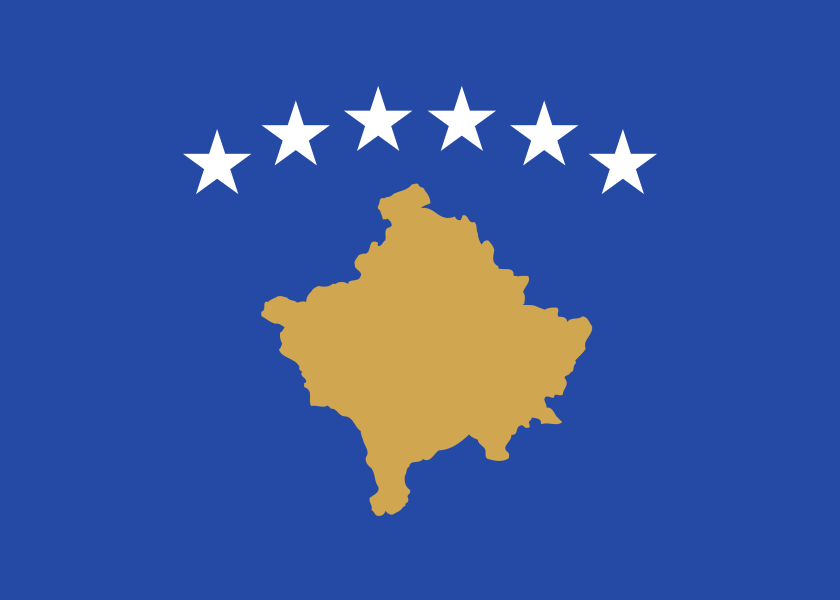
What the flag of Kosovo looks like
The flag of Kosovo is a dark blue rectangle with a width-to-height ratio of 5:7 (set by a 2009 protocol law), which is squarer than most national flags. A golden map of Kosovo's territory is placed in the center. Above it, six white five-pointed stars are set evenly along a gentle arc that bends over the map.
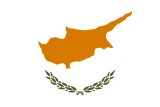
The use of a map is unusual. Maps are rare on national flags, and the flag of Cyprus is the only other national flag to use one. The design has no eagles, crosses or other emblems that could be tied to one community, which was a deliberate choice. You can see it in small form at the Kosovo flag emoji page.
Kosovo flag colors
Color codes measured from the official design. Use HEX for the web and CMYK for print.
HEX
#244AA5RGB
36, 74, 165CMYK
78, 55, 0, 35 HEX
#D0A650RGB
208, 166, 80CMYK
0, 20, 62, 18 Kosovo flag meaning and symbolism
The six stars are officially meant to symbolize the six main ethnic groups of Kosovo: Albanians, Serbs, Bosniaks, Turks, Roma and Gorani. The flag does not name the groups, and the aim of the design was that it would belong to all of the country's people.
The gold map shows the shape of the state and its territory. The blue background and white stars are sometimes compared to the flag of the European Union, but this is an interpretation rather than an official meaning, and the colors and construction of the flag are not defined in law.
History of the Kosovo flag
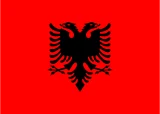
Kosovo was a province of Serbia within Yugoslavia, and later of Serbia and Montenegro. After the war of 1998-99, the United Nations took over the administration of the province in 1999 under UNMIK, and the UN flag was used officially in this period. Many Kosovo Albanians flew the red and black Albanian flag, and Kosovo Serbs used the Serbian flag.
As talks on the final status of Kosovo moved toward independence, a competition was held in 2007 for a new national flag. The rules stated that the design could not use symbols or colors linked to any one ethnic group, such as the red and black of the Albanian flag or the colors of the Serbian one. The competition drew 993 entries. The winning design was by Muhamer Ibrahimi, based on one of three proposals sent to the Assembly of Kosovo, and the Assembly approved a variant of it on 17 February 2008, the day independence was declared.
Kosovo is recognized as an independent state by around a hundred countries, including the United States and most European Union members. Serbia, which considers it a part of its territory, and some other countries do not recognize it.
Albanian flags in Kosovo
The Albanian flag is often seen in Kosovo, especially on holidays and at sports events. This is because most of the population is ethnic Albanian, and the Albanian flag is a symbol of national and cultural identity rather than a sign of allegiance to the state of Albania. The official state flag of Kosovo is the blue one with the map. Neighboring flags can be compared in the flags of Europe.
Kosovo flag facts
| Country | Kosovo |
|---|---|
| Flag adopted | February 17, 2008 |
| Proportions | 5:7 |
| Colors | #244AA5, #D0A650 |
| Symbols | five-pointed star, map |
| Flag emoji | 🇽🇰 |
| Country code | XK, XKS (ISO 3166) |
| Capital | Pristina |
| Continent | Europe |
| Population | 1,586,659 |
| Area | 10,909 km² |
| National anthem | Europe |
Kosovo flag: frequently asked questions
Why does Kosovo have 6 stars on its flag?
The six stars are said to stand for the six main ethnic groups of the country: Albanians, Serbs, Turks, Gorani, Roma and Bosniaks. They are placed in an arc above the map.
Is Kosovo technically a country?
Kosovo declared independence from Serbia on 17 February 2008 and is recognized as a state by around a hundred countries. Serbia and several others do not recognize it, and it is not a member of the United Nations.
Why are there Albanian flags in Kosovo?
Most of Kosovo's people are ethnic Albanians, and they fly the Albanian flag as a symbol of shared culture and heritage. The flag of the state itself is the blue flag with the gold map.
What country did Kosovo belong to?
Kosovo was part of Serbia, within Yugoslavia and later the union of Serbia and Montenegro. It was under United Nations administration from 1999 until it declared independence in 2008.
Which language is Kosovo speaking?
Albanian and Serbian are the two official languages. Albanian is spoken by the large majority, and Turkish, Bosnian and Romani are also used in some areas.