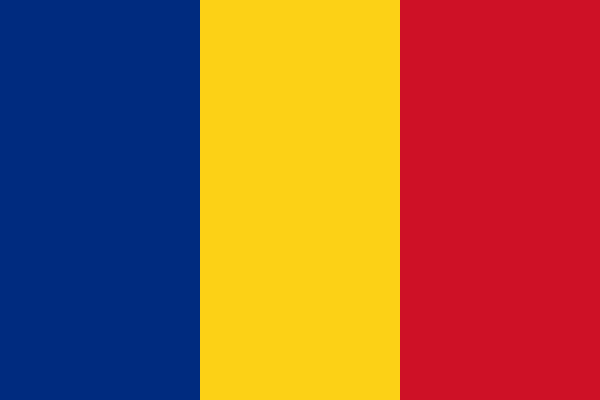
Flag of Romania
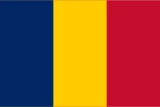
The Romania flag is a vertical tricolor of blue, yellow and red, with blue at the hoist. It is almost identical to the flag of Chad, and both are among the best-known cases of two national flags that look alike.
What the flag of Romania looks like
The Romanian flag has three vertical bands of equal width: blue next to the pole, yellow in the middle and red on the fly side. The proportions are 2:3. The flag has no coat of arms or other emblem in its normal form.
The shades are defined in the law as a cobalt blue, a bright chrome yellow and a vermilion red. The blue is lighter than the very dark indigo of the Chad flag, and the yellow is the brightest of the three colors, which helps to tell them apart on a screen.
Romanian ceremonial flags, such as those carried by the army, have the coat of arms in the center, but the ordinary flag is plain. See the Romania flag emoji to compare the small version.
Romania flag colors
Color codes measured from the official design. Use HEX for the web and CMYK for print.
HEX
#FCD116RGB
252, 209, 22CMYK
0, 17, 91, 1 HEX
#002B7FRGB
0, 43, 127CMYK
100, 66, 0, 50 HEX
#CE1126RGB
206, 17, 38CMYK
0, 92, 82, 19 Romania flag meaning and symbolism
The colors of the Romanian tricolor are usually traced to the banners and heraldry of the historic Romanian lands, Wallachia, Moldavia and Transylvania. They were combined in the nineteenth century as a symbol of the unity of Romanians.
A popular reading is that blue stands for the sky and freedom, yellow for the fields and the wealth of the land, and red for the courage and blood of the people. Another version, taught in schools, says that blue is liberty, yellow is justice and red is fraternity, echoing the slogan of the 1848 revolution (Dreptate, Frăție, "Justice, Brotherhood"). The law does not give an official meaning to the colors.
History of the Romanian flag
The tricolor first appeared as a national symbol during the revolutions of 1848. In Wallachia the revolutionary government adopted a blue, yellow and red flag on 26 June 1848, and the date is now marked as Romania's Flag Day. The revolution failed, but the colors lived on among Romanian nationalists.
After Moldavia and Wallachia united under one prince in 1859 and 1862, the tricolor was used in several forms. In 1866 the Romanian constitution named blue, yellow and red as the colors of the country, and in 1867 the vertical arrangement became the national flag. It was flown by the Kingdom of Romania (1881-1947) with the royal coat of arms on the center band.
The communist regime that took power in 1947 kept the colors and added a new coat of arms, first in 1948 and then in 1965 in a form that showed mountains, an oil derrick and the sun. During the revolution of December 1989, crowds cut the communist arms out of the middle of the flag, and the flag with a hole in the center became a symbol of the end of the Ceaușescu era. The arms were officially dropped, and a 1994 law confirmed the plain tricolor as the national flag. Romania celebrates its Flag Day on 26 June.
Romania flag vs Chad flag
Romania and Chad both use a vertical tricolor of blue, yellow and red with blue at the hoist, and both have a ratio of 2:3. The main difference is the shade: Chad's blue is a darker indigo (often called "midnight blue"), while Romania's is a lighter cobalt. In practice the two flags are very hard to tell apart, and the shades vary between manufacturers.
Romania's tricolor dates from the nineteenth century, and Chad adopted its flag on independence in 1960 (it was introduced in 1959). Chad's colors are explained as blue for the sky and hope, yellow for the sun and desert, and red for unity and sacrifice, and were not copied from Romania. The similarity was raised by the Romanian government in the early 2000s, but neither flag was changed.
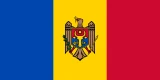
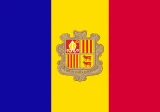
Other flags with the same colors include Moldova, which has the same stripes with a coat of arms showing an eagle in the center, and Andorra, which also has a coat of arms and a different blue. Colombia and Ecuador use the same colors in horizontal stripes. For more comparisons, see the flags of the world.
Romania flag facts
| Country | Romania |
|---|---|
| Flag adopted | December 27, 1989 |
| Proportions | 2:3 |
| Colors | #FCD116, #002B7F, #CE1126 |
| Symbols | field |
| Flag emoji | 🇷🇴 |
| Country code | RO, ROU (ISO 3166) |
| Capital | Bucharest |
| Continent | Europe |
| Population | 19,053,815 |
| Area | 238,397 km² |
| Currency | Romanian leu |
| National anthem | Deșteaptă-te, române! |
Romania flag: frequently asked questions
Why do Chad and Romania have similar flags?
Both flags are blue, yellow and red vertical tricolors. Romania's dates from the 1848 revolution, and Chad's was introduced in 1959 with its own meaning of sky, sun and unity. It is a coincidence rather than a copy.
How to tell Romania and Chad flags apart?
Look at the blue. Chad's is a dark indigo and Romania's is a lighter cobalt blue. Romania's yellow is also a little brighter than Chad's.
Which flag came first, Chad or Romania?
Romania's. Its tricolor dates from 1848, and the vertical form was adopted in 1867. Chad adopted its flag in 1959, shortly before independence in 1960.
What does the Romanian flag mean?
The colors come from the old principalities and are often read as blue for the sky and freedom, yellow for the land and justice, and red for the courage and blood of the people. These meanings are traditional, not official.
What did the Romanian flag look like before 1994?
The colors were the same, but during the communist period the flag had the coat of arms of the socialist republic in the center. It was removed during the revolution of December 1989, and a 1994 law set the plain tricolor as the flag.