Flag of Iceland
The Iceland flag is a blue field with a red Nordic cross that has a white border, with the vertical arm set toward the hoist. Its colors are often said to stand for the country's volcanoes, glaciers and sea.
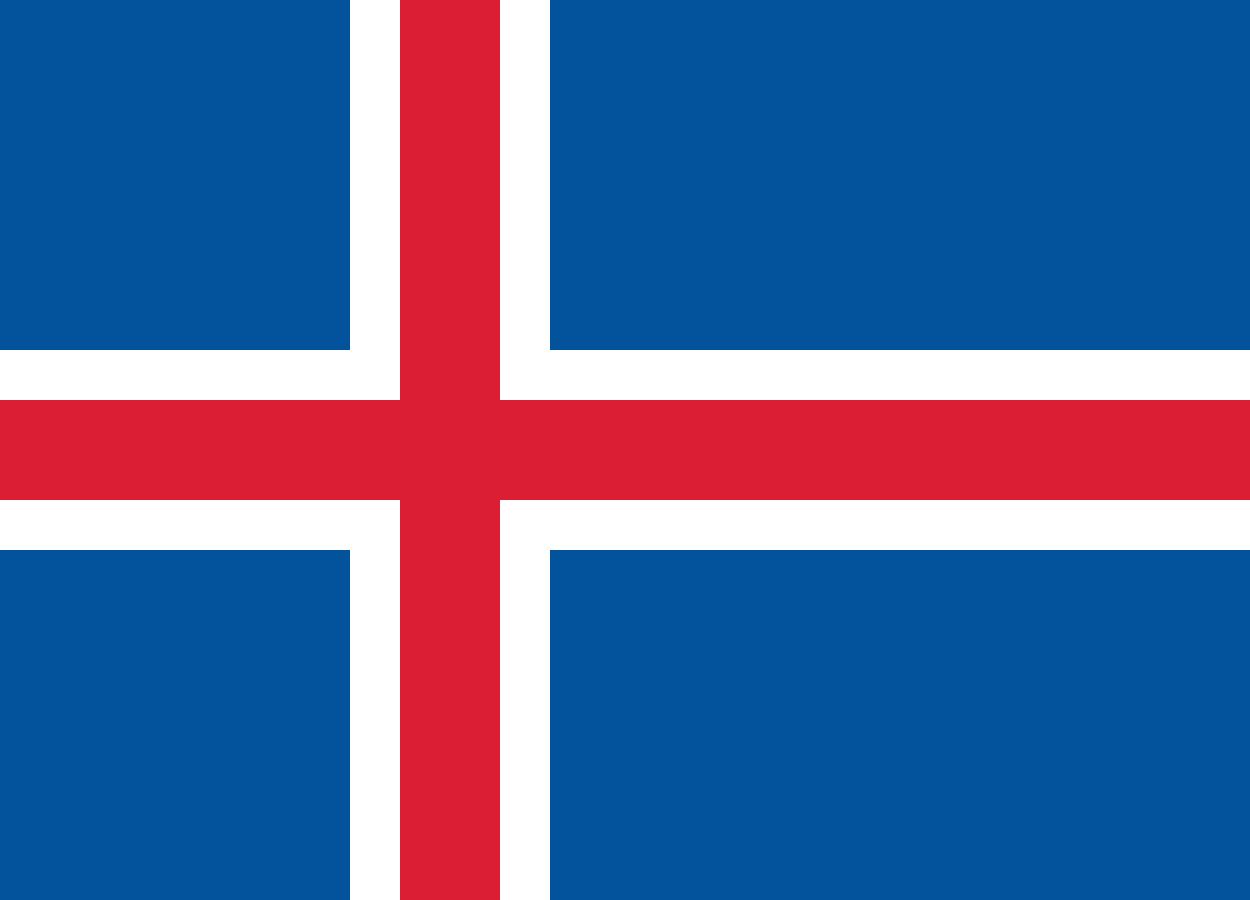
What the flag of Iceland looks like
The Icelandic flag has a deep sky-blue background and a red cross edged in white. The cross extends to all four edges, and its vertical arm sits closer to the hoist (the side next to the pole) than to the fly, as on every Nordic flag. The proportions are 18:25. Each white border is half as wide as the red cross itself.
The national flag has no coat of arms or other emblem. A separate state flag, used by government bodies, has the same design with the Icelandic coat of arms in the center and a swallow-tail cut. That coat of arms shows a shield held by four guardians of the land: a bull, a vulture, a dragon and a giant. The president of Iceland also has his own flag.
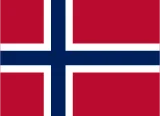
Because the cross design is shared across the region, the flag is often confused with the flags of its neighbors. Norway's flag, for example, is red with a blue cross edged in white, which is the same pattern with the colors swapped. See the Iceland flag emoji for how the design looks at a small size.
Iceland flag colors
Color codes measured from the official design. Use HEX for the web and CMYK for print.
HEX
#02529CRGB
2, 82, 156CMYK
99, 47, 0, 39 HEX
#DC1E35RGB
220, 30, 53CMYK
0, 86, 76, 14 HEX
#FFFFFFRGB
255, 255, 255CMYK
0, 0, 0, 0 Iceland flag meaning and symbolism
The cross is the main symbol. Like the other Nordic flags, it represents Christianity, and the shape comes from the Dannebrog, the flag of Denmark, and the cross is traditionally associated with Christianity across the Nordic countries.
The colors are most often explained by the Icelandic landscape. Blue is said to stand for the mountains and the sea around the island, white for the ice and snow of the glaciers, and red for the fire of its volcanoes. This is a commonly cited interpretation of the colors rather than an official definition. The 1944 flag law describes the shades as sky-blue, snow-white and fiery-red.
History of the Iceland flag
Iceland was under Danish rule and had no flag of its own. From the late 19th century a blue flag with a white Nordic cross was used as an unofficial national symbol, and it was first displayed publicly in 1897.
The current pattern, with a red cross inside the white one on a blue field, dates from 1915. A decree of 19 June 1915 by King Kristján X allowed it to be flown in Icelandic territorial waters, where the Danish flag had previously been required, and added the red cross to tell it apart from similar foreign flags. The flag was adopted as the national flag in 1918, when Iceland was granted sovereignty by Denmark. Iceland became a republic on 17 June 1944, and the flag was defined in law that day (Law No. 34/1944). Official color specifications followed in 1991.
Under the 1991 rules, official flag days include New Year's Day, Good Friday (when the flag is flown at half-mast), Easter, the first day of summer, Pentecost, Icelandic National Day on 17 June, Sovereignty Day on 1 December, Christmas and the president's birthday. The flag may not be flown before 07:00 and should normally be taken down at sunset, and never remain up after midnight.
Iceland flag vs Norway flag and other Nordic flags
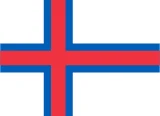
Iceland and Norway use the same three colors in the same pattern, but they are reversed: Iceland has a blue field with a red cross, while Norway has a red field with a blue cross. In both cases the inner cross is white-edged. The Faroe Islands flag also has a red cross edged in blue on white, so it is another close relative. Finland is blue on white, Sweden is yellow on blue, and Denmark is white on red. To see them side by side, browse the flags of the world.
Iceland flag facts
| Country | Iceland |
|---|---|
| Flag adopted | June 17, 1944 |
| Proportions | 18:25 |
| Colors | #02529C, #DC1E35, #FFFFFF |
| Symbols | Nordic cross |
| Flag emoji | 🇮🇸 |
| Country code | IS, ISL (ISO 3166) |
| Capital | Reykjavík |
| Continent | Europe |
| Population | 364,260 |
| Area | 103,004 km² |
| Currency | Icelandic króna |
| National anthem | Lofsöngur |
Iceland flag: frequently asked questions
What does the Icelandic flag symbolize?
The cross stands for Christianity and the Nordic tradition. The colors are often read as red for volcanic fire, white for ice and snow, and blue for the sea and mountains. These are popular interpretations rather than an official definition.
Why did Iceland change its flag?
Iceland had no flag of its own under Danish rule. The current design dates from 1915, and it was adopted as the national flag in 1918 when Denmark granted Iceland sovereignty. When Iceland became a republic in 1944, the flag was defined in law.
What flag has a blue and white cross?
Finland's flag has a blue cross on a white field, and Iceland's has a red cross edged in white on a blue field. The Faroe Islands use a red cross edged in blue on white.
What is the national color of Iceland?
The national flag uses blue, white and red, and the sky blue is the most visible of the three.
Does Iceland have other official flags?
Yes. Iceland has a state flag with the coat of arms and a swallow-tail, a presidential flag, and flags for the coast guard and other state bodies. The ordinary national flag is the plain blue-and-red cross.