Flag of Vatican City
The Vatican flag is a square vertical bicolor of yellow (gold) and white. The white half carries the papal tiara above two crossed keys, one gold and one silver. It has been the flag of Vatican City State since 1929.
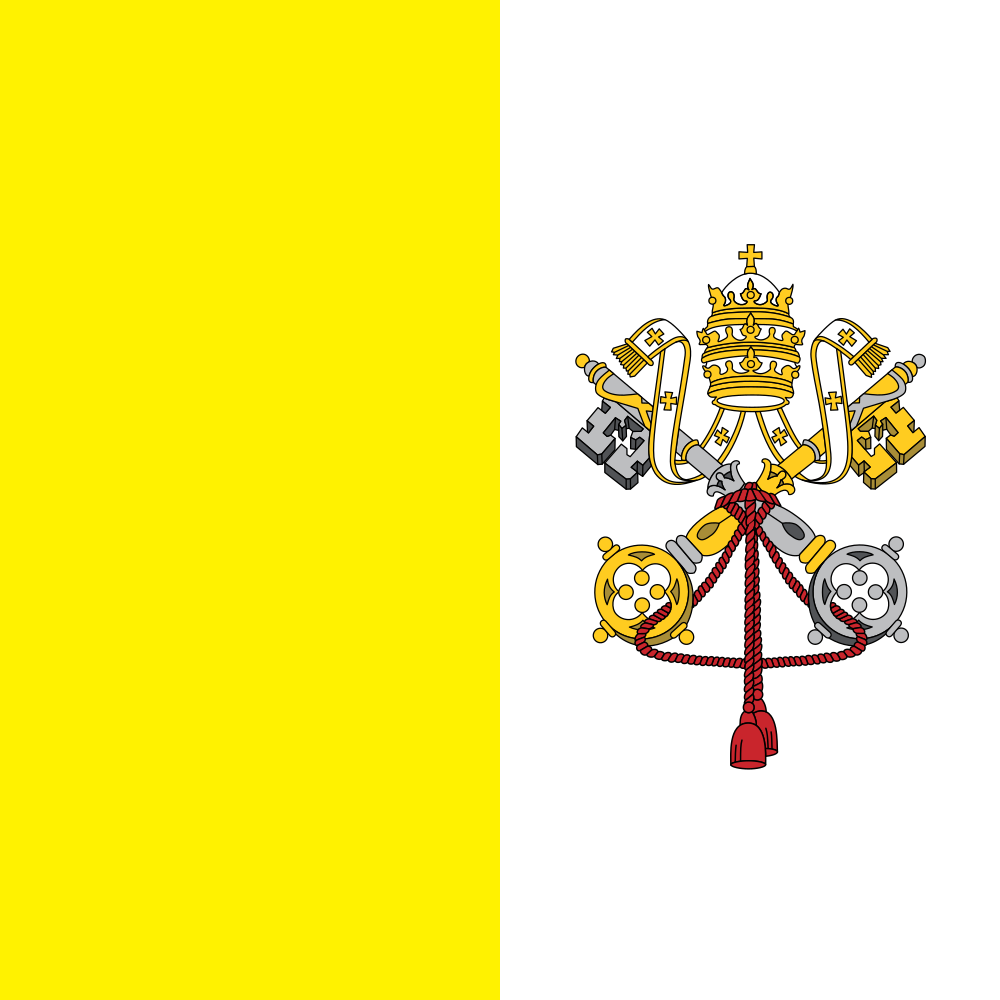
What the flag of Vatican City looks like
The flag of Vatican City is divided into two equal vertical halves: yellow at the hoist and white at the fly. In the white half is the coat of arms of the Holy See, a triple crown (the papal tiara) above two crossed keys. One key is gold and the other silver, and they are tied together with a red cord. The emblem is placed in the center of the white half only.
The flag is a perfect square, with a ratio of 1:1. Only two national flags are square: this one and the flag of Switzerland. It is also the only national flag with a pope's tiara. The Vatican City flag emoji shows the same layout in a small, simplified form. Italy surrounds Vatican City entirely, so it is an enclave inside Rome.
Vatican City flag colors
Color codes measured from the official design. Use HEX for the web and CMYK for print.
HEX
#FFF200RGB
255, 242, 0CMYK
0, 5, 100, 0 HEX
#FFFFFFRGB
255, 255, 255CMYK
0, 0, 0, 0 Vatican flag meaning and symbolism
The two colors come from the keys. Gold and silver (yellow and white on a flag) are the colors of the keys of Saint Peter. They refer to the words of Jesus in the Gospel of Matthew, who gave Peter the keys of the kingdom of heaven and the power to bind and loose. Tradition says the gold key stands for spiritual authority and the silver key for earthly authority, and the cord joins the two.
The tiara, a triple crown, is a long-standing symbol of the pope's office and is sometimes read as the pope's three roles as teacher, priest and ruler. Together, the keys and tiara make up the main symbol of the papacy. The flag is therefore a religious symbol as well as a state flag.
History of the Vatican flag
Yellow and white were the colors of the Papal States, the territories ruled by the popes in central Italy until 1870. They were in use as flag colors by the early 19th century. After the Papal States were taken over by the Kingdom of Italy, the popes had no territory for almost sixty years.
That ended with the Lateran Treaty between the Holy See and Italy in February 1929, which created the independent Vatican City State. The Fundamental Law of the State, issued in June 1929, set out the design of the flag, with the coat of arms in the white half. The date of adoption is 7 June 1929. The flag has not changed since, apart from small differences in how the emblem is drawn.
The Vatican flag is frequently depicted incorrectly, with the keys reversed or the emblem placed wrongly, and this has been a common complaint. The correct version is the one defined in the Vatican's Fundamental Law.
Vatican City flag facts
| Country | Vatican City |
|---|---|
| Flag adopted | June 7, 1929 |
| Proportions | 1:1 |
| Colors | #FFF200, #FFFFFF |
| Symbols | field, papal tiara, Keys of Heaven |
| Flag emoji | 🇻🇦 |
| Country code | VA, VAT (ISO 3166) |
| Capital | Vatican City |
| Continent | Europe |
| Population | 882 |
| Area | 0 km² |
| National anthem | Inno e Marcia Pontificale |
Vatican City flag: frequently asked questions
What does the Vatican flag represent?
The yellow and white are the colors of the gold and silver keys of Saint Peter. The tiara and keys together are the symbol of the papacy.
Why are there two keys on the Vatican flag?
The two keys come from the Gospel of Matthew, where Jesus gives Peter the keys of heaven. The gold key is usually said to stand for spiritual power and the silver one for earthly power.
Why is the Vatican City flag a square?
The flag was defined as a square in 1929, and this was kept. Only Vatican City and Switzerland have square national flags.
Is Vatican City legally a country?
Vatican City is a sovereign city-state, created by the Lateran Treaty of 1929. It is surrounded by Rome and Italy and is the smallest country in the world by area and population.
Do Catholics use the Vatican flag?
The flag is the flag of the state, but it is also sometimes flown by Catholic churches and groups as a sign of respect for the pope. The Catholic Church has no separate international flag.