Flag of Guernsey
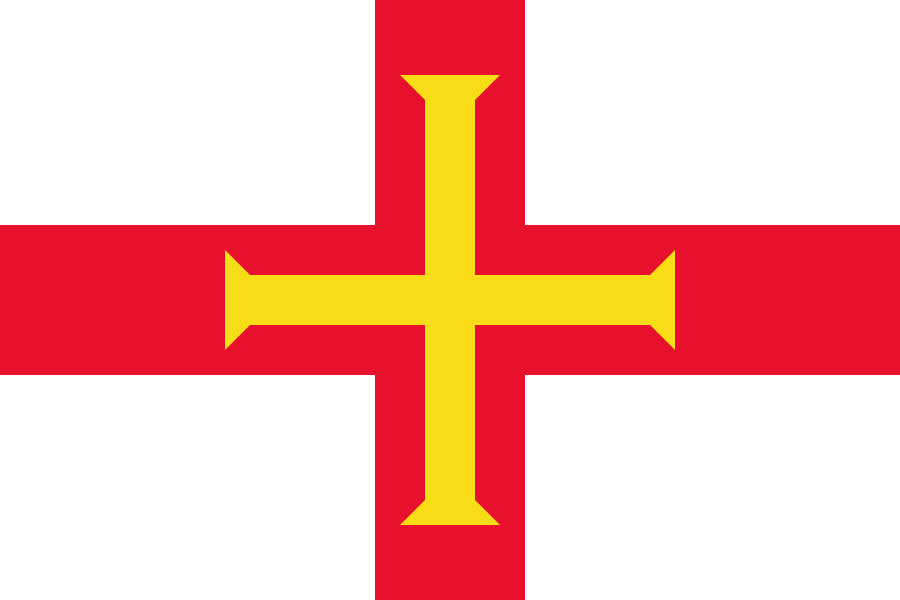
The Guernsey flag is a white field with a red St George's cross that carries a smaller gold cross within it. The flag was adopted in 1985, and its gold cross recalls William the Conqueror, Duke of Normandy.
What the flag of Guernsey looks like
The flag has a white field with a red cross that stretches to all four edges, the cross of St George. A thinner gold (yellow) cross is placed on top of the red one, also running to the edges. The ratio is 2:3.
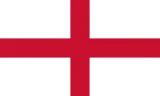
This makes it look like the flag of England with an added gold cross, and the two could easily be confused. The gold cross is what separates the Guernsey flag from England's plain red cross. The Guernsey flag emoji shows the same design.
Guernsey flag colors
Color codes measured from the official design. Use HEX for the web and CMYK for print.
HEX
#FFFFFFRGB
255, 255, 255CMYK
0, 0, 0, 0 HEX
#E8112DRGB
232, 17, 45CMYK
0, 93, 81, 9 HEX
#F9DD16RGB
249, 221, 22CMYK
0, 11, 91, 2 Guernsey flag meaning and symbolism
The red cross of St George links Guernsey to England and the Crown. The gold cross represents William the Bastard, Duke of Normandy, who became William I of England after the Norman Conquest. According to tradition, William was given such a cross as a banner by Pope Alexander II and flew it at the Battle of Hastings; it is shown on the Bayeux Tapestry.
Together the two crosses were meant to show that the islanders are of Norman descent but loyal to the English, and later British, Crown. Today Guernsey is a Crown dependency, not part of the United Kingdom.
History of the Guernsey flag
Before 1985 Guernsey had no flag of its own and used the cross of St George, the flag of England, when a flag was officially required; King Edward VIII consented to this in 1936. German forces occupied the island during the Second World War, and Liberation Day on 9 May marks the end of the occupation in 1945.
The push for a new flag came from confusion at the 1982 Commonwealth Games, where Guernsey competed under England's flag and some competitors thought England had entered two teams. A Flag Investigation Committee led by Deputy Bailiff Sir Graham Dorey designed the flag with the gold cross. It was unveiled on 15 February 1985, and Queen Elizabeth II, as Duke of Normandy, granted a Royal Warrant making it the official flag. It was first flown on Liberation Day, 9 May 1985, the 40th anniversary of the liberation. It is flown from States of Guernsey buildings except on designated flag-flying days, when the Union Jack is used.
The Bailiwick of Guernsey and other flags
Guernsey is a Crown dependency, and the Bailiwick of Guernsey also includes Alderney, Sark and a few smaller islands. Alderney and Sark have their own flags, and the Guernsey flag inspired the flag of Alderney in 1993. The Union Jack is flown instead of the Guernsey flag on designated flag-flying days. A Red Ensign with the gold cross serves as Guernsey's civil ensign. Its neighbor Jersey has a different flag, a white field with a red saltire. See also the flag of the United Kingdom.
Guernsey flag facts
| Country | Bailiwick of Guernsey |
|---|---|
| Flag adopted | 1985 |
| Proportions | 2:3 |
| Colors | #FFFFFF, #E8112D, #F9DD16 |
| Flag emoji | 🇬🇬 |
| Country code | GG, GGY (ISO 3166) |
| Capital | Saint Peter Port |
| Continent | Europe |
| Population | 67,787 |
| Area | 78 km² |
| Currency | pound sterling, Guernsey pound |
| National anthem | God Save the King |
Guernsey flag: frequently asked questions
What does the gold cross on the Guernsey flag mean?
It represents William the Conqueror, Duke of Normandy, and shows that the islanders are of Norman descent while loyal to the Crown. The red cross is St George's cross.
Which country does Guernsey belong to?
Guernsey is a self-governing Crown dependency. It belongs to the British Crown but is not part of the United Kingdom, and the UK handles its defense and international relations.
Is Guernsey still part of the UK?
No. Guernsey is not part of the United Kingdom, though the monarch is its head of state. It has its own government, laws and taxes.
Are Guernsey people British citizens?
Generally yes. People born in Guernsey to a parent with the right connections to the islands or the UK are British citizens, although the islands are not in the UK.
Is Guernsey more British or French?
Culturally it is mostly British today, with English as the main language and the pound as currency. French influence remains in place names, legal terms and the old Norman-French language, Guernésiais.