Flag of Aruba
The Aruba flag is a light blue field with a white-edged red four-pointed star in the upper hoist corner and two narrow yellow stripes across the lower part. It was adopted on 18 March 1976 and has been the flag of Aruba ever since.
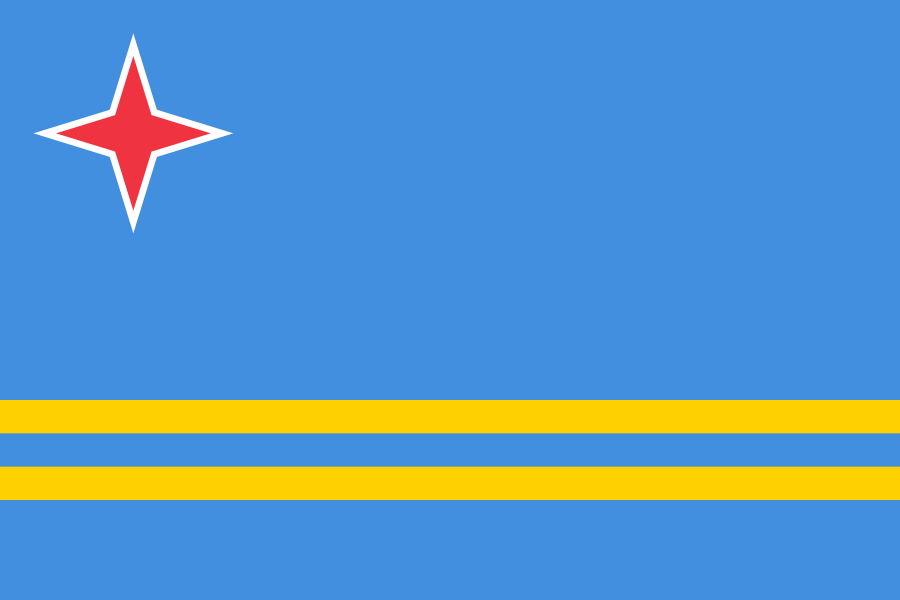
What the flag of Aruba looks like
The flag of Aruba has a plain light blue background, often called Aruba blue. In the upper left corner, near the pole, is a red four-pointed star with a white border. Two narrow horizontal yellow stripes run across the lower part of the flag, below the middle. The proportions are 2:3.
The four-pointed star looks like a compass rose with its points aimed in four directions. Aruba is part of the Kingdom of the Netherlands, but it has its own flag, separate from the Dutch tricolor. You can find the flag on the Aruba flag emoji 🇦🇼.
Aruba flag colors
Color codes measured from the official design. Use HEX for the web and CMYK for print.
HEX
#418FDERGB
65, 143, 222CMYK
71, 36, 0, 13 HEX
#FFD100RGB
255, 209, 0CMYK
0, 18, 100, 0 Aruba flag meaning and symbolism
The flag's elements are commonly explained as follows:
- Light blue stands for the Caribbean Sea and the sky that surround the island, and it also carries the idea of peace and hope.
- The yellow stripes are said to represent the sun and the island's past and present sources of wealth, such as gold and aloe, and later tourism.
- The red star represents the island itself and the blood and soil of its people. It has four points like a compass rose, a reference to the four directions from which the island's people and visitors came.
- The white border around the star stands for the island's white beaches and for purity.
None of these explanations is official, so Aruban sources give slightly different versions.
History of the Aruba flag
Spanish explorers reached Aruba around 1499, and the Dutch took the island in 1636. For much of the 20th century it belonged to the Netherlands Antilles, a group of Dutch Caribbean islands governed together. During the 1970s many Arubans, led by the politician Betico Croes, called for a separate status for their island.
The flag and anthem were chosen in 1976, and 18 March, the day they were adopted, became Aruba's national holiday, Flag Day. The flag was selected from entries submitted in a public competition. Aruba left the Netherlands Antilles on 1 January 1986 and became a separate country within the Kingdom of the Netherlands. Full independence had been planned for 1996, but the plan was dropped in 1990. The flag has not changed since 1976.
Aruba flag facts
| Country | Aruba |
|---|---|
| Flag adopted | March 18, 1976 |
| Proportions | 2:3 |
| Colors | #418FDE, #FFD100 |
| Symbols | field, fess, fimbriation, four-pointed star |
| Flag emoji | 🇦🇼 |
| Country code | AW, ABW (ISO 3166) |
| Capital | Oranjestad |
| Continent | North America |
| Population | 106,739 |
| Area | 179 km² |
| Currency | Aruban florin |
| National anthem | Aruba Dushi Tera |
Aruba flag: frequently asked questions
What does the Aruban flag symbolize?
The blue is the sea and sky, the yellow stripes the sun and the island's resources, the red star the island and its people, and the white edge the beaches. These readings are traditional rather than official.
Is Aruba a country or a state?
Aruba is a constituent country of the Kingdom of the Netherlands. It manages its own internal affairs, while defense and foreign affairs are handled by the kingdom.
What country does Aruba belong to?
Aruba belongs to the Kingdom of the Netherlands, but it is not part of the Netherlands proper. It has had a separate status since 1986.
What does Aruba mean?
The origin of the name is uncertain. One common explanation is that it comes from a word in a native language meaning "red gold", and others link it to the Spanish phrase for "there was gold".