Flag of Zambia
The Zambia flag is green, with an orange African fish eagle in flight above three vertical stripes of red, black and orange near the fly edge. It was adopted at independence on 24 October 1964.
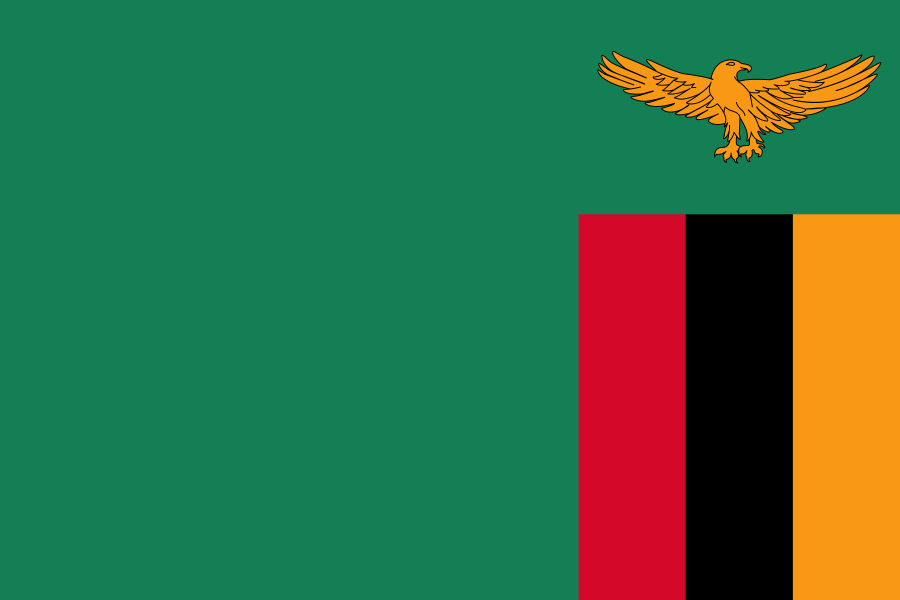
What the flag of Zambia looks like
The flag of the Republic of Zambia has a green field. In the lower right, at the fly end, is a rectangular block of three vertical stripes: red, black and orange from left to right. Above this block, an orange eagle flies with its wings spread. The ratio is 2:3.
The eagle is an African fish eagle, a bird that lives near lakes and rivers across southern Africa. The flag has four colors in all, and the eagle and the orange stripe share the same shade. Image files for the flag are on the Zambia flag download page, and the emoji is at /zambia/emoji/.
Because the stripes and eagle sit at the fly end, the left side of the flag is left as open green. This makes the flag easy to recognize even when it hangs limp or is seen from a distance. Green takes up about three quarters of the flag, a larger share than on most national flags.
Zambia flag colors
Color codes measured from the official design. Use HEX for the web and CMYK for print.
HEX
#147F55RGB
20, 127, 85CMYK
84, 0, 33, 50 HEX
#F99815RGB
249, 152, 21CMYK
0, 39, 92, 2 HEX
#D40829RGB
212, 8, 41CMYK
0, 96, 81, 17 HEX
#000000RGB
0, 0, 0CMYK
0, 0, 0, 100 Zambia flag meaning and symbolism
The commonly given meanings are:
- Green stands for the country's natural resources and vegetation.
- Red stands for the struggle for freedom.
- Black stands for the people of Zambia.
- Orange stands for the mineral wealth under the ground, especially copper.
- The eagle stands for freedom and the ability of the nation to rise above its problems.
History of the Zambia flag
The country was called Northern Rhodesia during the colonial era, after Cecil Rhodes, whose British South Africa Company governed the area from the 1890s. It became a British protectorate in 1924 and from 1953 to 1963 it was part of the Federation of Rhodesia and Nyasaland. Its flag was the British Blue Ensign with the colony's badge.
When independence came on 24 October 1964, Northern Rhodesia took the new name Zambia, from the Zambezi River, and raised the present flag. It has been in use ever since. The flag has stayed the same through every change of government since.
The date is marked each year as Independence Day, and in 1964 Kenneth Kaunda became the first president of the new republic.
A flag with an eagle
Few African flags feature a bird. Zambia's eagle is a reminder that the country's national symbols draw on its wildlife. For other designs see the Africa flags page.
Zambia flag facts
| Country | Zambia |
|---|---|
| Flag adopted | 1996 |
| Proportions | 2:3 |
| Colors | #147F55, #F99815, #D40829, #000000 |
| Symbols | African Fish Eagle, field, sinister canton |
| Flag emoji | 🇿🇲 |
| Country code | ZM, ZMB (ISO 3166) |
| Capital | Lusaka |
| Continent | Africa |
| Population | 19,610,769 |
| Area | 752,618 km² |
| Currency | Zambian Kwacha |
| National anthem | Stand and Sing of Zambia, Proud and Free |
Zambia flag: frequently asked questions
What is the symbolism of the Zambian flag?
Green is for natural resources, red for the struggle for freedom, black for the people, orange for mineral wealth and the eagle for freedom and the ability to rise above problems.
Why did Zambia change its name?
The country was Northern Rhodesia under British rule, named after Cecil Rhodes. At independence in 1964 it took the name Zambia, taken from the Zambezi River.
What was Zambia called before 1964?
It was called Northern Rhodesia. From 1953 to 1963 it belonged to the Federation of Rhodesia and Nyasaland.
What languages are spoken in Zambia?
English is the official language. Seven major local languages are widely used, including Bemba, Nyanja, Tonga, Lozi, Kaonde, Lunda and Luvale, and there are dozens more.
Is Zambia an African country?
Yes. Zambia is a landlocked country in southern Africa. It borders eight countries, including Zimbabwe, Tanzania and the Democratic Republic of the Congo, and its capital is Lusaka.