Flag of Nigeria
The Nigerian flag is a vertical triband of green, white and green. It was designed by a Nigerian student in London, Michael Taiwo Akinkunmi, and first raised on 1 October 1960, the day Nigeria became independent from Britain.
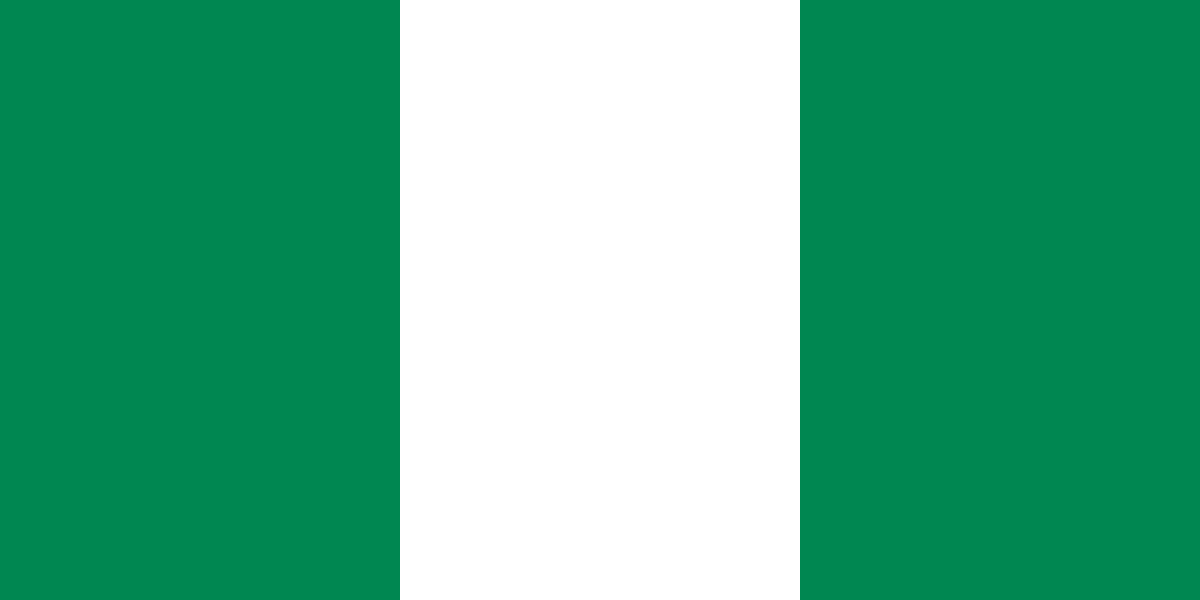
What the flag of Nigeria looks like
The flag of Nigeria is made of three vertical bands of equal width. A green band sits at the hoist, a white band in the middle and a second green band at the fly. The proportions are 1:2, so the flag is twice as long as it is high. There is no emblem, star or inscription, which makes it one of the simplest flags in Africa and easy to recognize.
Because the design has only two colors, it is often described as a vertically striped bicolor, or as a green-white-green triband. The green is a medium, fairly dark shade, and the white is plain white. You can see the exact shades in the color swatches on this page.
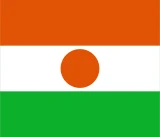
Do not confuse it with the flag of its northern neighbor Niger, which has horizontal stripes of orange, white and green with an orange disc in the middle. Their names are similar, since both are named after the Niger River. If you only need a small icon, there is the Nigeria flag emoji and a flag download page with images in several sizes.
Nigeria flag colors
Color codes measured from the official design. Use HEX for the web and CMYK for print.
HEX
#008751RGB
0, 135, 81CMYK
100, 0, 40, 47 HEX
#FFFFFFRGB
255, 255, 255CMYK
0, 0, 0, 0 Nigeria flag meaning and symbolism
The Nigeria flag meaning is simple and is taught in schools across the country. The two colors have these standard meanings:
- Green represents agriculture and the natural wealth of the land. It also stands for the forests and fertile land that cover much of the country.
- White represents peace and unity among the many peoples of Nigeria.
Nigeria is a federation of over 250 ethnic groups, among them the Hausa, Yoruba and Igbo, and several major religions. The two colors are often read as a call to peace and cooperation among all of them. Green is also the color most often associated with growth and hope, and the combination makes the flag look quite different from the red, white and blue flags of Britain and the United States. Green and white are also the colors of the national football team, the Super Eagles, although the team's shirts are not always the same shade as the flag.
History of the Nigerian flag
Before independence, the area was under British control. The territory was ruled through the Royal Niger Company and then as the Colony and Protectorate of Nigeria, which used the British Blue Ensign with the Union Flag in the corner and a colonial badge on the fly. This was the flag of the colonial government, not a national flag chosen by Nigerians.
As independence approached, a committee ran a national competition in 1959 to choose a flag. More than 2,000 entries were submitted. The winner was a design by Michael Taiwo Akinkunmi, then a 23-year-old student at a technical college in London. His first version had a red sun at the center of the white band, but the judging panel removed it and left the plain green-white-green design that we see today.
The flag was raised for the first time at the independence ceremony on 1 October 1960. The same design has been in use since then, through the civil war of 1967-70 and several changes of government. Akinkunmi became well known as the designer, and he is still credited on official pages about the flag.
How the flag is used
The Nigerian flag is flown on public buildings, schools and at official events every day. Nigeria celebrates Independence Day on 1 October, when the flag is raised in every state. The national coat of arms is separate from the flag: it shows an eagle above a black shield with a Y-shaped silver band, which stands for the rivers Niger and Benue that meet in the country. For other flags, browse flags of Africa.
Nigeria flag facts
| Country | Nigeria |
|---|---|
| Flag adopted | October 1, 1960 |
| Proportions | 1:2 |
| Colors | #008751, #FFFFFF |
| Symbols | field, pale |
| Flag emoji | 🇳🇬 |
| Country code | NG, NGA (ISO 3166) |
| Capital | Abuja |
| Continent | Africa |
| Population | 211,400,708 |
| Area | 923,768 km² |
| Currency | naira |
| National anthem | Nigeria, We Hail Thee |
Nigeria flag: frequently asked questions
What is the full meaning of the Nigerian flag?
Green stands for agriculture and the natural wealth of the land, and white stands for peace and unity. The flag was designed to show a country that is both rich in natural resources and committed to peace among its many peoples.
Who designed the Nigerian flag?
Michael Taiwo Akinkunmi, a Nigerian student in London, designed it in 1959. His entry won a national competition, and the original red sun on the white band was left out by the judges.
What was the old Nigerian flag?
Before 1960 Nigeria used the British Blue Ensign with a colonial badge, because it was a British colony and protectorate. It was replaced by the green-white-green flag on Independence Day, 1 October 1960.
What does the Nigerian flag look like?
It has three equal vertical stripes in green, white and green. It has no symbol or emblem, and its width-to-height ratio is 1:2.
Which country has a similar flag to Nigeria?
No other country uses exactly the same flag. Niger, Ivory Coast and Italy also use green and white, but in different layouts. Niger has orange-white-green horizontal stripes with a disc, and Ivory Coast has vertical stripes in orange, white and green.
What language do Nigerians speak?
English is the official language. Hausa, Yoruba and Igbo are the most widely spoken of more than 500 local languages.