Flag of Angola
The Angola flag is a horizontal bicolor of red over black with a yellow emblem in the center: half a cogwheel crossed by a machete, topped by a five-pointed star. It was adopted at independence from Portugal on 11 November 1975.
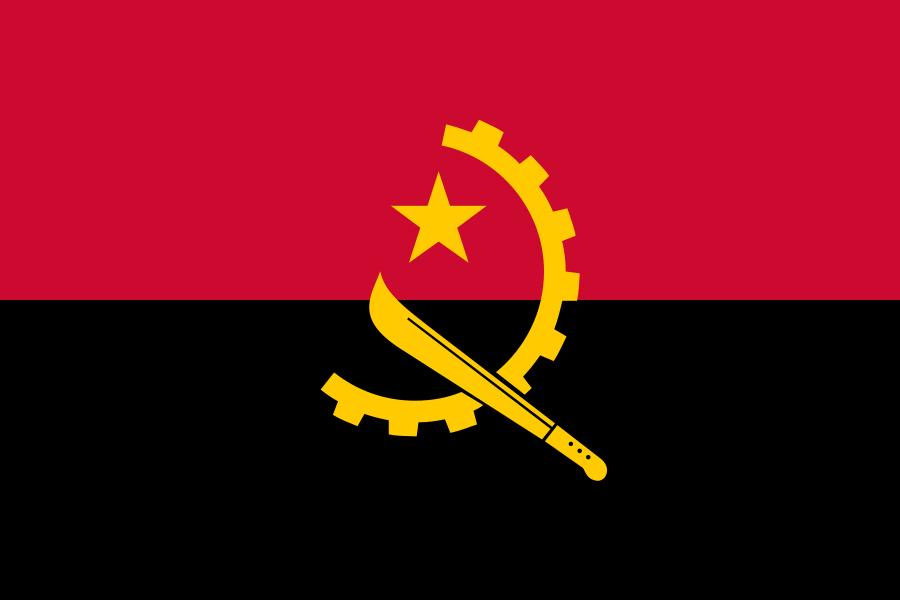
What the flag of Angola looks like
The flag of Angola is divided into two horizontal bands of equal height, red above and black below. The proportions are 2:3. In the center is a gold-yellow emblem made of three elements: a half cogwheel, a machete that curves across it like a crescent, and a five-pointed star above.
The star sits above the two tools. The overall arrangement recalls the hammer, sickle and star of communist flags, but it uses a machete and a cogwheel instead. The flag is also shown as the Angola flag emoji 🇦🇴.
Angola flag colors
Color codes measured from the official design. Use HEX for the web and CMYK for print.
HEX
#CC092FRGB
204, 9, 47CMYK
0, 96, 77, 20 HEX
#000000RGB
0, 0, 0CMYK
0, 0, 0, 100 HEX
#FFCB00RGB
255, 203, 0CMYK
0, 20, 100, 0 Angola flag meaning and symbolism
The meanings of the flag are tied to the liberation movement that designed it:
- Red stands for the blood shed by the Angolan people during colonial oppression, the war of liberation and in the defense of the nation.
- Black stands for the African continent.
- Yellow (gold) is used for the emblem, and it is said to represent the wealth of the country, such as its diamonds and oil.
In the emblem, the half cogwheel represents industrial workers and production. The machete stands for the peasants, agricultural work and the armed struggle against Portuguese rule, since it is both a farming tool and a weapon used in the independence war. The star represents internationalism and progress.
Many visitors ask why the flag looks communist. The answer is its origin: it was based on the flag of the MPLA (Popular Movement for the Liberation of Angola), a Marxist-oriented movement that took power in 1975 and ruled as a one-party state. Angola dropped Marxism-Leninism and introduced a multi-party system in the early 1990s, but the flag was not changed.
History of the Angola flag
Portuguese traders reached the coast of Angola in the late 15th century, and in time the territory became a Portuguese colony. Earlier, the area included the Kingdom of Kongo. Claims that it flew a red-and-black flag in 1390 are modern and have little historical support.
Three movements fought for independence from the early 1960s: the MPLA, the FNLA and UNITA. After the 1974 revolution in Portugal, the new government agreed to grant independence, and in January 1975 the Alvor Agreement set out a transition. The movements soon turned on each other. On 11 November 1975, Agostinho Neto of the MPLA proclaimed independence in Luanda and the red and black flag was raised.
Angola then went through a long civil war between the MPLA government and UNITA, which lasted until 2002. The design was kept after peace came, and it remains the national flag.
Another former Portuguese colony, Mozambique, also took a flag from its liberation movement in 1975. See more on the flags of Africa page.
Angola flag facts
| Country | People's Republic of Angola |
|---|---|
| Flag adopted | November 11, 1975 |
| Proportions | 2:3 |
| Colors | #CC092F, #000000, #FFCB00 |
| Symbols | cogwheel, five-pointed star, machete, field |
| Flag emoji | 🇦🇴 |
| Country code | AO, AGO (ISO 3166) |
| Capital | Luanda |
| Continent | Africa |
| Population | 36,749,906 |
| Area | 1,246,700 km² |
| Currency | kwanza |
| National anthem | Angola Avante |
Angola flag: frequently asked questions
Why does the Angola flag have a machete?
The machete stands for the peasants, agricultural work and the armed struggle for independence. It is a farming tool that also became a weapon in the war against Portuguese rule.
Why is the Angola flag communist?
It was designed by the MPLA, a Marxist-oriented liberation movement, which took power at independence in 1975. The cogwheel, tool and star follow the style of socialist emblems. Angola moved to a multi-party system in the 1990s but kept the flag.
What does the symbol on the Angola flag mean?
The half cogwheel represents industry and workers, the machete represents farmers and the armed struggle, and the star represents internationalism and progress.
Which flag has an AK-47 on it?
Angola's flag has a machete, not a gun. The flag that shows an AK-47 is the flag of Mozambique.
What do the colors of the Angola flag mean?
Red stands for the blood shed in the fight against colonial rule, black for the African continent, and yellow for the country's wealth.