Flag of Gabon
The Gabon flag is a horizontal tricolor of green, yellow and blue in equal bands. The yellow stripe is a reference to the equator, which crosses the country, and the flag has been in use since independence from France in 1960.
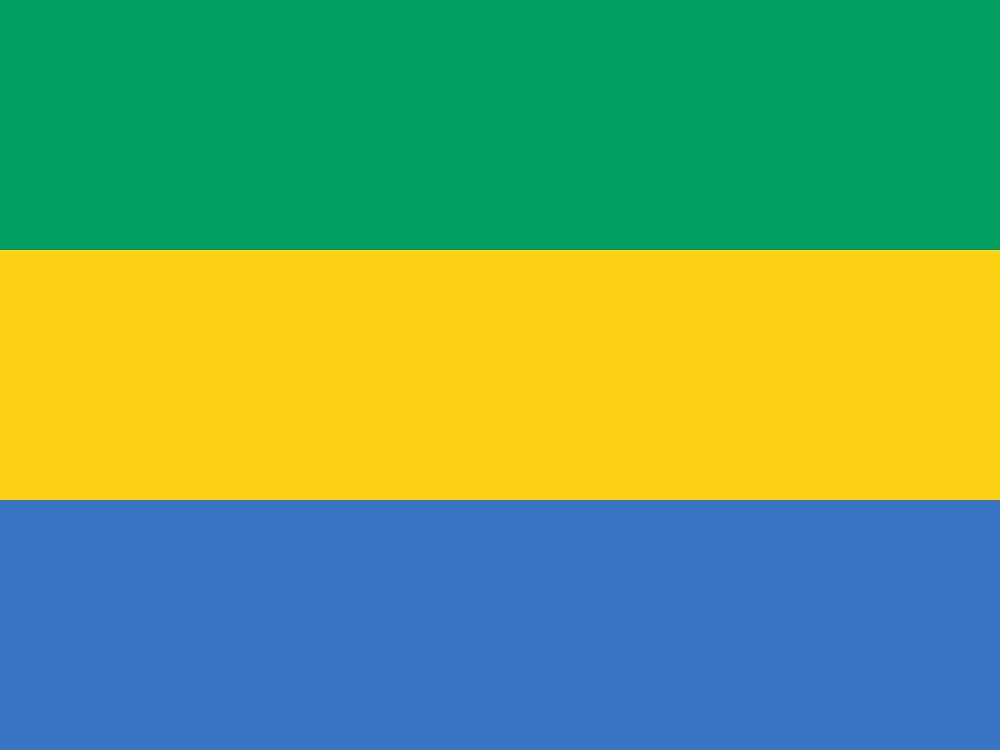
What the flag of Gabon looks like
The flag of Gabon has three horizontal bands of equal height. Green is at the top, yellow is in the middle and blue is at the bottom. The flag has no emblem or other detail, and its proportions are 3:4 (height to length, a width-to-height ratio of 4:3), set by Gabonese law, so it is closer to a square than most national flags.
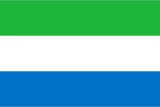
Many flags use green, yellow and blue, but this order and the plain layout are distinctive. The flag of Sierra Leone has green, white and blue bands, and is the closest in appearance, although white replaces yellow.
Gabon flag colors
Color codes measured from the official design. Use HEX for the web and CMYK for print.
HEX
#009E60RGB
0, 158, 96CMYK
100, 0, 39, 38 HEX
#FCD116RGB
252, 209, 22CMYK
0, 17, 91, 1 HEX
#3A75C4RGB
58, 117, 196CMYK
70, 40, 0, 23 Gabon flag meaning and symbolism
The meanings are tied to the geography and resources of the country:
- Green stands for the natural resources of Gabon, especially its extensive forests.
- Yellow stands for the equator, which crosses the country, and for the sun.
- Blue stands for the sea, the South Atlantic Ocean along Gabon's long coast.
Gabon's flag does not use the green, yellow and red Pan-African colors that its neighbors use, and unlike other former French colonies in Africa it is a horizontal tricolor rather than a vertical one.
History of the Gabon flag
Gabon was part of French Equatorial Africa and became an autonomous republic within the French Community in 1958. A first national flag was adopted in 1959, making Gabon the only French autonomous republic whose flag carried this link to France. It used the same three colors but the yellow stripe was narrower, and the French tricolor sat in the canton as a sign of the link to France.
The present flag was adopted on 9 August 1960, just over a week before full independence on 17 August 1960. The French canton was removed and the yellow stripe was widened to match the other two. The design has not changed since. In 2023 the country went through a change of government, but the flag stayed the same.
Gabon flag facts
| Country | Gabon |
|---|---|
| Flag adopted | August 9, 1960 |
| Proportions | 3:4 |
| Colors | #009E60, #FCD116, #3A75C4 |
| Flag emoji | 🇬🇦 |
| Country code | GA, GAB (ISO 3166) |
| Capital | Libreville |
| Continent | Africa |
| Population | 2,025,137 |
| Area | 267,667 km² |
| Currency | Central African CFA franc |
| National anthem | La Concorde |
Gabon flag: frequently asked questions
What does the Gabon flag symbolize?
Green is for the forests, yellow for the equator and the sun, and blue for the sea. The flag has been the national flag since 1960.
Has the Gabon flag ever changed?
Yes, once. The 1959 flag had a narrower yellow stripe and a French tricolor in the canton. On 9 August 1960 the canton was dropped and the three bands were made equal.
What country did Gabon used to be?
Gabon was a French colony and part of French Equatorial Africa. It became independent on 17 August 1960.
What is the Gabon flag emoji?
The emoji shows the green, yellow and blue stripes. You can find it on the Gabon flag emoji page.
Is Gabon an African country?
Yes. Gabon is on the Atlantic coast of Central Africa. It borders Equatorial Guinea, Cameroon and the Republic of the Congo, and its capital is Libreville.