Flag of Botswana
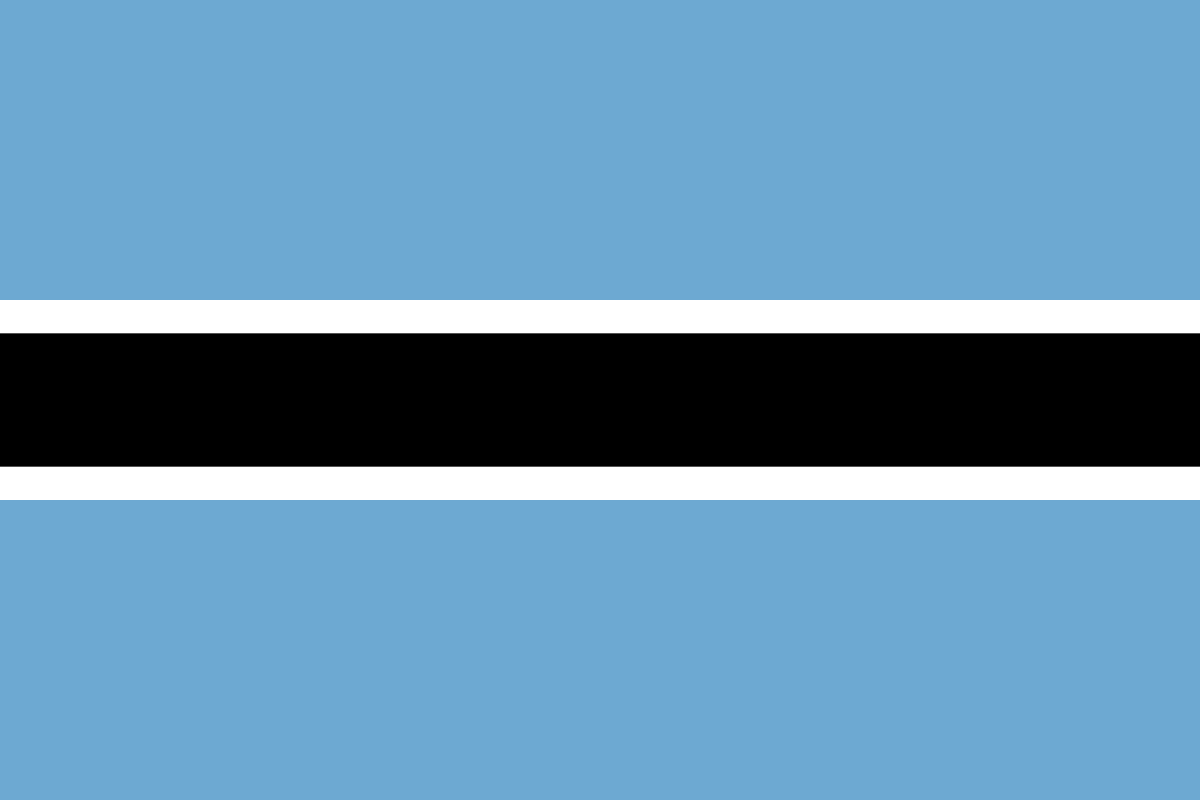
The Botswana flag is light blue with a black horizontal stripe across the middle, edged in white. The blue stands for water and rain, and the black and white stripe for harmony between the people of the country. It was first raised at independence in 1966.
What the flag of Botswana looks like
The flag of Botswana has a width-to-height ratio of 2:3. The field is a pale, sky-like blue. Across the center runs a horizontal black band with a thin white stripe along both its top and bottom edges. The black band is narrow, so most of the flag is blue.
The design has no emblem. That makes it one of the simplest flags in Africa, and it looks clear from a distance. The light blue shade is unusual among national flags, and the black and white stripe is the main feature that sets the flag apart. A smaller image is on the Botswana flag emoji page.
Botswana flag colors
Color codes measured from the official design. Use HEX for the web and CMYK for print.
HEX
#6DA9D2RGB
109, 169, 210CMYK
48, 20, 0, 18 HEX
#000000RGB
0, 0, 0CMYK
0, 0, 0, 100 HEX
#FFFFFFRGB
255, 255, 255CMYK
0, 0, 0, 0 Botswana flag meaning and symbolism
Blue stands for water, in particular rain. Water is scarce in a country that is largely semi-desert, which is why rain is so highly valued: the national motto is Pula, a Setswana word meaning rain, and it is also the name of the currency. Blue is also taken as a symbol of the sky.
The black and white stripe represents the harmony and cooperation between the people of Botswana, whatever their origin. The stripe is also often compared to the markings of the zebra, which appears on the national coat of arms. The meaning of the stripe is commonly given in this way, and it is a statement about unity rather than a legal rule.
History of the Botswana flag
Before independence the area was the Bechuanaland Protectorate, which Britain took under its protection in 1885. It used the British Blue Ensign with the badge of the protectorate. Botswana moved toward self-government in the 1960s.
The national flag was adopted when the country became independent on 30 September 1966, with Seretse Khama as its first president. It has not been changed since then. The date is celebrated each year as Botswana Day, or Independence Day.
Flags that look like the Botswana flag
No other national flag matches the Botswana flag closely. Estonia uses blue, black and white in horizontal bands of equal width, and Argentina also uses a light blue, but each is a different design. The flag is easy to identify among the flags of Africa because of its single black and white stripe.
Botswana flag facts
| Country | Republic of Botswana |
|---|---|
| Flag adopted | September 30, 1966 |
| Proportions | 2:3 |
| Colors | #6DA9D2, #000000, #FFFFFF |
| Symbols | field, fimbriation, fess |
| Flag emoji | 🇧🇼 |
| Country code | BW, BWA (ISO 3166) |
| Capital | Gaborone |
| Continent | Africa |
| Population | 2,480,244 |
| Area | 581,737 km² |
| Currency | Botswana pula |
| National anthem | Fatshe leno la rona |
Botswana flag: frequently asked questions
What do the colors of the Botswana flag mean?
Light blue stands for water and rain. Black and white together stand for racial harmony and cooperation among the people of Botswana.
What does the black stripe on Botswana's flag symbolize?
The black stripe, with its white edges, symbolizes the unity of the country's people. The stripe is also compared to the black and white pattern of a zebra.
What is the old name for Botswana?
It was called Bechuanaland, a British protectorate from 1885. The country took the name Botswana at independence on 30 September 1966.
Is Botswana part of South Africa?
No. Botswana is an independent country that borders South Africa to the south and southeast, as well as Namibia, Zimbabwe and Zambia.
What language do they speak in Botswana?
English is the official language and Setswana is the national language, spoken by most people.
Is Botswana a rich or poor country?
Botswana is classed as an upper-middle-income country. Diamond mining has been the main driver of its economy since the 1970s, and it has been politically stable since independence.