Flag of Turkey
The Turkish flag is red with a white crescent and a white five-pointed star near the center. Called Ay Yıldız ("Moon Star") or Al Bayrak ("the red flag"), it descends from the Ottoman flag and was standardized by law in the 20th century.
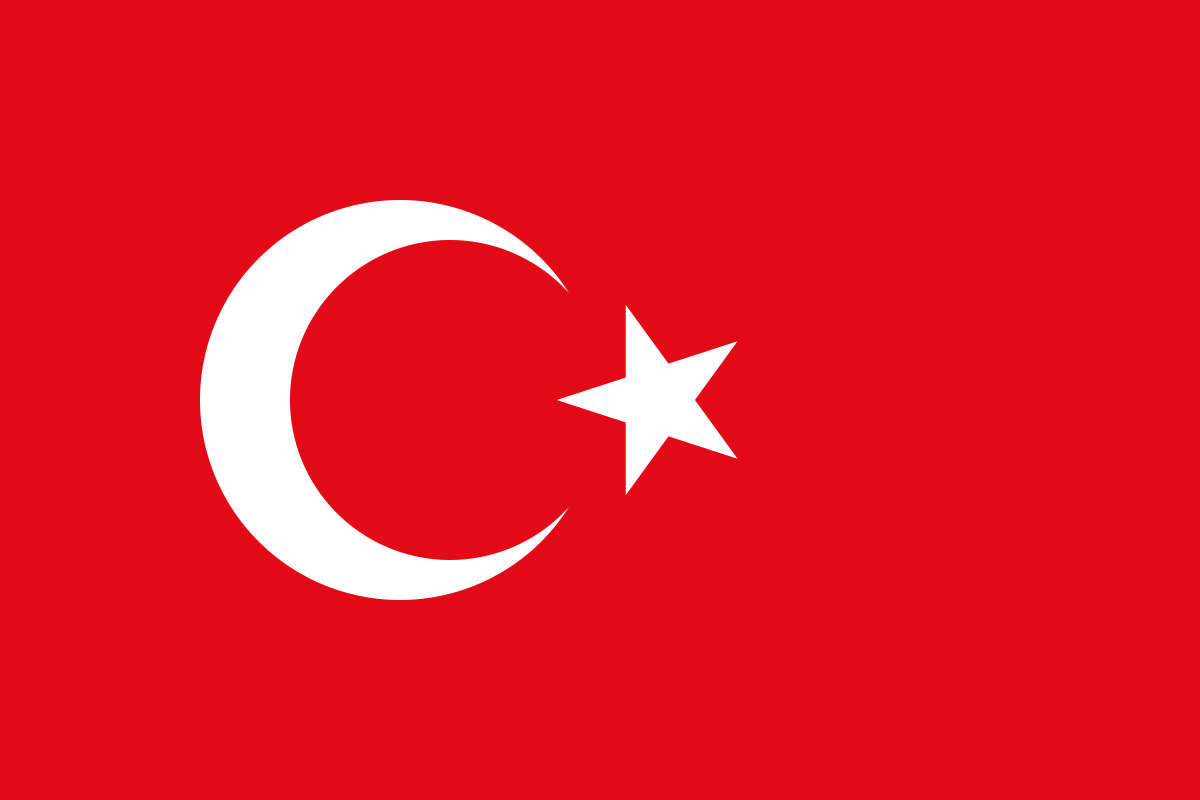
What the flag of Turkey looks like
The flag of Turkey has a red field with a ratio of 2:3. A white crescent moon opens toward the fly (the side away from the pole), and a white five-pointed star sits between the horns of the crescent. One point of the star is directed to the upper right, and the pair is placed slightly toward the hoist rather than at the exact center of the flag.
The geometry is defined in detail by the Turkish Flag Law. The crescent is drawn as a larger white circle with a smaller red circle cut out of it, and the law fixes the size of the star and the distance between it and the crescent. These rules keep the flag identical everywhere, from government buildings to schools.
The same design appears in the Turkey flag emoji, and a ready image is on the download page. The country now uses the name Türkiye in international settings, but the flag has not changed.
Turkey flag colors
Color codes measured from the official design. Use HEX for the web and CMYK for print.
HEX
#E30A17RGB
227, 10, 23CMYK
0, 96, 90, 11 HEX
#FFFFFFRGB
255, 255, 255CMYK
0, 0, 0, 0 Turkish flag meaning and symbolism
The Turkish state does not give the crescent and the star an official meaning. The red color is usually said to stand for the blood of the soldiers who died for the country, and the white for purity and peace.
A well-known legend explains the symbols. After a battle, the moon and a star were reflected in a pool of blood left on the field, and the soldiers adopted the image as their emblem. Different versions of the story set it in different battles, such as the Battle of Kosovo of 1389, and it is a folk tale rather than recorded history.
In fact, the crescent and star are very old symbols in the region. The crescent was an emblem of the city of Byzantium long before the Ottomans took Constantinople in 1453, and the Ottomans adopted it, and later the combination of crescent and star, as an emblem of their state. In later centuries it became associated with Islam and appears on the flags of other majority-Muslim countries, but it is not a religious symbol in the Turkish flag's law.
History of the Turkish flag
Early Ottoman flags came in different colors, including red, green and white, and often featured crescents or other symbols. The Ottoman Empire did not have a single official national flag until the late 18th century. A red flag with a white crescent and star was in use under Sultan Selim III around 1793, and in 1844, during the Tanzimat reforms, the red flag with a crescent and star was set as the official flag. The star's shape varied until the five-pointed form was fixed.
After the First World War, the Ottoman Empire was defeated and occupied. The nationalist movement led by Mustafa Kemal (later Atatürk) fought the War of Independence (1919-1923) under the same red flag. It was kept when the Republic of Turkey was proclaimed on 29 October 1923, so the national flag is almost the same as the one the Ottomans used.
The exact proportions and geometry were fixed by a law passed in 1936, and a new Turkish Flag Law in 1983 updated the regulations on how and when the flag may be used. The flag is flown on public buildings and on national holidays, such as Republic Day on 29 October and Victory Day on 30 August.
Flags that look like the Turkish flag
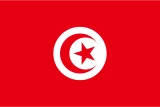
The flag most often compared with Turkey's is the flag of Tunisia. It is also red with a crescent and star, but they are red and sit inside a white disk in the center. Azerbaijan, Pakistan and others use a crescent and star too, with different colors and layouts. The flag of the Turkish Republic of Northern Cyprus, which is recognized only by Turkey, also uses a red crescent and star on a white field between two red stripes.
Turkey flag facts
| Country | Turkey |
|---|---|
| Flag adopted | May 29, 1936 |
| Proportions | 2:3 |
| Colors | #E30A17, #FFFFFF |
| Symbols | five-pointed star, crescent, field, star and crescent |
| Flag emoji | 🇹🇷 |
| Country code | TR, TUR (ISO 3166) |
| Capital | Ankara |
| Continent | Asia |
| Population | 85,372,377 |
| Area | 783,562 km² |
| Currency | Turkish lira |
| National anthem | İstiklâl Marşı |
Turkey flag: frequently asked questions
What does the Turkish flag symbolize?
The red is usually said to represent the blood of soldiers and the white purity. The crescent and star are old symbols whose meaning is not set by law, and a legend links them to the reflection of the moon and a star in a pool of blood.
Why does Turkey have the same flag as the Ottoman Empire?
The nationalists who founded the republic in 1923 fought for independence under the red crescent and star flag, so they kept it. The exact design was standardized in 1936.
What did the Ottoman flag look like?
Ottoman flags varied in color over the centuries. From the 18th and 19th centuries the standard flag was red with a white crescent and star, which is almost the same as the modern Turkish flag.
Which flag is similar to the Turkish flag?
The flag of Tunisia is the closest. It is also red with a crescent and star, but the symbols are red and sit inside a white circle in the middle.
Why is Turkey now called Türkiye?
Turkey asked the United Nations in 2022 to use Türkiye in English as the country's name, which is how it is written in Turkish. The name change did not affect the flag.