Flag of Tunisia
The Tunisia flag is a red field with a white circle in the center, holding a red crescent and a red five-pointed star. Its design goes back to the 19th century, when Tunisia was ruled by the Husainid beys.
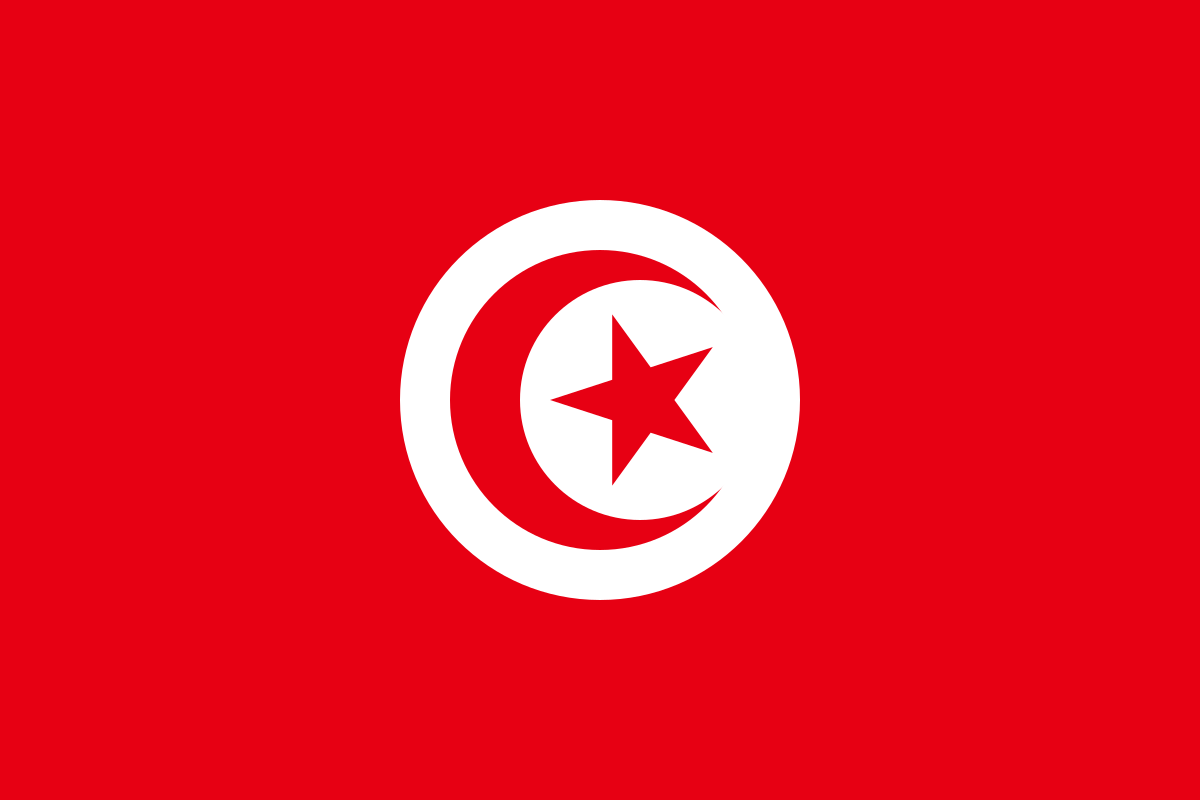
What the flag of Tunisia looks like
The flag of Tunisia is red with a white disc in the middle. Inside the disc is a red crescent that holds a red five-pointed star. The proportions are 2:3. There are only two colors, and the shape of the circle, crescent and star is the only decoration.
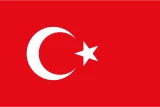
The star sits within the opening of the crescent. It is easy to confuse this flag with the flag of Turkey, which is also red with a white crescent and star. The Turkish flag has no disc, and its crescent and star are white on the red field. You can see the Tunisian design in the Tunisia flag emoji.
Tunisia flag colors
Color codes measured from the official design. Use HEX for the web and CMYK for print.
HEX
#E70013RGB
231, 0, 19CMYK
0, 100, 92, 9 HEX
#FFFFFFRGB
255, 255, 255CMYK
0, 0, 0, 0 Tunisia flag meaning and symbolism
Red is read as the blood of Tunisian martyrs, and it was also the color of the Beylical flag. White is the color of peace. The crescent and star are old symbols of Islam, the main religion of Tunisia, and the disc is said to stand for the sun. There is more than one interpretation of these symbols, so these are the common readings.
The crescent is also linked to ancient Carthage, in present-day Tunisia, where it appeared on standards and buildings long before Islam. The crescent and star are also symbols related to the Ottoman Empire and its historic rule of the region.
History of the Tunisian flag
After the Battle of Navarino in 1827, the Husainid bey Hussein II decided to create a flag for the Tunisian fleet, based on the plain red naval flags used along the southern Mediterranean coast. The government gives 1831 as the year it was adopted. Tunisia then became a French protectorate in 1881, and the flag was kept.
Tunisia became independent on 20 March 1956 and the flag was kept as the national flag. The flag was proclaimed the state flag of the Republic in the constitution of 1 June 1959, and a law of 30 June 1999 set its exact proportions and construction. Its general appearance has stayed virtually unchanged. The Tunisian flag was also flown in the revolution of 2010-11, which began in Tunisia and led to the Arab Spring.
Tunisia flag vs Turkey flag
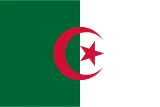
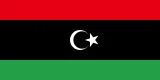
The flags of Tunisia and Turkey look close because both come from the same Ottoman red. Turkey's flag has a white crescent and a white star on a red field. Tunisia's has a red crescent and star on a white disc. Tunisia was under Ottoman rule before the French protectorate, and the crescent and star are symbols related to the Ottoman Empire, which explains why the two flags look alike. The neighbors Algeria and Libya have very different flags.
Tunisia flag facts
| Country | Tunisia |
|---|---|
| Flag adopted | June 1, 1959 |
| Proportions | 2:3 |
| Colors | #E70013, #FFFFFF |
| Symbols | five-pointed star, roundel, crescent, star and crescent |
| Flag emoji | 🇹🇳 |
| Country code | TN, TUN (ISO 3166) |
| Capital | Tunis |
| Continent | Africa |
| Population | 11,565,204 |
| Area | 163,610 km² |
| Currency | Tunisian dinar |
| National anthem | Humat Al Hima |
Tunisia flag: frequently asked questions
What does the Tunisian flag symbolize?
Red is read as the blood of Tunisian martyrs, white as peace, and the crescent and star as Islam. The disc is sometimes said to stand for the sun.
Why is Tunisia's flag similar to Turkey's?
Tunisia was under Ottoman rule, and the crescent and star on its flag are symbols related to the Ottoman Empire. Turkey's flag has a white crescent and star on red, while Tunisia's are red on a white disc.
What country was Tunisia before?
Tunisia was under Ottoman rule, governed by local beys, then a French protectorate from 1881, and became independent in 1956.
Where is 🇹🇳?
The flag emoji 🇹🇳 is the flag of Tunisia, a country in North Africa on the Mediterranean, between Algeria and Libya.
Are Tunisians Muslims?
Yes. Islam is the state religion, and the great majority of Tunisians are Sunni Muslims. The crescent and star on the flag are symbols of Islam.