Flag of Mali
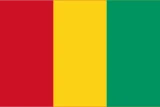
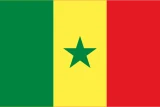
The Mali flag is a vertical tricolor of green, gold and red, with green at the hoist. It carries no emblem, and its three Pan-African colors are the same as Senegal's but in a plain design that mirrors the flag of Guinea.
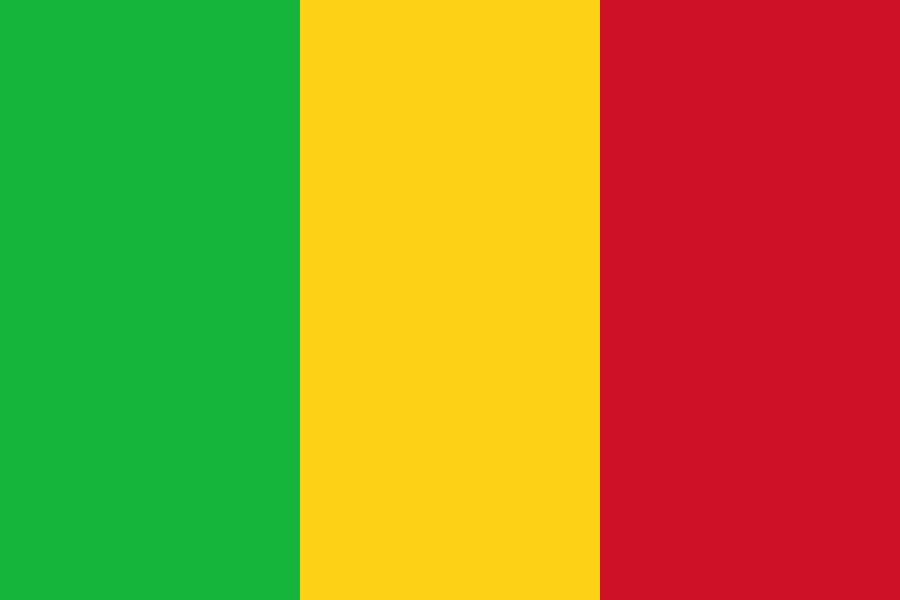
What the flag of Mali looks like
The flag of Mali has three vertical bands of equal width. Green is next to the pole (the hoist), gold, also called yellow, is in the middle, and red is at the outer edge (the fly). The width-to-height ratio is 3:2, and there is no coat of arms, star or other symbol on it.
The same three colors appear on several West African flags, so the order matters. Guinea uses red, yellow and green in the opposite direction, which makes its flag look like a mirror image of the Malian one. Senegal has the same green, gold and red bands as Mali but places a green five-pointed star in the center of the gold band. If you see a plain green-gold-red tricolor with green on the left, it is Mali. On a screen you can find it as the Mali flag emoji 🇲🇱.
Mali flag colors
Color codes measured from the official design. Use HEX for the web and CMYK for print.
HEX
#FCD116RGB
252, 209, 22CMYK
0, 17, 91, 1 HEX
#14B53ARGB
20, 181, 58CMYK
89, 0, 68, 29 HEX
#CE1126RGB
206, 17, 38CMYK
0, 92, 82, 19 Mali flag meaning and symbolism
Green, gold and red are known as the Pan-African colors. They spread across the continent after Ethiopia kept its independence and flew a green, yellow and red flag, and they were adopted by many countries as they became independent in the 20th century.
The meanings below are the ones most often given, since Mali does not define them in an official text that is widely quoted:
- Green stands for nature, the land, agriculture and hope.
- Gold is said to represent purity and the mineral wealth of the country, especially gold, which has long been mined in the region.
- Red is the blood of those who died for independence and in the fight against colonial rule.
Some Malians also link the colors to the three great stages of the nation's story: the land, the wealth of the old empires and the sacrifice of the independence struggle.
History of the Mali flag
The country took its name from the medieval Mali Empire, which flourished between the 13th and 16th centuries and grew rich on gold, salt and trade across the Sahara. The empire's ruler Mansa Musa is the best-known figure, and he appears on the 1375 Catalan Atlas. Historians do not know of an official flag of the empire in the modern sense, so the "Mali Empire flags" you see online are modern reconstructions or artistic ideas.
In the colonial period the area was French Sudan, and the French tricolor was the flag used. In 1959 French Sudan joined Senegal to form the Mali Federation. Its flag was a green, gold and red vertical tricolor with a black figure in the center, known as the kanaga. This is a stylized human figure with raised arms, taken from the masks of the Dogon people.
The federation broke up in August 1960 when Senegal withdrew. French Sudan then declared its independence as the Republic of Mali on 22 September 1960 and kept the same flag. On 1 March 1961 the kanaga was removed, leaving the plain tricolor in use today. The change is usually explained by objections that the figure was a human image, which many Muslims, who are the large majority in Mali, did not want on the national flag.
Mali compared with neighboring flags
Several flags in the region use the same colors, and they are easy to confuse:
- Guinea: red, yellow and green vertical bands, the reverse of Mali.
- Senegal: green, yellow and red with a green star in the center.
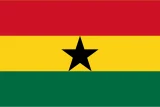
- Ghana and Ethiopia: the same colors in horizontal bands (Ghana adds a black star).
You can compare these and other African designs on the flags of Africa page.
Mali flag facts
| Country | Mali |
|---|---|
| Flag adopted | March 1, 1961 |
| Proportions | 2:3 |
| Colors | #FCD116, #14B53A, #CE1126 |
| Symbols | field |
| Flag emoji | 🇲🇱 |
| Country code | ML, MLI (ISO 3166) |
| Capital | Bamako |
| Continent | Africa |
| Population | 22,395,489 |
| Area | 1,240,192 km² |
| Currency | West African CFA franc |
| National anthem | Pour l'Afrique et pour toi |
Mali flag: frequently asked questions
What is the meaning of the Mali flag?
The colors are the Pan-African green, gold and red. Green is usually read as nature and hope, gold as purity and mineral wealth, and red as the blood shed for independence. These meanings are traditional rather than set in law.
What is the Mali flag flipped?
A mirror image of Mali's flag, with red at the hoist and green at the fly, is the flag of Guinea. Senegal's flag has the same colors in the same order as Mali's, but with a green star in the middle.
When did Mali change its flag?
Mali became independent in September 1960 with a flag that had a black kanaga figure in the center. The figure was removed on 1 March 1961, and the plain green, gold and red tricolor has been the flag since then.
Did the Mali Empire have a flag?
No official flag of the medieval Mali Empire is known. Flags shown online as the "Mali Empire flag" are modern reconstructions, often inspired by banners drawn in the 14th-century Catalan Atlas.
What country is 🇲🇱?
The flag emoji 🇲🇱 is the flag of Mali, a landlocked country in West Africa whose capital is Bamako.