Flag of Guinea-Bissau
The Guinea-Bissau flag has a red vertical band at the hoist with a black five-pointed star, next to two horizontal bands of yellow over green. It comes from the PAIGC independence movement and uses the Pan-African colors.
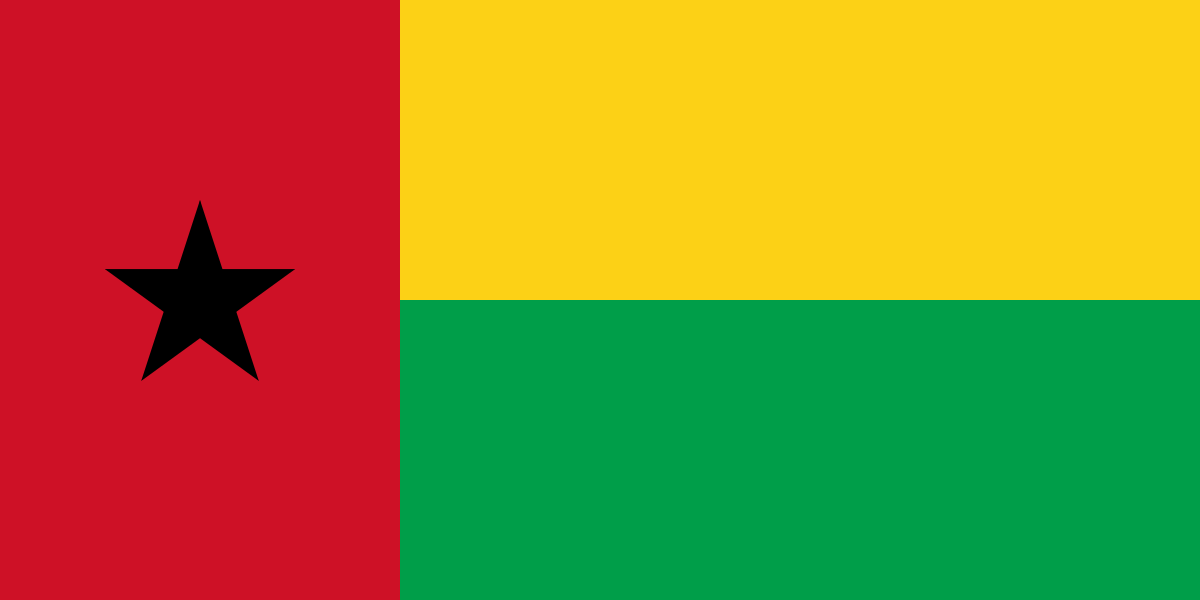
What the flag of Guinea-Bissau looks like
The flag of Guinea-Bissau has a vertical red band along the hoist, taking up about a third of the width. A black five-pointed star stands in the center of the red band. The rest of the flag is split into two equal horizontal stripes: yellow on top and green below. The proportions are 1:2.
The red, yellow, green and black are the Pan-African colors, and they appear in many African flags. The Guinea-Bissau flag emoji shows the design clearly even at a small size.
Guinea-Bissau flag colors
Color codes measured from the official design. Use HEX for the web and CMYK for print.
HEX
#FCD116RGB
252, 209, 22CMYK
0, 17, 91, 1 HEX
#009E49RGB
0, 158, 73CMYK
100, 0, 54, 38 HEX
#CE1126RGB
206, 17, 38CMYK
0, 92, 82, 19 Guinea-Bissau flag meaning and symbolism
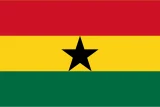
Red is generally explained as the blood shed in the struggle for independence. Yellow is linked to the sun, the harvest and the country's mineral wealth. Green stands for forests, hope and agriculture. The black star is a symbol of African unity and of the Black people's liberation, following the example of Ghana's black star. The Pan-African colors came from Ethiopia, the oldest independent state in Africa, and later spread across the continent. These readings are the traditional ones.
History of the Guinea-Bissau flag
The country was the colony of Portuguese Guinea. In 1956 Amílcar Cabral and others founded the PAIGC (African Party for the Independence of Guinea and Cape Verde), which began an armed struggle in 1963. The party's flag, with its red, yellow, green and black star, became the flag of the independence movement. Independence was declared in the liberated areas on 24 September 1973, and the flag was adopted at that point. Portugal recognized the new state in September 1974.
When Cape Verde became independent in 1975, it first used a flag based on the PAIGC design, since the party had planned a union of the two countries. After a coup in Guinea-Bissau in 1980, the plan was dropped, and Cape Verde changed its flag in 1992. Guinea-Bissau has kept the original design.
Guinea-Bissau flag facts
| Country | Guinea-Bissau |
|---|---|
| Flag adopted | September 24, 1973 |
| Proportions | 1:2 |
| Colors | #FCD116, #009E49, #CE1126 |
| Symbols | five-pointed star, flanche, field |
| Flag emoji | 🇬🇼 |
| Country code | GW, GNB (ISO 3166) |
| Capital | Bissau |
| Continent | Africa |
| Population | 1,861,283 |
| Area | 36,125 km² |
| Currency | West African CFA franc |
| National anthem | Esta é a Nossa Pátria bem Amada |
Guinea-Bissau flag: frequently asked questions
What do the colors of the Guinea-Bissau flag mean?
Red stands for the blood shed for independence, yellow for the sun and wealth, and green for hope and nature. The black star stands for African unity.
Why does the Guinea-Bissau flag look like Cape Verde's old flag?
Both come from the flag of the PAIGC, the party that led both countries to independence from Portugal. Cape Verde used a flag based on it from 1975 until 1992.
Is Guinea-Bissau an Islamic country?
No. It is a secular republic with no state religion. A large share of the people are Muslim, and there are also Christians and followers of traditional beliefs.
When was the Guinea-Bissau flag adopted?
It was adopted on 24 September 1973, when independence was declared, and Portugal recognized the country in 1974.