Flag of Eswatini
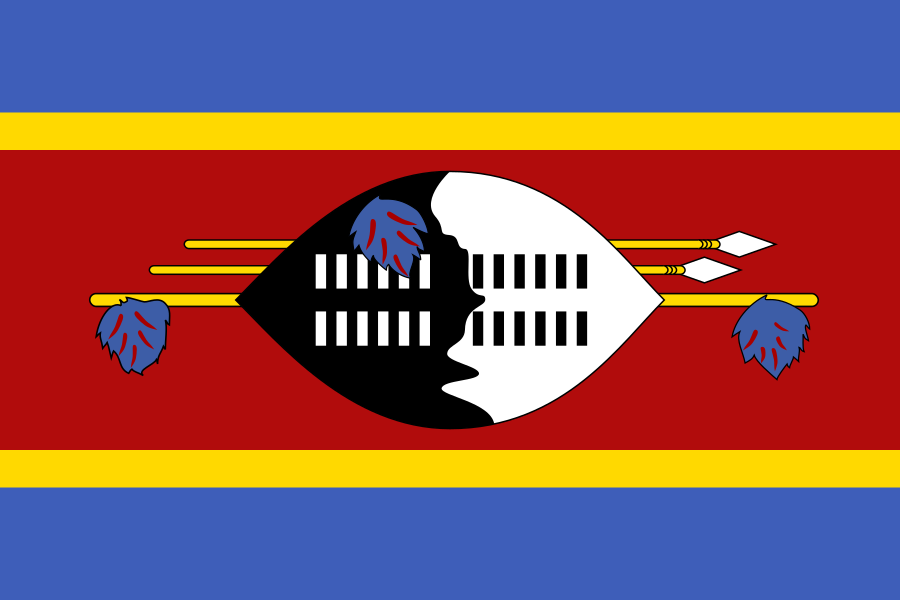
The Eswatini flag (formerly the flag of Swaziland) has five horizontal bands in blue, yellow, red, yellow and blue. In the center lies a black and white Nguni shield crossed by a spear and a staff, a design that has survived the country's 2018 name change.
What the flag of Eswatini looks like
The flag of Eswatini is divided into five horizontal bands. A wide red band runs through the middle and is flanked by thin yellow stripes, which are in turn bordered by a blue band at the top and another at the bottom. The red band is twice the height of each blue band, so red dominates the flag. The proportions are 2:3.
On the red band sits the emblem: a large Nguni shield made of cowhide, divided into black and white halves. Across the shield lie a spear (an assegai) and a staff decorated with tassels made from the feathers of the widowbird. The shield, spear and staff are all drawn from Swazi tradition and are the weapons and regalia of a warrior regiment.
The flag is one of the few in Africa that shows a traditional shield as its main symbol. You can see the flag as a small icon in the Eswatini flag emoji, and download print-ready files from the flag download page.
Eswatini flag colors
Color codes measured from the official design. Use HEX for the web and CMYK for print.
HEX
#3E5EB9RGB
62, 94, 185CMYK
66, 49, 0, 27 HEX
#B10C0CRGB
177, 12, 12CMYK
0, 93, 93, 31 HEX
#FFD900RGB
255, 217, 0CMYK
0, 15, 100, 0 HEX
#FFFFFFRGB
255, 255, 255CMYK
0, 0, 0, 0 HEX
#000000RGB
0, 0, 0CMYK
0, 0, 0, 100 Eswatini flag meaning and symbolism
The meanings most often given for the Eswatini flag are:
- Blue stands for peace.
- Yellow represents the natural resources and wealth of the country.
- Red recalls the battles of the past.
- The black and white shield is said to show that black and white people live together in peaceful coexistence.
- The spear and staff stand for protection of the nation and the authority of the monarchy. Together with the shield, they remind Swazis that their country was defended by its own warriors.
These are traditional readings rather than a formal legal text, and sources phrase them slightly differently. The shield itself belonged to the Emasotsha regiment, one of the royal regiments of the Swazi kingdom.
History of the Swaziland and Eswatini flag
The roots of the design go back to the Second World War. In 1941 Sobhuza II, the Swazi leader, presented a flag to the Swazi Pioneer Corps, a unit of Swazi men who served with British forces. The flag had a similar arrangement of colors and a shield, and it became the model for the later national flag.
Swaziland was a British protectorate, and a flag for the country was approved in 1967 as it moved toward self-government. The country became independent on 6 September 1968, and the flag was finalized in its present form on 6 October 1968, a month after independence. Since then the flag has been flown without change.
In April 2018 King Mswati III announced that the country would use its Swazi-language name, Eswatini, meaning land of the Swazis. The change was made in the 50th year of independence and was meant to end the confusion with Switzerland and to drop a colonial name. The flag stayed the same. That is why people searching for the Swaziland flag and the Eswatini flag find the same design. The old flag is not a different version; only the country name changed.
Where the flag is used
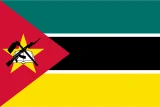
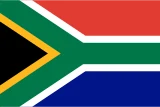
The flag flies over government buildings, schools and at official events across the kingdom, including at Lobamba, the legislative and royal capital, and in Mbabane, the administrative capital. It is also raised at international events where Eswatini competes. For other African flags, see flags of Africa. Eswatini shares its borders with only two countries, Mozambique and South Africa.
Eswatini flag facts
| Country | Kingdom of Eswatini |
|---|---|
| Flag adopted | October 30, 1968 |
| Proportions | 2:3 |
| Colors | #3E5EB9, #B10C0C, #FFD900, #FFFFFF, #000000 |
| Symbols | field, spear, fess, fimbriation, Nguni shield |
| Flag emoji | 🇸🇿 |
| Country code | SZ, SWZ (ISO 3166) |
| Capital | Mbabane, Lobamba |
| Continent | Africa |
| Population | 1,230,506 |
| Area | 17,364 km² |
| Currency | lilangeni |
| National anthem | Nkulunkulu Mnikati wetibusiso temaSwati |
Eswatini flag: frequently asked questions
What do the colors of the Eswatini flag mean?
Blue is said to represent peace, yellow the country's natural resources and red the battles of the past. The black and white shield stands for peaceful coexistence between black and white people.
Are Eswatini and Swaziland the same country?
Yes. Swaziland was renamed Eswatini in April 2018, which means land of the Swazis in the Swazi language. The country, its borders and its flag remained the same.
Why is it no longer called Swaziland?
King Mswati III chose to use the traditional Swazi name on the 50th anniversary of independence. The new name drops the colonial-era form and avoids confusion with Switzerland.
Did the Eswatini flag change when the country was renamed?
No. The flag adopted in 1968 is still the national flag. There is no new or old version linked to the name change.
What is the shield on the Eswatini flag?
It is a Nguni shield, a traditional cowhide warrior shield. It is split into black and white and displayed with a spear and a staff decorated with widowbird feather tassels.
What language do they speak in Eswatini?
The official languages are siSwati (Swazi) and English. Siswati is the language of daily life, and English is used in government and education.