Flag of Bouvet Island
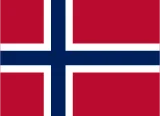
Bouvet Island has no flag of its own. This uninhabited sub-Antarctic volcano in the South Atlantic is a Norwegian dependency, so the Bouvet Island flag is the flag of Norway: a red field with a white-edged blue Nordic cross.

What the flag of Bouvet Island looks like
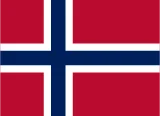
The flag shown for Bouvet Island is the national flag of Norway. It is a red rectangle with a blue cross outlined in white. The cross is a Nordic (Scandinavian) cross: its vertical bar sits closer to the hoist than the center, and both arms reach the edges of the flag. The proportions are 8:11, a little squarer than most national flags.
Bouvet Island has never had a flag, coat of arms or local government of its own, because no one lives there. The territory is listed under the code BV, and the Bouvet Island flag emoji simply repeats the Norwegian design. You can see the original on the page for Norway.
Bouvet Island flag colors
Color codes measured from the official design. Use HEX for the web and CMYK for print.
HEX
#BA0C2FRGB
186, 12, 47CMYK
0, 94, 75, 27 HEX
#00205BRGB
0, 32, 91CMYK
100, 65, 0, 64 HEX
#FFFFFFRGB
255, 255, 255CMYK
0, 0, 0, 0 Why Bouvet Island uses the Norwegian flag
Bouvet Island is one of Norway's three dependencies outside the kingdom proper, together with Peter I Island and Queen Maud Land in Antarctica. It is not a county or a municipality, and Norwegian law applies to it directly. A dependency of this kind has no separate flag, so the Norwegian state flag stands for it on maps, in the ISO country list and at the few places where a flag is needed.
The Norwegian colors have commonly cited meanings, though none is official. Red and white come from the old Danish flag, since Norway was under Denmark until 1814. Blue is often tied to the Swedish flag, as Norway entered a union with Sweden that year. Together they also echo the French tricolor and the ideals of liberty linked to it.
History of Bouvet Island and its flag
The French navigator Jean-Baptiste Charles Bouvet de Lozier sighted the island in 1739, but he could not land and recorded its position inaccurately, so it was lost again for decades. British and American crews saw or visited it in the early 19th century. A Norwegian expedition raised the Norwegian flag there in 1927, and Norway annexed the island in 1929 after a dispute with the United Kingdom, which dropped its own claim. Since then it has been a Norwegian dependency.
The Norwegian flag itself dates from 1821, when the Storting adopted a design by Fredrik Meltzer. Its current form has been in use since the union with Sweden ended in 1905, after the union emblem was removed from the corner in 1898.
About the island itself
Bouvet Island covers about 49 square kilometers, most of it covered by glacier, and it is among the most remote islands in the world. The nearest inhabited land is Tristan da Cunha, more than 2,000 kilometers away. It is a volcanic island with no harbor and steep ice cliffs, and landing is difficult. Since 1971 it has been a nature reserve, with a weather station and a small hut as the only structures. Visits are very rare and need a permit from the Norwegian authorities.
Bouvet Island flag facts
| Country | Bouvet Island |
|---|---|
| Proportions | 8:11 |
| Colors | #BA0C2F, #00205B, #FFFFFF |
| Flag emoji | 🇧🇻 |
| Country code | BV, BVT (ISO 3166) |
| Area | 49 km² |
Bouvet Island flag: frequently asked questions
What country does Bouvet Island belong to?
Bouvet Island belongs to Norway. It has been a Norwegian dependency since 1929 and is managed from Oslo as a nature reserve.
Does anyone live on Bouvet Island?
No. The island is uninhabited and has never had a permanent population. It is almost entirely covered by ice, and the only structure is a small automatic weather station and a hut.
Can people visit Bouvet Island?
Only in rare cases. Landing is hard because of the cliffs and rough seas, and a permit from Norway is required because the island is a protected nature reserve.
Does Bouvet Island have its own flag?
No. The flag of Norway is used for Bouvet Island, which is why the island's flag emoji matches the Norwegian one.